



Oak Floor Standing Cupboard
An oak floor standing cupboard brings warmth and grounded presence to a room, offering generous storage in timber that ages with remarkable character.
Oak Floor Standing Cupboard
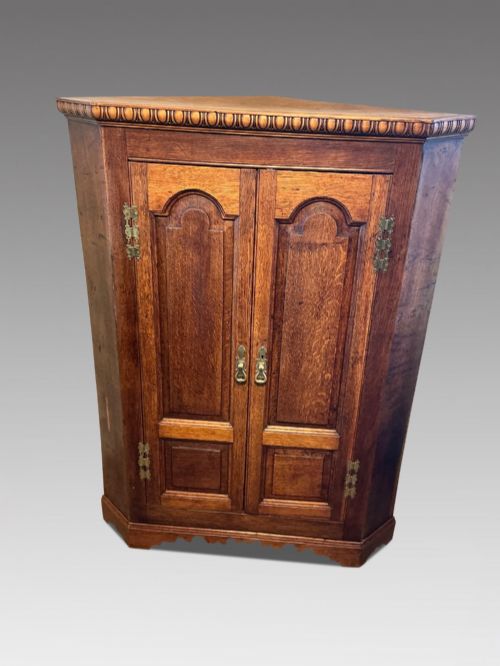
When you search for an oak floor standing cupboard, you are looking at substantial timber furniture designed to sit directly on the floor and utilise corner or wall space efficiently. The examples gathered here span several eras, predominantly featuring Georgian, Victorian, and Edwardian interpretations.
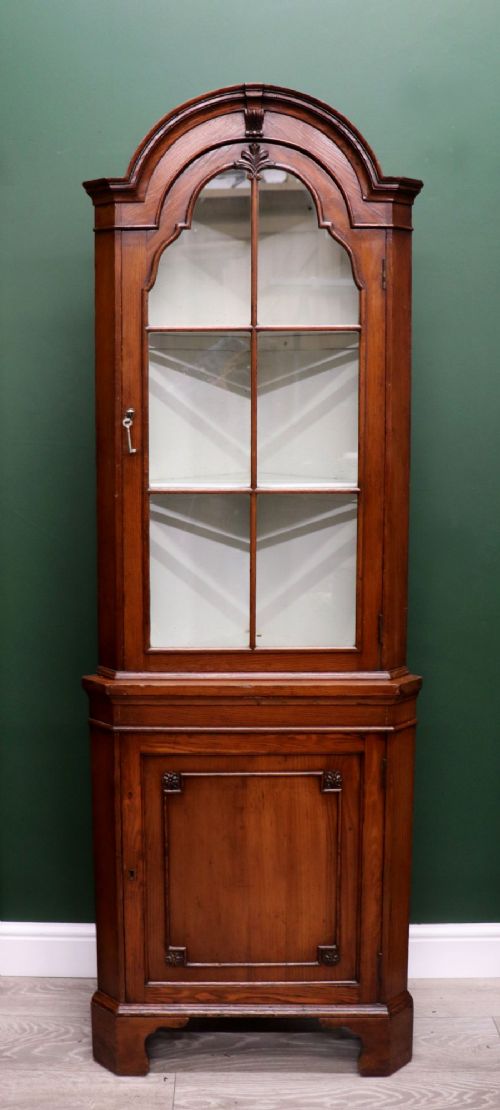
The versions you are most likely to meet on this page are corner cupboards and cabinets, often constructed in two parts to aid movement and placement. These pieces range from simple English country items to more formal Georgian and Victorian designs.
Alongside standard cupboards, the selection includes related forms such as bookcases, display cabinets with glazed doors, and book presses incorporating mahogany or brass details. Origins stretch across the eighteenth, nineteenth, and early twentieth centuries, maintaining timber as the primary medium.
How they were made
Makers relied on solid oak for the primary carcases, occasionally combining it with mahogany for contrasting crossbanding or interior fittings. Construction methods prioritized longevity, utilising panelled doors and robust framing to house books, display items, or household stores.
Iron and brass hardware served both functional and decorative roles, securing heavy doors and supporting shelving within the cupboards. Glazed doors appeared on later display cabinets, allowing contents to be viewed while protected from dust.
Oak Floor Standing Cupboard Retail Price Guide 2026
Typical asking prices for oak floor standing cupboard among the pieces listed under this phrase on Sellingantiques today, from the lower quarter to the upper quarter. They describe what is for sale here now, not the wider market.
Early cabinetmakers built tall cupboards in two parts purely so they could squeeze them up narrow staircases without swearing.
What varies in quality
The distinction between standard pieces and superior examples lies in the selection of the timber and the crispness of the joinery. Eighteenth-century and early Georgian pieces often exhibit finer grain figuring and more considered proportions in two-part forms.
Hardware integrity and original glass panels also separate basic utilitarian cupboards from refined display cabinets and book presses. The integration of secondary woods like mahogany indicates a higher tier of craftsmanship.
The Oak Floor Standing Cupboard Glossary
- Corner cupboard
- A specialised cabinet built with a triangular footprint designed to fit snugly into the corner of a room. This form maximises floor space while providing deep interior storage.
- Book press
- A heavy timber piece used historically for pressing pages flat, often incorporating a cupboard or shelving base. Examples in the evidence combine oak and mahogany.
- Glazed door
- A door fitted with glass panes to display books or china. These are common on Edwardian and later display cabinets.
- Bow fronted
- A cabinet featuring a convex, curved front facade rather than a flat surface. This stylistic choice softens the angles of a room.
- Two parts
- Construction where a tall cabinet separates into an upper and lower section for easier transport and positioning in a home.
Oak Floor Standing Cupboard: Frequently Asked Questions
Where should I place an oak floor standing cupboard?
These cupboards suit dining rooms, living spaces, or hallways where they can utilise empty corners or wall space without crowding the room. Their substantial timber presence anchors the surrounding decor.
Because many examples are tall or built in two parts, ensure the ceiling height and floor space accommodate the specific dimensions before placement.
How do I care for antique oak furniture?
Keep oak furniture away from direct heat sources and strong sunlight to prevent the timber from drying out or splitting. Regular dusting with a dry cloth maintains the finish without chemical buildup.
Feeding the wood occasionally with a traditional wax helps preserve the natural grain and deepens the colour over time.
How can I tell Georgian pieces from Victorian ones?
Georgian pieces often display simpler, robust country joinery or refined proportions typical of the eighteenth century, while Victorian items may incorporate richer contrasting woods like mahogany.
Examining the hardware, door construction, and overall stylistic cues helps distinguish the 1800s pieces from later Edwardian or 1930s revivals.
What were corner cupboards originally used for?
Corner cupboards served to store household provisions, tableware, or linens in rooms where wall space was at a premium. Their triangular shape turned wasted corner angles into practical storage.
Later variations evolved to display fine china, books, or decorative objects behind glazed doors.