

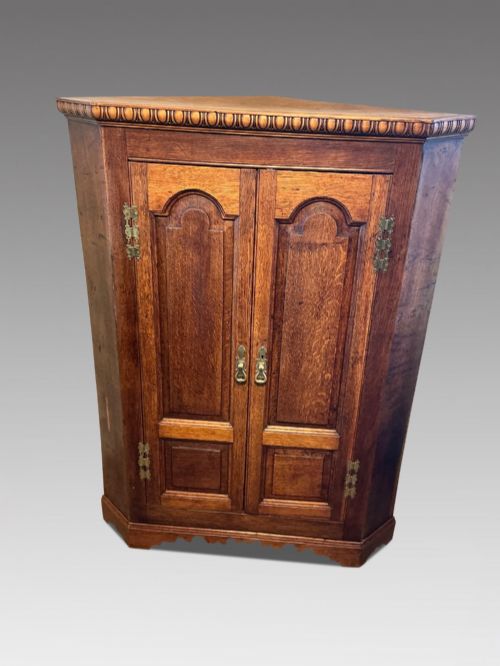
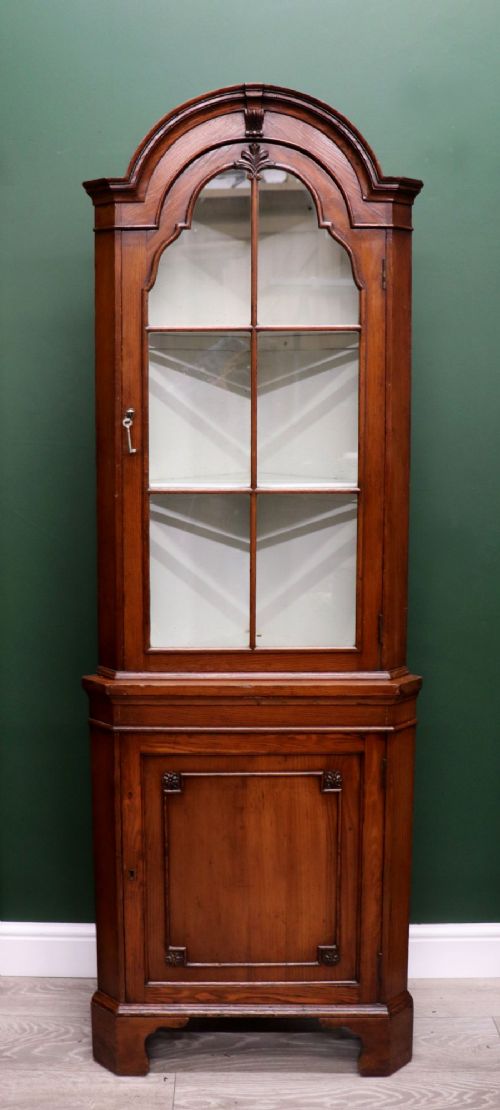


Oak Floor Cupboard
An oak floor cupboard grounds a room with timber weight, offering tall, closed storage that fits neatly into a forgotten corner.
Oak Floor Cupboard
An oak floor cupboard most often appears as a standing corner cabinet or corner cupboard designed to utilise vacant angles in a room. These pieces rise from the floor, anchoring themselves firmly against two adjoining walls rather than hanging above.
The selections span several distinct eras, bringing together Georgian, Victorian, Edwardian, and 1930 examples. Alongside traditional corner cupboards, you encounter related forms such as book presses, display cabinets with glazed doors, and tall bookcases.
Originating largely from English country traditions, these standing units frequently arrive in two separate parts for easier transport and placement. They serve as practical repositories for china, books, and household goods while displaying the grain of native timber.
How they were made
Makers relied primarily on solid oak for the main carcasses and panelled doors, sometimes pairing it with mahogany accents or secondary woods. This robust timber provided the structural strength needed for tall, standing units.
Functional metalwork defined the hardware, with brass escutcheons and hinges securing the doors, alongside occasional iron fittings. Glazed upper doors appeared on later display variants, allowing light to reach the interior shelves.
Oak Floor Cupboard Retail Price Guide 2026
Typical asking prices for oak floor cupboard among the pieces listed under this phrase on Sellingantiques today, from the lower quarter to the upper quarter. They describe what is for sale here now, not the wider market.
Listings span multiple eras from the 18th century through to the 1930s, uniting oak, mahogany, glass, and brass in standing corner configurations.
What varies in quality
Distinction lies in the handling of the timber and the architectural ambition of the moulding, where crisper cornices and well-figured grain separate simpler utility pieces from grander architectural examples. Two-part construction demands precise joinery to ensure the upper and lower sections align seamlessly upon installation.
The integration of secondary timbers, such as mahogany crossbanding on oak carcases, points to greater workshop care. Original brass hardware and cleanly rebated glass panes further separate standard vernacular items from finer regional interpretations.
The Oak Floor Cupboard Glossary
- Corner cupboard
- A tall cabinet built with a triangular footprint designed specifically to fit into the internal angle of a room. These units make efficient use of otherwise wasted space.
- Book press
- A heavy timber piece incorporating a mechanical screw mechanism used originally to flatten pages or bind volumes. In later adaptations, the upper section serves as a standing cabinet.
- Bow fronted
- A convex curved cabinet face that softens the sharp angles typical of standard corner furniture. This curved profile requires advanced woodworking skill to shape solid timber accurately.
- Two parts
- Construction method where a tall cabinet is built in separate upper and lower vertical sections. This design simplifies transport through narrow doorways and stairwells.
Oak Floor Cupboard: Frequently Asked Questions
What rooms suit an oak floor cupboard best?
These tall standing units excel in dining rooms or living spaces where unused wall angles require functional height. Their enclosed lower cupboards hide clutter while upper display sections showcase ceramics or glassware.
Because they anchor securely into corners, they preserve central floor space while drawing the eye upward to architectural mouldings and aged timber grain.
How do I secure a tall corner cabinet?
Most floor standing units rely on gravity and their substantial timber weight to remain stable against the walls. Tall pieces, particularly those from the Georgian and Victorian eras, often benefit from discreet wall fixings near the top cornice to prevent tipping.
Ensuring the floor beneath is level helps the heavy oak doors swing true and latch cleanly into their brass fittings.
Are these cupboards built in one piece?
Many of the larger standing examples are constructed in two distinct vertical sections that stack together. This modular approach allowed makers to transport heavy timber furniture safely through narrow domestic doorways.
When positioning a two-part cupboard, check that the dividing moulding sits flush and the internal shelves align properly across the join.
How do I distinguish Georgian from Edwardian examples?
Georgian pieces display heavier proportions, fielded timber panels, and deeper cornices reflecting earlier vernacular building traditions. Edwardian and later 1930 variants often incorporate lighter framing, glazed display doors, and refined bracket feet.
Examining the internal construction marks and the cut of the brass hinges helps clarify the manufacturing era of each individual cabinet.