




Oak Floor Cabinet
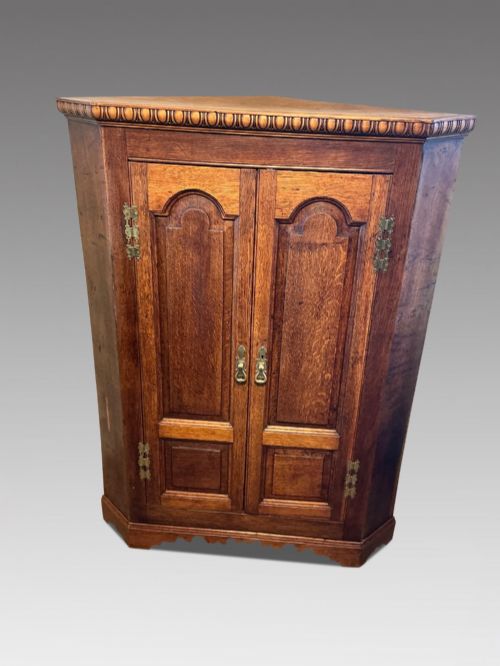
These oak floor cabinet examples bring substantial timber presence and practical corner storage to a room, offering period character alongside everyday utility.
Oak Floor Cabinet
An oak floor cabinet typically takes the form of a standing corner cupboard or a tall display piece designed to utilise room perimeters efficiently. Buyers seeking an oak floor cabinet encounter pieces ranging from Georgian and Victorian eras down to early twentieth-century examples.
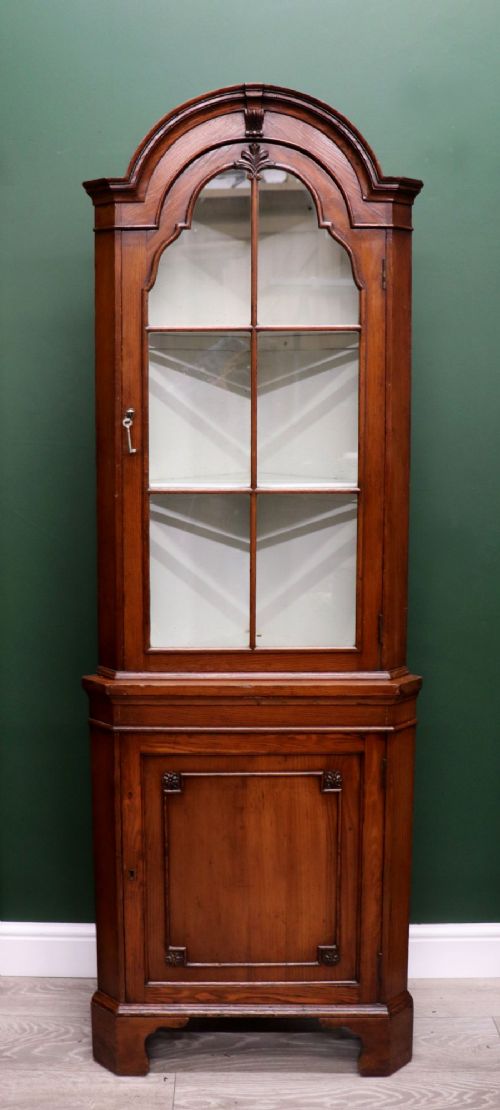
The selection centres heavily on corner cupboards and standing cabinets made to occupy neglected room angles. Forms vary from single-piece units to two-part Welsh cupboards and glazed display bookcases.
Origins span eighteenth-century vernacular workshops through to Edwardian production, with timber grain and panel construction defining their architectural character.
How they were made
Construction relies primarily on solid oak, frequently paired with secondary woods like mahogany for contrasting details. Cabinet makers utilised brass for hinges and escutcheons, alongside iron fixings for structural reinforcement.
Glazing appears on later display variants, while internal shelving utilises timber fitted into fixed housings. Surfaces show the results of hand planing and traditional joinery methods appropriate to each period.
Oak Floor Cabinet Retail Price Guide 2026
Typical asking prices for oak floor cabinet among the pieces listed under this phrase on Sellingantiques today, from the lower quarter to the upper quarter. They describe what is for sale here now, not the wider market.
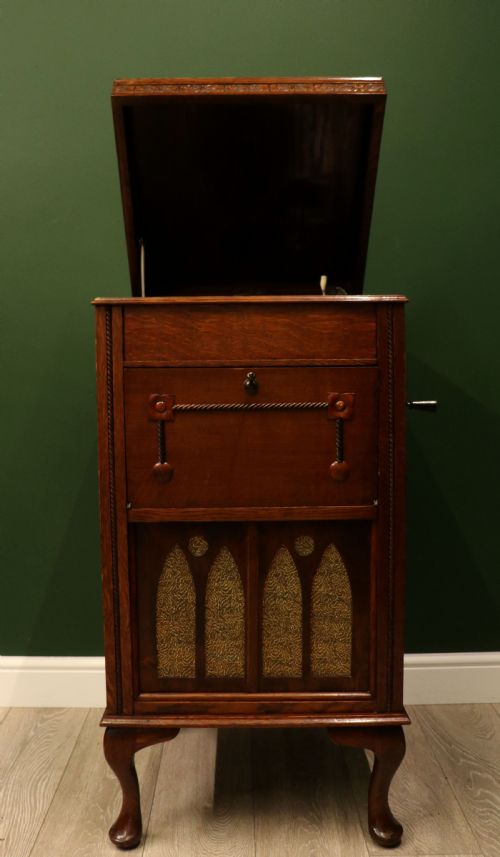
One early twentieth-century entry swaps traditional shelves for an upright parlour gramophone by U Phone of Leeds.
What varies in quality
Quality rests upon the selection of the timber and the crispness of the architectural mouldings. Eighteenth-century examples demonstrate superior joinery depth compared to later revival pieces.
The integrity of the original brass hardware and the preservation of the surface patination elevate certain pieces above standard vernacular production.
The Oak Floor Cabinet Glossary
- Corner cabinet
- A standing storage unit specifically built with a triangular footprint to fit directly into a room junction. These pieces maximise spatial economy while displaying timber façades.
- Welsh cupboard
- A regional vernacular form, often constructed in two distinct stacked sections. They provide substantial storage capacity with traditional panelled doors.
- Bow front
- A convex curved cabinet front that softens the room angles. This shaping requires specialist woodworking skill to bend or shape the timber frames.
- Glazed door
- A frame fitted with glass panes to allow interior visibility. This feature appears on display bookcases and cabinets intended for book or object storage.
Oak Floor Cabinet: Frequently Asked Questions
Where should I place an oak floor cabinet?
These cabinets suit awkward room angles and empty corners where standard rectangular furniture fails to fit. Their vertical presence draws the eye upward without dominating the floor space.
Position them in living rooms, dining spaces, or hallways where their storage and display capabilities remain accessible.
How do I date an oak floor cabinet?
Examine the construction joints, timber selection, and hardware style to determine the likely period of manufacture. Eighteenth-century pieces typically feature hand-cut joinery and heavy oak boards.
Later Victorian and Edwardian examples often incorporate machine-cut elements and softer secondary timbers.
What is a two-part corner cupboard?
A two-part corner cupboard consists of an upper and lower section stacked together to form a single tall unit. This design facilitated transport and placement in historic homes with narrow stairwells.
The division between the upper and lower halves is usually concealed behind a central moulding.
How do I care for antique oak timber?
Maintain the timber by keeping the cabinet away from direct heat sources and rapid humidity fluctuations. Regular dusting with a dry cloth prevents dirt accumulation on the carved mouldings.
A light application of traditional beeswax helps nourish the grain without leaving a heavy buildup.