



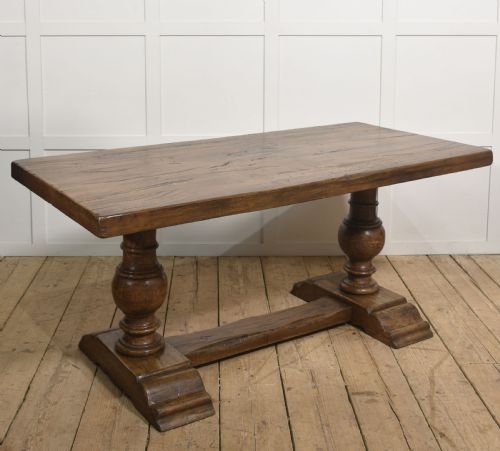


Oak Farm Dining Table
An oak farm dining table brings decades of honest utility and generous proportions straight into a modern kitchen or dining hall.
Oak Farm Dining Table
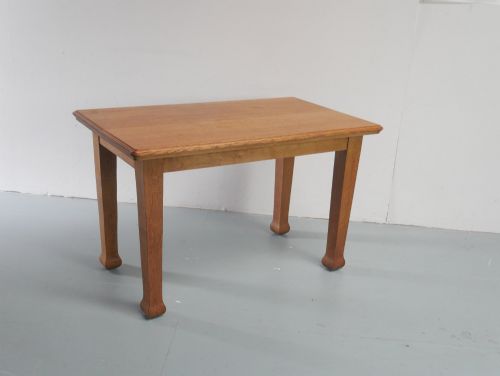
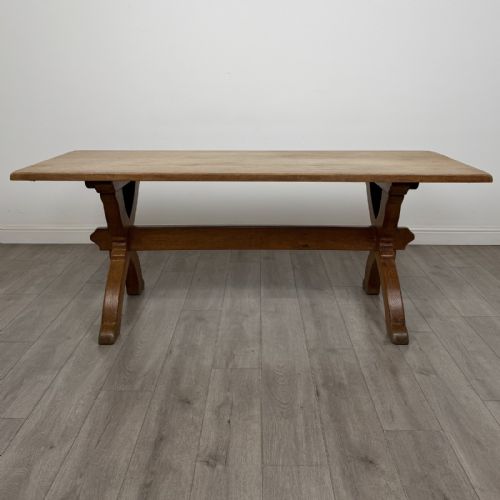
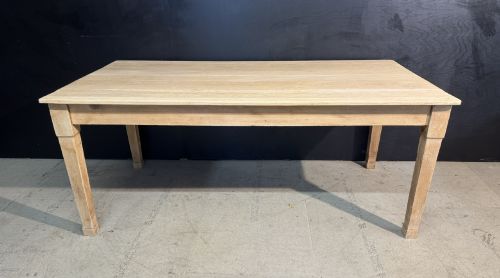
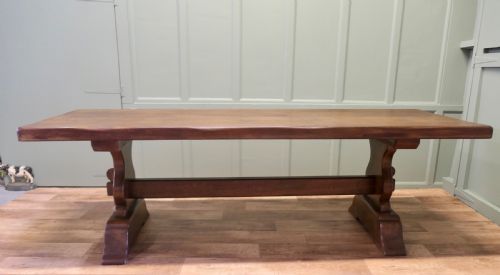
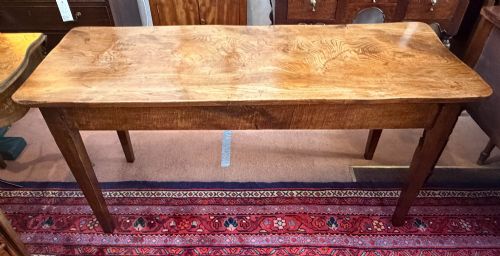
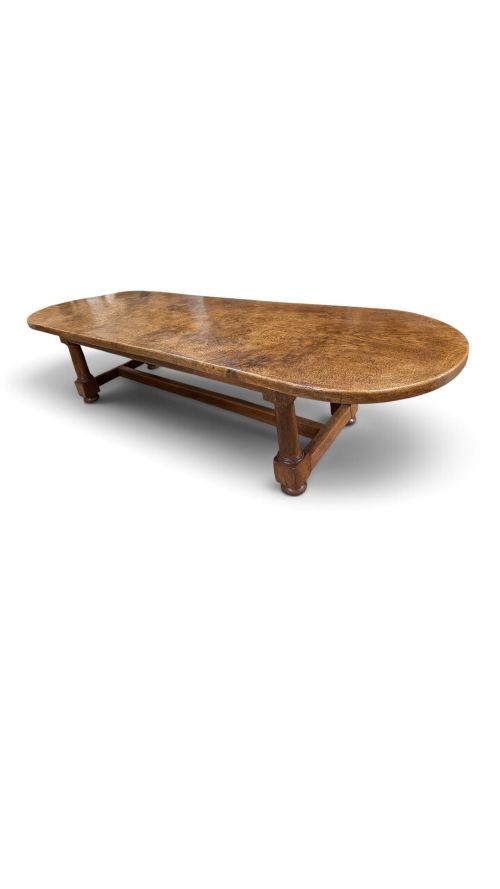
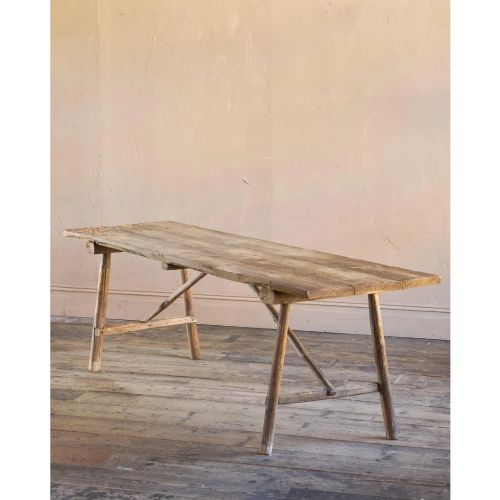
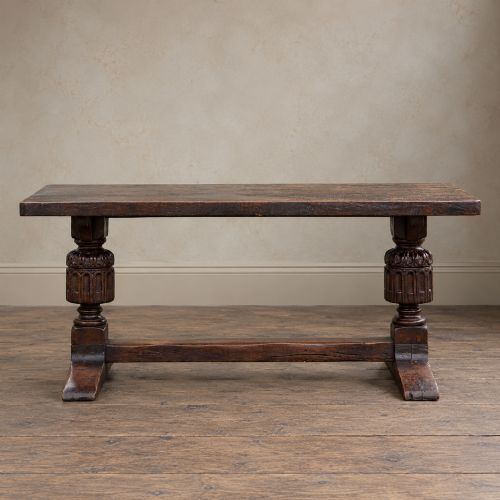
When searching for an oak farm dining table, buyers encounter robust refectory boards, trestle bases and plank-top kitchen tables spanning from the seventeenth century through to the Edwardian era and the nineteen-twenties. The pieces appearing most frequently range from nineteenth-century French country formats to English vernacular refectory designs built for heavy communal dining.
Makers and workshops across Britain and France shaped these boards from solid local timber, yielding substantial lengths suited to large gatherings. Surviving examples demonstrate how domestic and institutional kitchens relied on thick timber tops supported by pegged joints and substantial legs.
Materials and Construction
Makers relied principally on solid oak, frequently paired with elm for single planks or supported by pine and softwood frames in secondary areas. Fruitwood and beech also appear in regional European workshop traditions, adding subtle tonal variation to provincial frames.
Joinery depended on traditional pegged mortise and tenon methods, anchoring thick timber boards to heavy trestles or four-legged underframes. Carpenters selected slow-grown heartwood to withstand generations of daily friction, moisture and movement.
Oak Farm Dining Table Retail Price Guide 2026
Typical asking prices for oak farm dining table among the pieces listed under this phrase on Sellingantiques today, from the lower quarter to the upper quarter. They describe what is for sale here now, not the wider market.
Listings feature oak, elm, pine, fruitwood, and weathered timber across periods ranging from the seventeenth century to the nineteen-thirties.
Substance and Proportion
Quality rests in the integrity of the timber top, where single-plank surfaces and deep, heavy boards command greater respect than multi-board assemblies. The presence of original stretchers, undisturbed pegged joinery and genuine period patination elevates a piece far above later provincial reconstructions.
Proportion and stance dictate the visual weight of the furniture, distinguishing restrained seventeenth-century refectories from robust nineteenth-century farmhouse forms. Tables retaining their original untreated or naturally bleached surfaces show superior historical honesty compared to overly stripped or heavily refinished examples.
Heals Of London
The Oak Farm Dining Table Glossary
- Refectory table
- A long dining table originally built for monastic dining halls and later adapted for domestic country houses. These pieces typically feature heavy trestle or four-legged bases connected by a low central stretcher.
- Plank top
- A table surface constructed from multiple parallel boards or, in superior examples, a single wide board running the full length of the table. Carpenters joined these boards using tongue and groove or dowels to accommodate natural timber expansion.
- Trestle base
- A support structure consisting of two or more upright frames connected by a horizontal beam or stretcher. This design allows maximum legroom along the length of large dining tables.
- Parquetry
- A geometric mosaic of wood pieces used for decorative surface inlay. French provincial workshops frequently employed this technique on tabletops.
- Patina
- The surface sheen and mellow colour developed by timber over centuries of exposure, handling and polishing. This quality signals age and authentic usage.
Oak Farm Dining Table: Frequently Asked Questions
How do I clean an antique oak table?
Wipe surfaces gently using a slightly damp cloth, avoiding harsh chemical sprays or modern detergents that strip the finish. Dry the timber immediately to prevent moisture rings from forming on the aged grain.
Apply a traditional beeswax occasionally to nourish the dry wood and maintain the natural lustre. Buff the surface with a soft brush once the wax has dried.
Can I use these tables daily?
These pieces were originally constructed for heavy daily use in farmhouses and monastic refectories, making them exceptionally durable for modern dining. Solid timber withstands active households well when protected from excessive heat and direct moisture.
Use coasters and heat mats to safeguard the historical finish from water damage or scorching. Regular use only enhances the character and depth of the surface patina.
How do I date an oak table?
Examine the underside and joints for hand-cut peg holes, tool marks and the method used to secure the top to the frame. Hand-sawn boards and irregular timber thicknesses usually point toward earlier seventeenth or eighteenth-century construction.
Compare the stretcher placement and leg turning style against documented vernacular furniture types from Britain and France. Secondary woods like pine or elm can also help narrow down the regional origin and decade.
Are single plank tops better?
Single plank tops are prized for their visual continuity and the sheer maturity of the ancient tree required to yield such width. They represent a more uncommon form of construction compared to multi-board surfaces.
Multi-board tables remain entirely authentic and stable, often showing wonderful grain variation across the width. Both configurations serve dining needs equally well depending on personal aesthetic preference.