
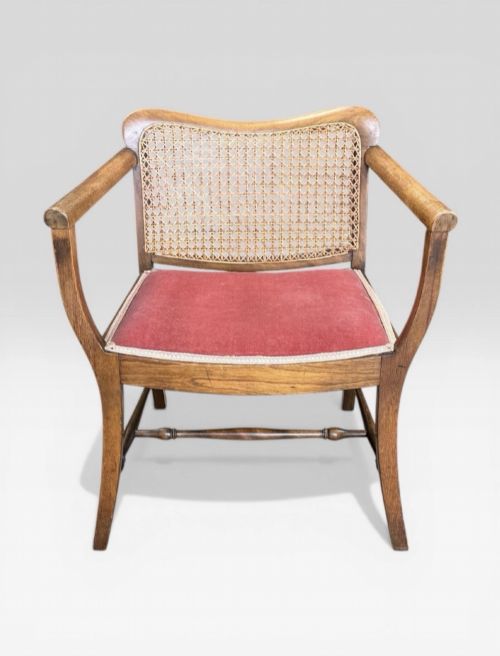


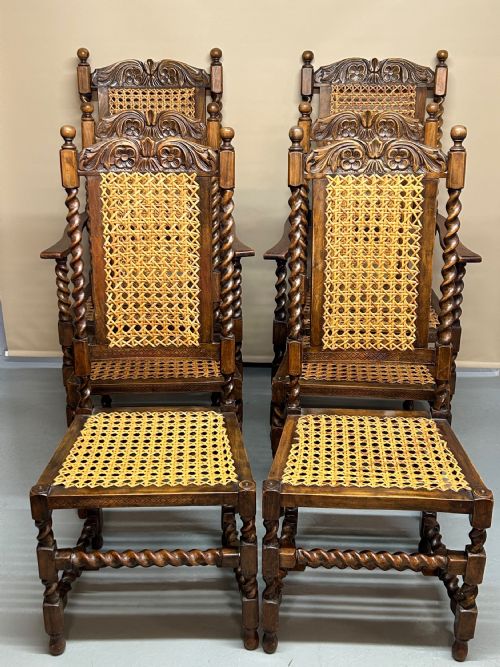


Oak Bergere Chair
An oak bergere chair brings distinctive woven cane panels and a solid timber frame into a room, offering both traditional character and comfortable daily seating.
Oak Bergere Chair
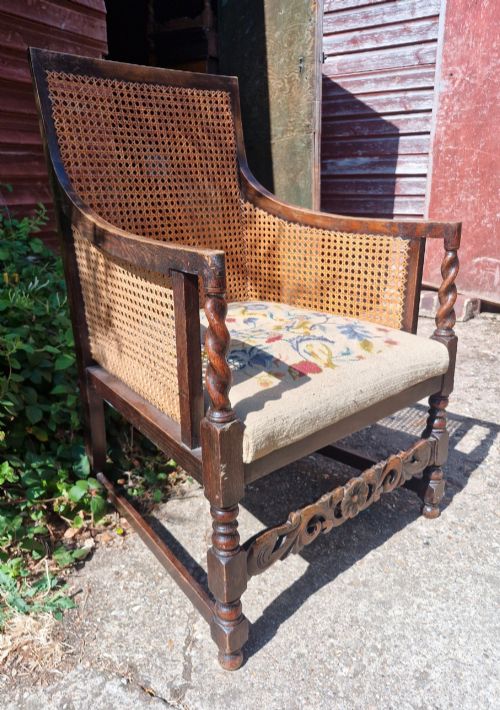
An oak bergere chair combines a solid timber framework with woven cane panels on the back and sometimes the sides. When searching for an oak bergere chair, buyers encounter single armchairs, library chairs, and matching suites originating predominantly from the nineteenth and early twentieth centuries.
The form appears in various domestic contexts, ranging from fireside armchairs and desk chairs to sets of dining chairs. Victorian and Edwardian examples sit alongside pieces referencing earlier Carolean and Jacobean Revival styles, reflecting changing interior tastes across decades.
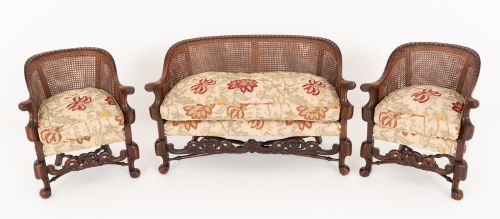
Armchairs and tub chairs dominate the available selections, frequently accompanied by upholstered cushions in leather, velvet, or tapestry fabric. Smaller childs versions and multi-piece seating suites also emerge within these periods.
Materials and construction methods
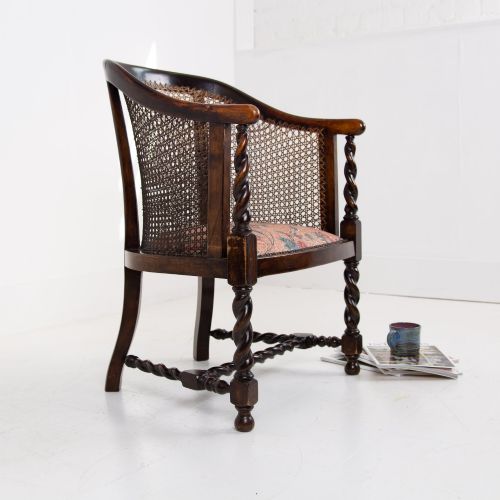
Makers constructed the structural frames primarily from oak and occasional associated hardwoods like beech, shaping the timber through turning, carving, and joinery. Frames often display decorative elements such as barley twist supports, carved stretchers, and exposed wood framing.
Caning material, including standard cane and split cane, was hand-woven through holes drilled in the frame to form tight, supportive panels for seats and backs. Double caned versions feature woven work on both exterior and interior surfaces.
Upholstered elements rely on traditional textiles like leather, velvet, fabric, and woolwork, secured over sprung or drop-in seat foundations to provide additional comfort.
Miniature childs bergere chairs appear alongside full-sized library armchairs, offering tiny caned seating for past nurseries.
Distinguishing quality in construction and material
The standard of a piece rests heavily on the crispness of the timber carving and the tightness of the frame joints. Finely executed turnings and deep, detailed relief work elevate an example above plain, utilitarian production.
The preservation and intricacy of the cane work define another level of excellence, particularly where double caning or split cane has been employed without breakage or clumsy repairs. Original or sympathetic surface finishes, whether polished oak or bleached timber, preserve the integrity of the piece.
James Shoolbred·Charles Bevan·James Lamb·Gillows of Lancaster
The Oak Bergere Chair Glossary
- Bergere
- An enclosed upholstered armchair featuring wooden framing and cane panels. The style originated in France before influencing British cabinet makers.
- Cane
- Woven rattan material used for chair backs and seats. It provides a flexible yet supportive surface.
- Carolean Style
- A decorative aesthetic popular during the late seventeenth century, characterised by rich carving and scrolling motifs. Later revival pieces imitate this ornate vocabulary.
- Barley Twist
- A turned woodwork detail resembling a twisted rope. It appears frequently on the legs and stretchers of Victorian seating.
- Drop-in Seat
- A removable upholstered seat frame that drops into a rebate within the chair rails. It allows straightforward reupholstery.
Oak Bergere Chair: Frequently Asked Questions
How do I care for cane panels?
Keep cane panels clean by dusting them gently with a soft brush and wiping them with a damp cloth occasionally to maintain moisture in the rattan fibres.
Avoid placing these chairs directly next to intense heat sources or in overly dry rooms, which can cause the natural material to become brittle and snap.
Can I replace the seat cushions?
Most armchairs feature loose squab cushions upholstered in leather, velvet, or fabric that can be easily updated or replaced to match your interior.
Ensure that any replacement cushion maintains the correct depth and firmness to support the seated weight without straining the cane base beneath.
Were these chairs used at desks?
Yes, specialised desk chairs and tub chairs were manufactured with lower profiles or swivel mechanisms to suit study and library environments.
These pieces combined the supportive curved back of a bergere with mobility or proportions suited for writing tables.
How do I distinguish Edwardian from Victorian examples?
Victorian pieces often display heavier proportions, darker timber finishes, and deeper carved ornamentation such as barley twists or elaborate crest rails. Edwardian variations tend to lean towards lighter oak tones, slender frames, and refined French-inspired revival styles.