




Oak Barrel Stand
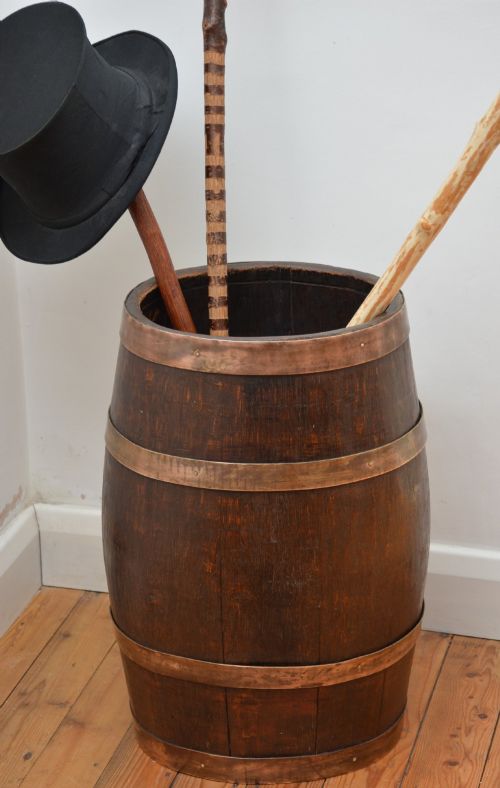
An oak barrel stand brings solid country house character to a hallway, offering a sturdy vessel for walking sticks and umbrellas.
Oak Barrel Stand
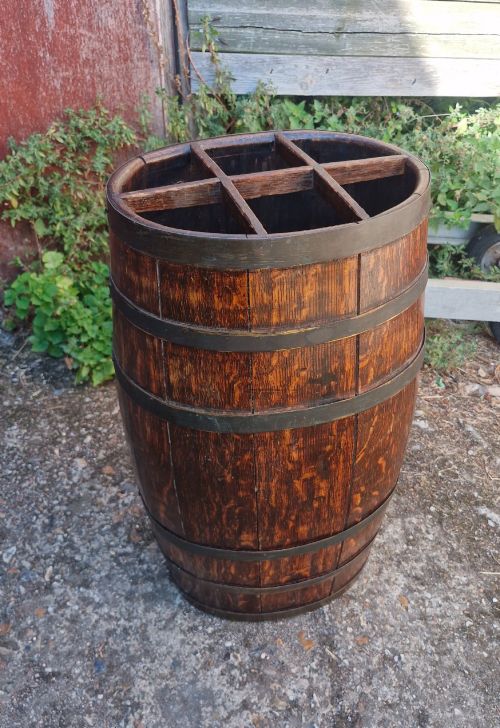
An oak barrel stand takes the form of coopered vessels designed primarily to hold walking sticks and umbrellas in a hallway or boot room. You will frequently encounter Victorian and Edwardian examples fashioned with sturdy wooden staves.
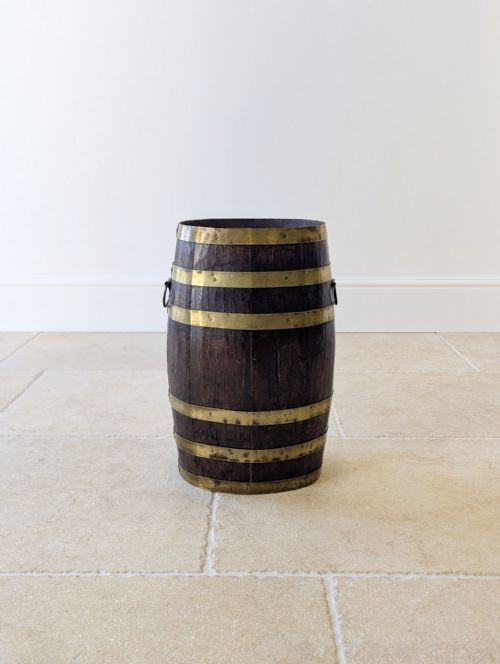
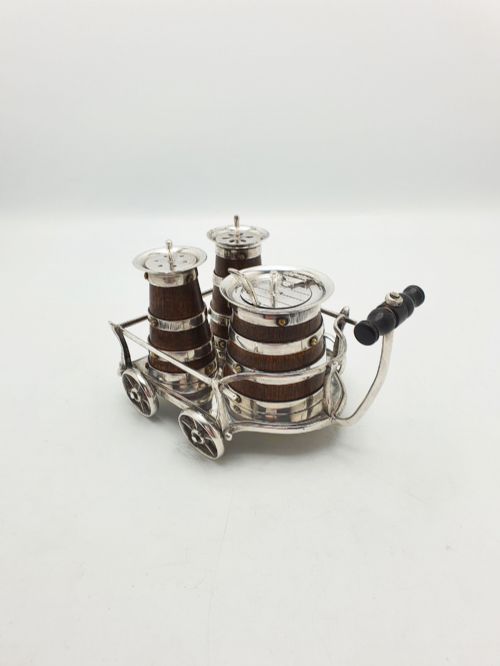
The selection here encompasses coopered barrels fitted with umbrella loops, alongside jardinieres, butter churns on stands, and condiment cruet sets. Most pieces date from the nineteenth and early twentieth centuries, reflecting rural and country house aesthetics.
Makers utilised traditional woodworking methods to shape the staves, creating cylindrical or oval vessels suitable for domestic use. These functional objects range from simple rustic items to decorative pieces featuring heraldic motifs.
How they were made
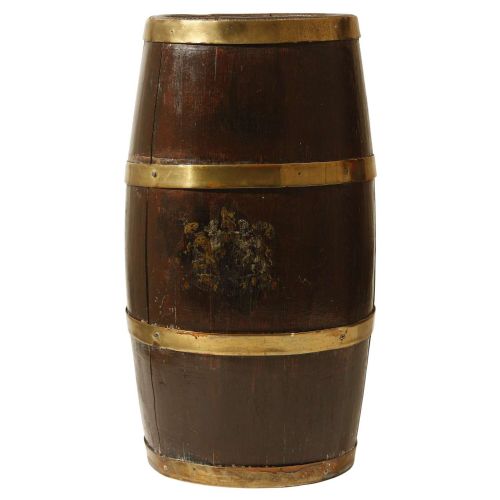
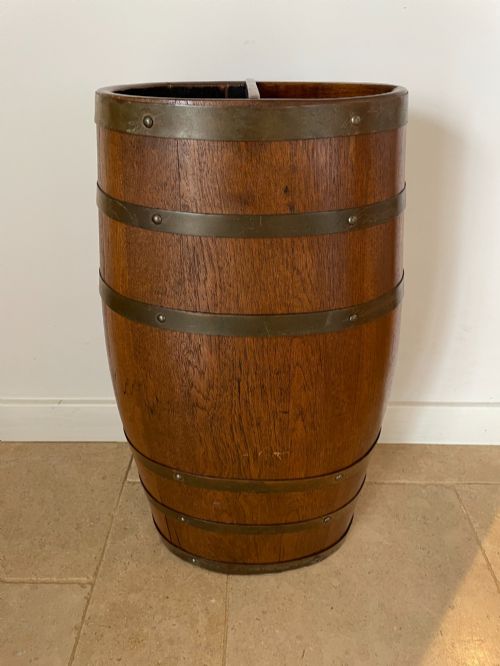
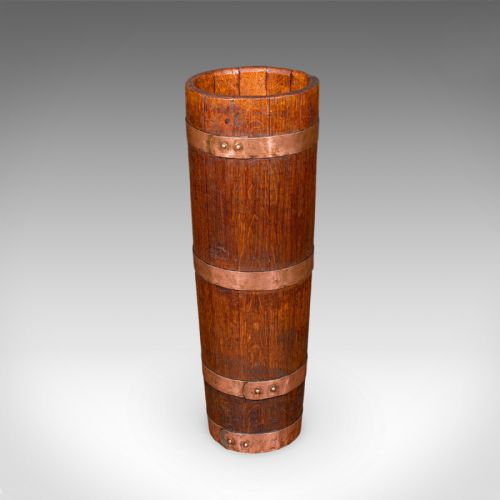
The construction relies on coopered oak staves shaped to form tight barrels, bound securely with bands of brass, copper, or iron. Metal braces provide structural integrity while adding a distinct decorative contrast to the warm timber.
Makers selected seasoned oak for its durability and grain, assembling the staves by hand before attaching metal hoops around the circumference. Some examples incorporate cast brass umbrella loops or handles to assist with daily use in busy households.
Oak Barrel Stand Retail Price Guide 2026
Typical asking prices for oak barrel stand among the pieces listed under this phrase on Sellingantiques today, from the lower quarter to the upper quarter. They describe what is for sale here now, not the wider market.
Listings span the Victorian and Edwardian periods, featuring oak combined with brass, copper, and iron bindings.
What varies in quality
Quality rests in the precision of the cooperage and the richness of the oak grain across the staves. Superior examples display tight joints and substantial metal binding that remains secure and well-fitted to the timber.
The presence of original mounts, such as cast brass braces or specific heraldic elements like a coat of arms, elevates an ordinary utilitarian vessel into a notable decorative furnishing. The overall proportion and original finish determine the visual weight of the piece in an interior.
R.A. Lister
The Oak Barrel Stand Glossary
- Coopered
- Constructed from curved wooden staves bound together with metal hoops, a technique traditionally used for making casks and barrels.
- Stave
- One of the narrow vertical strips of oak fitted together to form the curved sides of a barrel or stand.
- Jardiniere
- An ornamental pot or stand designed to hold plants or flowers, often sharing similar coopered construction.
- Butter churn
- A domestic dairy vessel used for shaking cream into butter, occasionally found mounted on a wooden stand.
Oak Barrel Stand: Frequently Asked Questions
What are oak barrel stands used for?
These coopered vessels serve primarily as practical holders for walking sticks, parasols, and umbrellas in hallways or entrance porches.
Alternative forms found within this group include planters for indoor greenery, butter churns, and table bases adapted from barrels.
How do I date an oak barrel stand?
Dating relies on observing the construction methods, the type of metal used for the bands, and the overall style associated with periods like the Victorian or Edwardian eras.
Examine the patination of the oak and the fixings, as older examples from the nineteenth century display hand-finished cooperage details distinct from later manufacturing.
Are brass bands original to the barrels?
Most period pieces retain their original brass, copper, or iron bindings fitted snugly around the timber staves to hold them in tension.
Original metalwork typically shows honest age-related tarnishing and surface wear consistent with the surrounding oak.
How do I care for an oak barrel stand?
Maintain the timber by applying a suitable wax polish periodically to preserve the moisture and natural lustre of the oak grain.
Avoid placing the stand in damp locations or directly beside heat sources that might cause the staves to dry out and shrink.