




Nineteenth Century Slate
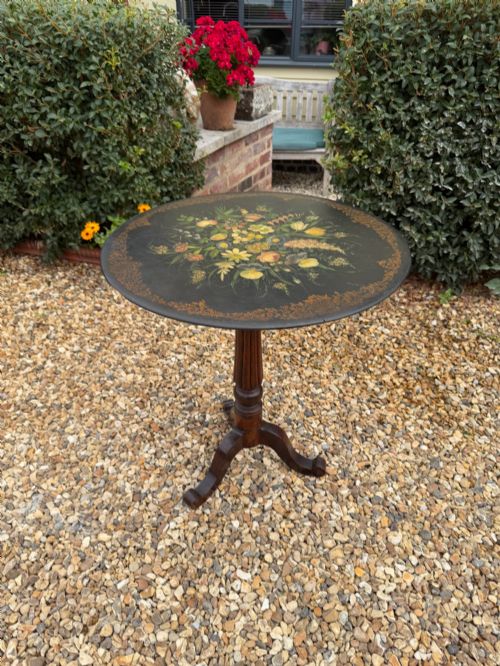
Nineteenth century slate offers a robust and striking medium for Victorian mantel clocks, architectural models and tables.
Nineteenth Century Slate
When you search for nineteenth century slate, you encounter a robust group of objects that span the Victorian era, utilising heavy stone for domestic utility and ornament. These items range from architectural models of fire surrounds to heavy mantel clocks and slate-topped tables.
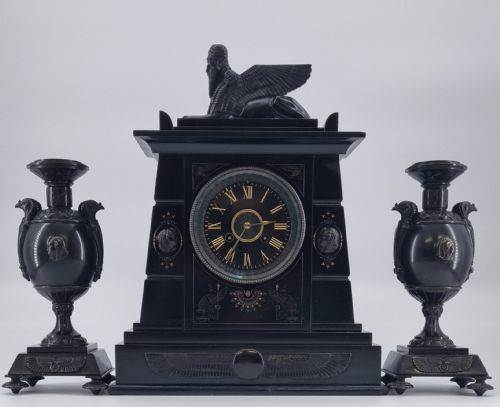
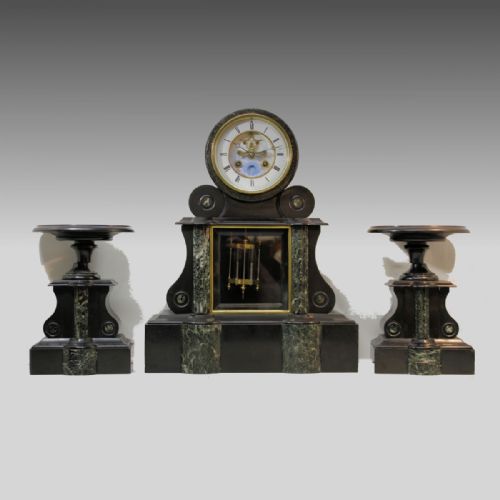
The versions you are most likely to meet on this page are Victorian mantel clocks and decorative garnitures, often paired with marble or bronze mounts. These pieces display the characteristic dark or variegated tones of the stone, shaped to suit mid to late nineteenth-century interiors.
How nineteenth century slate pieces were made
Maker's workshops built these objects using dense black or Welsh slate, frequently combined with marble, brass, and gilt metal. Craftsmen carved and polished the stone surfaces, sometimes incorporating inlaid decoration or architectural details.
In clockmaking and ornamental sets, heavy slate blocks house mechanical movements while supporting bronze or ormolu mounts and garnitures. Architectural models demonstrate precise masonry techniques, mimicking full-scale stone and slate fireplaces in miniature.
Nineteenth Century Slate Retail Price Guide 2026
Typical asking prices for nineteenth century slate among the pieces listed under this phrase on Sellingantiques today, from the lower quarter to the upper quarter. They describe what is for sale here now, not the wider market.
What varies in quality
The standard of these objects depends upon the precision of the stone cutting, the crispness of any inlaid marble, and the integration of subsidiary materials like bronze and brass. Finer examples display meticulous polishing of the slate surfaces and harmonious proportions in architectural forms.
Lesser pieces rely on plain, unadorned blocks without the refined inlay or balanced garniture sets found in superior Victorian examples. The sophistication of the clock movements and the detail of the metal casting further separate standard domestic items from exceptional works.
The Nineteenth Century Slate Glossary
- Mantel clock
- A clock designed to sit on the shelf above a fireplace, frequently housed in heavy slate or marble cases during the Victorian period.
- Garniture
- A set of decorative ornaments, such as a mantel clock accompanied by matching candelabra or vases, displayed together on a surface.
- Ormolu
- Gilt-bronze decorative mounts applied to furniture and clock cases, common in French and English pieces of the nineteenth century.
- Architectural model
- A small-scale representation of a building element, such as a fire surround carved from local stone or slate.
Nineteenth Century Slate: Frequently Asked Questions
What is nineteenth century slate?
Nineteenth century slate refers to decorative and functional objects produced during the Victorian era using dense stone materials. These items include heavy mantel clocks, architectural models, and topped tables.
The stone provides a durable and weighty foundation, allowing makers to apply polished finishes, marble inlays, and metal mounts suited to formal period interiors.
How were slate clocks used?
Slate clocks served as prominent timepieces and decorative centerpieces on drawing room mantelpieces. Their substantial weight and dark surfaces lent an air of solidity to Victorian parlours.
They were frequently accompanied by matching garnitures or candelabra to create a balanced display across the fireplace shelf.
How do I identify Victorian slate?
Victorian slate pieces are characterised by dense, dark stone bodies, often paired with contrasting marble inlays or gilt-bronze mounts. Look for the distinct weight and polished finish typical of mid to late nineteenth-century manufacture.
Styles range from plain architectural forms to elaborate Egyptian Revival or French-influenced clock cases.
Are architectural models common?
Architectural models in slate represent a specialised form of stonemasonry from the period, depicting items like fire surrounds in miniature. They demonstrate the technical skill of regional craftsmen working in areas such as North Wales.
These pieces function purely as decorative display objects rather than utilitarian furnishings.