




Nineteenth Century Desk Lamp
A nineteenth century desk lamp brings heavy cast brass, patinated bronze and marble into a workspace, offering solid period weight and antique character.
Nineteenth Century Desk Lamp
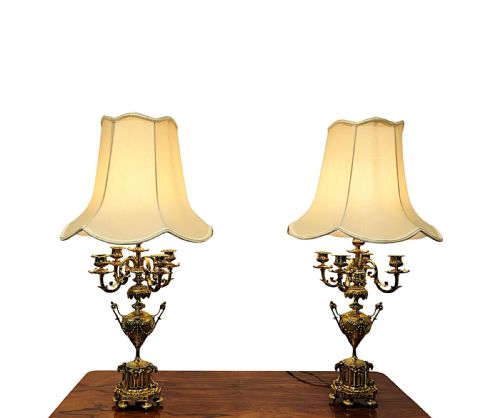
A nineteenth century desk lamp generally takes the form of a converted oil lamp, candelabrum or classical column rather than a piece built from scratch for electric light. The examples found here span the Victorian era, the French Empire period and the years around eighteen hundred, often utilising heavy metals and stone bases.
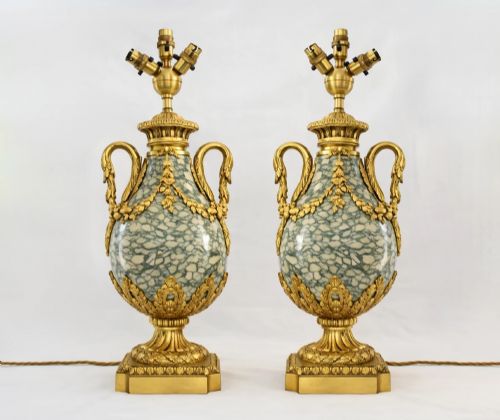
Buyers encounter French ormolu, silver-plated Corinthian columns, and Japanese cloisonné adapted for modern illumination. Many pieces began life as cassolettes, vases or decorative bronzes before gaining electrical fittings during conversion.
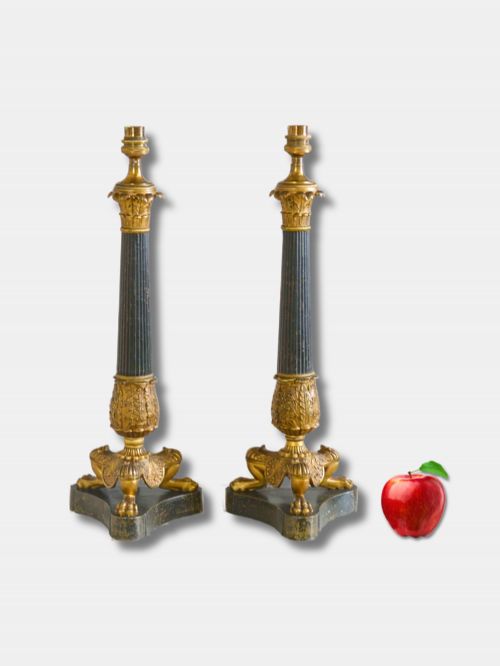
The selection ranges from large architectural column lamps with lion's paw feet to figural pieces featuring cherubs or classical figures. Ormolu-mounted rouge marble and gilt bronze dominate the continental offerings, while British pieces favour silver-plated brass.
Materials and construction
Foundry work relied on heavy casting in brass, bronze and spelter, often finished with mercury gilding or patination. Ormolu mounts and gilt metal enrich the French pieces, whilst silver plating covers the classical columns produced in Britain.
Stonework provides substantial bases for these lamps, with white and rouge marble appearing frequently alongside faux lapis lazuli columns. Fabric shades and painted porcelain panels, including Sèvres-style sections, complete the mixture of materials.
Many of these objects started as functional oil lamps or decorative urns, meaning the construction involves structural adaptation for wiring. Metal components were threaded, drilled or fitted with collars to hold electrical hardware securely.
Nineteenth Century Desk Lamp Retail Price Guide 2026
Typical asking prices for nineteenth century desk lamp among the pieces listed under this phrase on Sellingantiques today, from the lower quarter to the upper quarter. They describe what is for sale here now, not the wider market.
Listings feature brass, ormolu, marble, and patinated bronze across Victorian and French Empire periods.
Differences in quality
The quality of a nineteenth century desk lamp rests largely on the crispness of the metal casting and the depth of the original gilding or patination. Finer pieces display sharply chiselled acanthus leaves on Corinthian capitals and expressive detailing on figural bronzes, whereas lesser items show softer edges from worn moulds.
Materials dictate the upper tier of the range, where heavy marbles, fire-gilded ormolu and signed artistic bronzes take precedence over spelter and lightweight brass. The weight of the base and the precision of the joinery between stone and metal indicate the original maker's investment in the piece.
Emile Picault·Gaggenau·Samson·Sèvres
The Nineteenth Century Desk Lamp Glossary
- Ormolu
- Gilded bronze produced by applying a mercury and gold amalgam to cast bronze before heating. The process creates a rich, durable golden surface seen on French Empire and Louis XVI style lamps.
- Cassolette
- A decorative vessel shaped like a vase or urn, featuring a reversible lid that shows either a solid top or a incense burner. Many period cassolettes were converted into table lamps.
- Spelter
- A zinc alloy used as a cheaper alternative to bronze during the nineteenth century. It takes patination well but lacks the heavy density and sharp detail of true bronze.
- Patinated bronze
- Bronze that has been chemically treated to alter its surface colour from bright golden brown to deep chocolate or green. This treatment protects the metal and accentuates cast details.
- Corinthian column
- An architectural column style featuring an ornate capital decorated with carved acanthus leaves. It serves as a popular column form for nineteenth century metal table lamps.
Nineteenth Century Desk Lamp: Frequently Asked Questions
Are these lamps converted from oil lamps?
Many nineteenth century desk lamps began life as oil lamps, vases or candelabra before receiving modern electrical wiring and fittings. This conversion history explains the unusual heights and weighted bases found across the selection.
Collectors appreciate this adaptive history because it preserves decorative metalwork and stone bodies that would otherwise have lost their domestic function.
How do I identify a French Empire lamp?
French Empire pieces typically feature heavy fire-gilded ormolu, classical architectural motifs, and patinated bronze figures. Look for precise casting, strict symmetry, and decorative themes inspired by antiquity.
These lamps often incorporate marble plinths and gilt mounts that reflect the grand interior style of the early nineteenth century.
How do I clean an ormolu lamp?
Ormolu surfaces require gentle dusting with a soft, dry cloth to prevent the accumulation of grit in recessed chasing. Avoid abrasive metal cleaners and harsh chemical polishes, which strip away the thin layer of gold.
If the metal requires more attention, a specialist conservator should assess the piece to preserve the original mercury gilding.