




Neoclassical Marble Compote
A neoclassical marble compote brings the monumental discipline of antiquity directly onto a tabletop through sculpted stone and cast metal.
Neoclassical Marble Compote
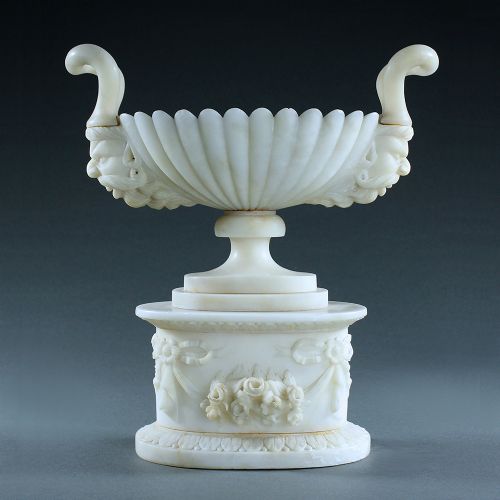
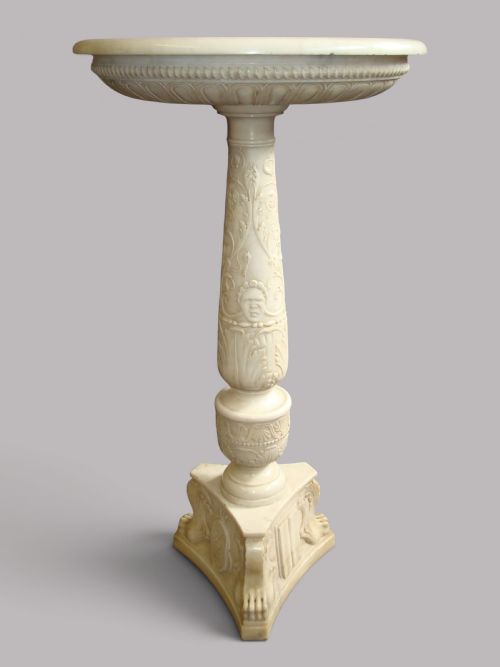
A neoclassical marble compote takes the form of a shallow tazza, an ornamental urn, or a pedestal vessel designed for display. These objects draw heavily on classical antiquity and the Grand Tour tradition of the eighteenth and nineteenth centuries.
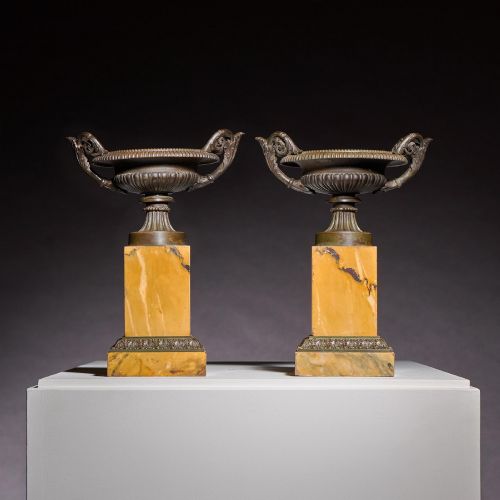
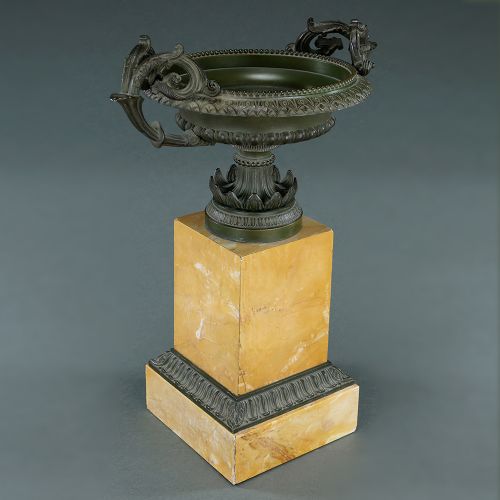
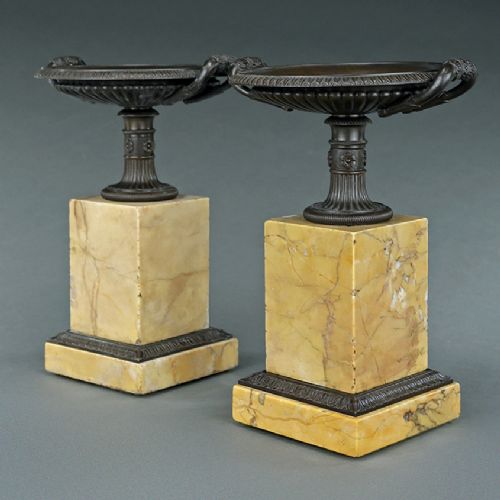
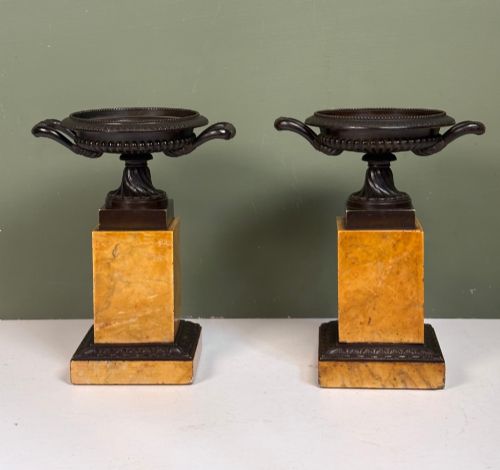
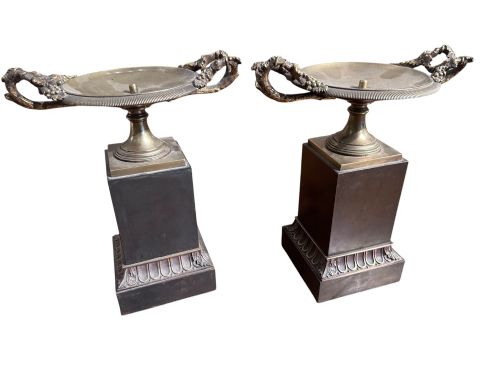
The versions met most frequently on this page are nineteenth-century French productions, often presented as pairs of library tazzas or larger decorative vessels. They combine carved stone bowls with classical metal mounts in the French Empire style.
Makers shaped these vessels from distinctive geological specimens, creating substantial decorative objects intended to anchor a room. They survive as tangible echoes of classical architecture translated into domestic ornamentation.
How they were made
The construction relies on the union of carved stone and cast metal, uniting heavy marbles like Siena, red marble, and Rosso Antico with bronze and ormolu. Artisans turned and carved the stone bowls on lathes or by hand, finishing the surfaces to a smooth polish.
Foundry workers cast the bronze and ormolu components, applying gilding or patination to the metal mounts that support or encircle the marble basins. These metal elements include classical handles, collars, and stepped pedestals that secure the stone sections together.
Neoclassical Marble Compote Retail Price Guide 2026
Typical asking prices for neoclassical marble compote among the pieces listed under this phrase on Sellingantiques today, from the lower quarter to the upper quarter. They describe what is for sale here now, not the wider market.
Listings feature nineteenth-century French and Italian pieces in Siena marble, malachite, bronze, and ormolu.
What varies in quality
Quality reveals itself in the geological selection of the marble and the crispness of the stone carving. Distinctive figuring, rich colouration in Sienna or malachite specimens, and precision in the turned profiles separate standard vessels from superior examples.
The refinement of the bronze and ormolu mounts distinguishes the top of the range. Finely chased metalwork, secure joinery between stone and metal, and monumental proportions indicate a higher level of workshop execution.
The Neoclassical Marble Compote Glossary
- Tazza
- A shallow bowl or vase mounted on a stem and foot, used primarily for display in neoclassical interiors. These vessels mimic ancient drinking and serving forms.
- Ormolu
- Gilded bronze produced by applying a mercury-gilding process to cast brassy bronze. This technique creates a rich, durable golden surface on decorative mounts.
- Grand Tour
- The traditional journey of European educational travel undertaken by upper-class young men through Italy and France. Tourists acquired classical antiquities and souvenirs such as marble tazzas.
- Siena Marble
- A distinctive yellow and brownish-red marble quarried in Italy, highly prized for its vibrant natural figuring. Nineteenth-century French makers utilised it for striking contrast against dark bronze.
Neoclassical Marble Compote: Frequently Asked Questions
What is a neoclassical marble compote?
A neoclassical marble compote is a decorative vessel or tazza fashioned from carved stone and mounted with bronze or ormolu. These objects date predominantly from the nineteenth century and reflect classical design influences.
They serve as ornamental centerpieces or mantel displays, combining the weight of natural marble with the sculptural detail of French metalwork.
How were these vessels used originally?
These pieces functioned as decorative objects within libraries, drawing rooms, and studies during the nineteenth century. They were displayed on tables and pedestals rather than used for food or dining.
Their presence signalled an owner's classical education and engagement with the aesthetic traditions of the Grand Tour.
How do you style a marble compote at home?
Place a single large tazza or a matched pair on a solid surface such as a sideboard, mantelpiece, or library table where their weight and colour can be appreciated. They work well as standalone focal points without additional objects placed inside them.
Keep them away from direct heat sources and moisture to protect the polished stone surfaces and delicate metal patination.
How can you tell a nineteenth century piece apart?
Nineteenth-century examples frequently combine specific materials like Siena marble, Rosso Antico, or malachite with French bronze and ormolu mounts. The casting style and the specific geological varieties of stone align with production methods from this period.
Examining the underside of the base and the joinery between the stone bowl and the metal stem often reveals the construction techniques characteristic of the era.