

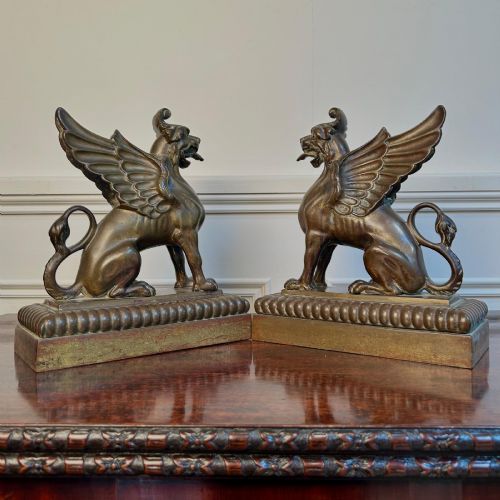


Neoclassical Lion Figures
Neoclassical lion figures capture the enduring severity of classical antiquity through bronze, marble, and serpentine forms designed to anchor a room with sculptural gravity.
Neoclassical Lion Figures
Neoclassical lion figures draw on ancient Roman and Greek archetypes, rendered in sculptural forms that range from recumbent beasts to seated pairs. These pieces frequently emerge from the Grand Tour tradition, reflecting the tastes of travellers acquiring souvenirs of Italian antiquity.
Visitors browsing this page will most commonly encounter bronze and marble interpretations spanning the nineteenth century. Forms vary from monumental Medici lions and recumbent Canova models to fountain heads and winged Venetian figures.
The objects take the shape of sculptures and garden statues, utilising materials like serpentine, stone, and cast metal alongside traditional bronze and marble. Pieces connect directly to historical precedents such as the Capitoline Lion and the sculptural work of Antonio Canova.
Materials and methods
Foundry casting brought bronze and metal to life, capturing the musculature and mane detail of seated and recumbent beasts. Patination on these metal works creates the dark or bronzed surfaces seen across nineteenth-century examples.
Carving defined the handling of solid marble, serpentine, and stone, allowing artisans to shape monumental proportions and intricate architectural elements. This subtractive method required careful planning to preserve the balance of figures like Una and the lion or classicizing recumbent forms.
Neoclassical Lion Figures Retail Price Guide 2026
Typical asking prices for neoclassical lion figures among the pieces listed under this phrase on Sellingantiques today, from the lower quarter to the upper quarter. They describe what is for sale here now, not the wider market.
Current listings feature materials ranging from traditional bronze and marble to serpentine, stone, and wood.
Qualities of the work
Quality rests in the fidelity of the casting and the crispness of the chisel work across mane and claw. Superior bronze casts retain sharp anatomical definition without softening the underlying musculature.
The choice of medium elevates a piece, with solid marble and genuine serpentine offering tactile depth superior to standard cast metal. Scale and proportion dictate the presence of the sculpture, distinguishing monumental pairs from smaller cabinet items.
The Neoclassical Lion Figures Glossary
- Grand Tour
- A traditional trip of Europe undertaken by upper-class European young men of sufficient means. Objects acquired on these journeys often replicate classical antiquities.
- Medici lions
- A pair of marble sculptures of lions, one with its paw upon a ball, originally Roman and later placed at the Villa Medici in Rome. They became popular subjects for later copyists.
- Serpentine
- A group of green silicate minerals often used as a decorative stone for carving. Its mottled appearance resembles snakeskin.
- Recumbent
- Lying down or resting in a horizontal position. Many lion figures adopt this relaxed yet alert posture.
Neoclassical Lion Figures: Frequently Asked Questions
What periods do these lion figures date from?
The pieces span the nineteenth century, including Georgian and Victorian eras, alongside twentieth-century works influenced by earlier revivals.
Dates range through the eighteen-fifties, seventies, and nineteen-hundreds, reflecting enduring enthusiasm for classical subjects.
How were these sculptures displayed originally?
Many figures served as decorative elements in grand interiors, libraries, or studies during the height of the Grand Tour.
Larger stone and marble examples were also suited for architectural placement or garden settings.
What materials are most common?
Bronze and marble appear frequently, alongside serpentine, stone, and cast metal.
Artists utilised these durable mediums to replicate classical textures and monumental presence.
How do I identify a Grand Tour piece?
Grand Tour pieces often replicate famous Roman or Venetian monuments in portable bronze or carved stone formats.
They reflect the specific tastes of nineteenth-century travellers collecting classical souvenirs in Italy.