

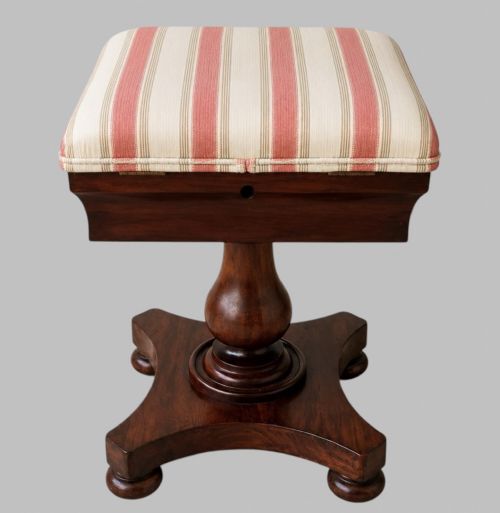


Needlework Storage Table
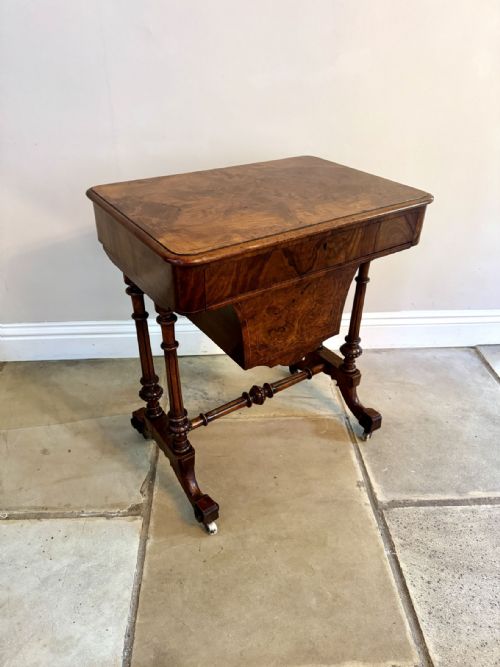
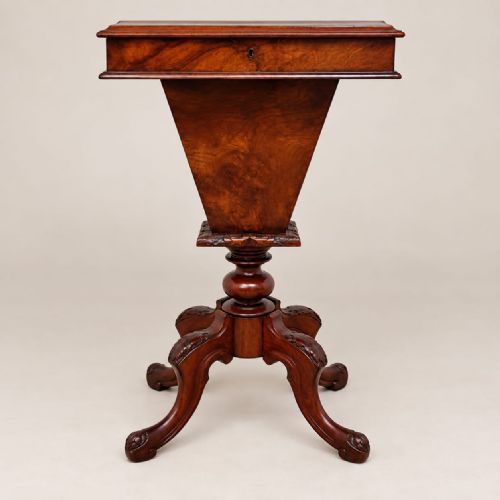
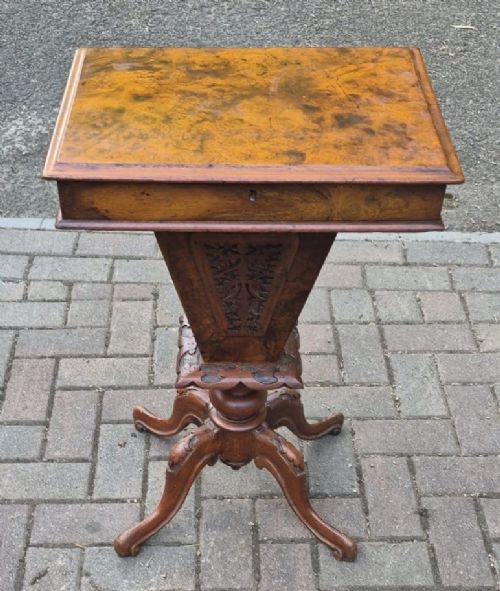
These needlework storage table examples combine practical craft storage with refined period timber, offering a dedicated spot for threads and tools.
Needlework Storage Table
A needlework storage table serves as a dedicated piece of furniture designed to house sewing supplies, threads, and textile projects within a tidy compartment. These functional items typically combine a tabletop surface with an integrated storage basket, box, or lower shelf tailored for handcrafts.
Buyers browsing this selection most frequently encounter Victorian walnut and mahogany iterations, often dating from the mid-nineteenth century onwards. Forms range from compact sewing boxes on stands to elaborate occasional side tables equipped with drop leaves and fitted interior trays.
How they were made
Cabinetmakers utilised dense timbers such as mahogany, walnut, and rosewood for the primary frames, frequently employing burr walnut veneers to create decorative patterned surfaces on the lids. These woods were often hand-carved or inlaid with lighter contrasting materials to accentuate the upper panels.
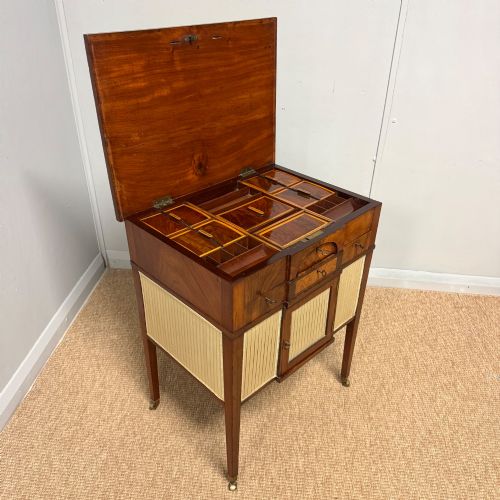
Interior compartments relied on fine joinery to partition small spaces for spools, needles, and pins, while suspended fabric bags or hanging storage wells were attached below to hold textiles. Brass hardware, including hinges, castors, and small locks, secured the lids and allowed the pieces to be moved easily around a drawing room.
Needlework Storage Table Retail Price Guide 2026
Typical asking prices for needlework storage table among the pieces listed under this phrase on Sellingantiques today, from the lower quarter to the upper quarter. They describe what is for sale here now, not the wider market.
Victorian etiquette demanded that needlework be instantly concealable when unexpected callers knocked, turning these tables into polite daytime hiding spots.
What varies in quality
The refinement of the timber selection largely dictates the standing of a piece, with figured burr walnut and richly grained rosewood sitting at the upper end of the scale. Plain secondary woods and simpler structural forms represent the more utilitarian end of the domestic spectrum.
Interior organisation also marks the distinction between standard workshops and master makers, particularly where fitted removable trays and intricate compartment dividers remain intact. Superior examples feature crisp carving, precise inlay work, and robust structural joinery that withstands daily use.
Waring & Gillow
The Needlework Storage Table Glossary
- Work table
- A multi-purpose piece of furniture featuring enclosed storage specifically designed for sewing materials and needlework tools. These items frequently double as writing or occasional lamp tables in period interiors.
- Burr walnut
- A prized timber veneer harvested from the knotty growths of walnut trees, displaying swirling, highly decorative grain patterns. Cabinetmakers used it on the principal display surfaces of finer nineteenth-century furniture.
- Drop leaf
- A hinged flap on the side of a table that can be raised to extend the surface area or lowered when space is at a premium. It allowed compact sewing tables to adapt to different social settings.
- Inlay
- A decorative technique where pieces of contrasting wood, metal, or shell are inserted into recesses flush with the surrounding surface. This method was often applied to the tops of Victorian work boxes to create geometric or floral motifs.
Needlework Storage Table: Frequently Asked Questions
What is a needlework storage table used for?
These pieces were originally created to keep sewing threads, needles, fabrics, and unfinished handcrafts neatly concealed yet accessible in a parlour or drawing room. The integrated storage compartments and hanging bags kept loose items from cluttering the main living spaces.
Today, they function as versatile side or lamp tables that retain their hidden storage compartments, making them useful for small items in modern rooms.
How do I identify a Victorian sewing table?
Victorian examples generally feature dense timbers like walnut, mahogany, or rosewood, often accompanied by turned legs, brass castors, and hinged lids. Look for internal wooden trays with tiny fitted compartments designed for spools and thimbles.
Many pieces from this era also incorporate a suspended fabric work bag beneath the main body to hold wools and larger textiles.
Are these tables sturdy enough for daily use?
Period sewing furniture was built from solid hardwoods using traditional joinery methods, making them structurally robust for everyday placement as side or lamp tables. The internal compartments and delicate hinges, however, require gentle handling to preserve their original mechanisms.
Placing them away from direct heat sources helps prevent the timber and decorative veneers from warping or splitting over time.
How do Regency and Edwardian styles differ?
Regency versions, often dating around the early nineteenth century, tend to feature classical lines, dark mahogany or rosewood timbers, and elegant brass mounts. They lean towards architectural restraint and refined proportions.
Edwardian interpretations from the early twentieth century are typically lighter in feel, sometimes utilising simpler mahogany or oak frames with understated detailing suited to more relaxed domestic interiors.