



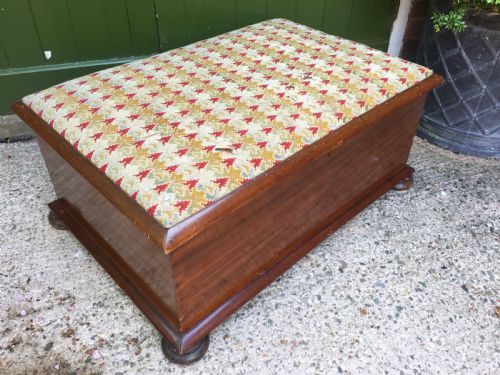
Needlework Storage Box
These needlework storage box pieces offer a practical home for sewing tools, combining period timber and fitted compartments in a traditional table or box.
Needlework Storage Box
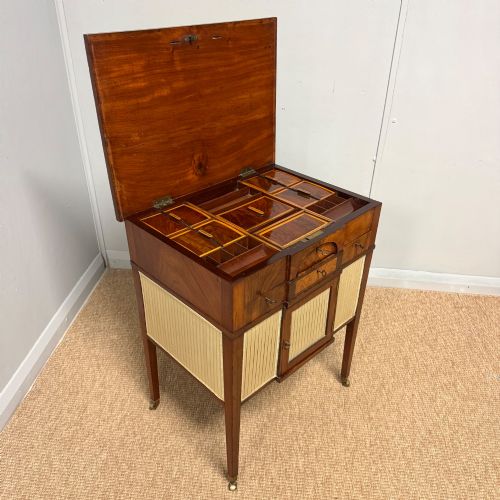
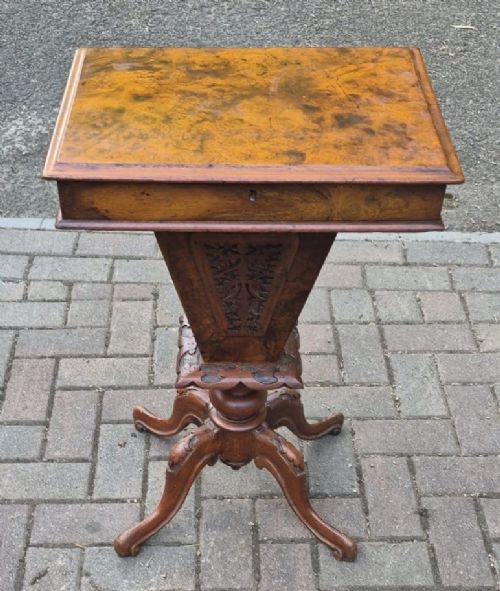
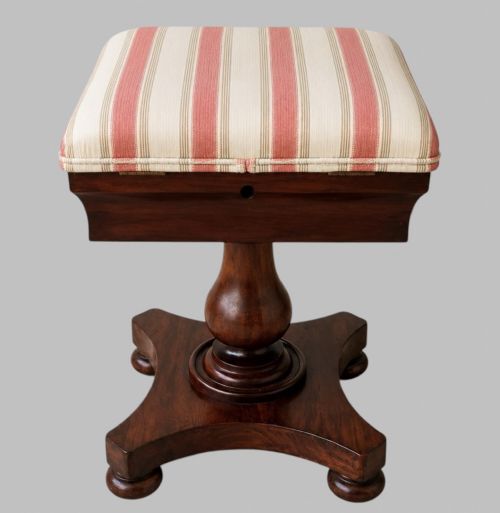
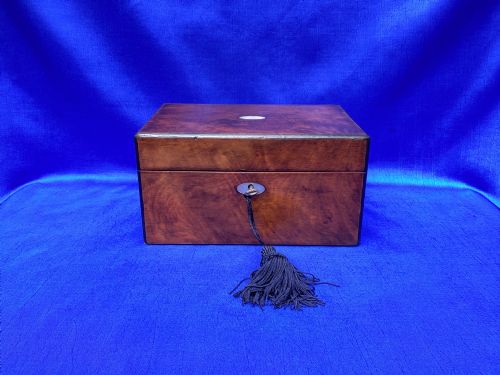
A needlework storage box is a dedicated receptacle designed to hold threads, needles, and sewing accessories within a tidy compartment. The pieces seen here span periods from the Regency era through to the Edwardian period, incorporating forms such as sewing boxes, work tables, and ottomans.
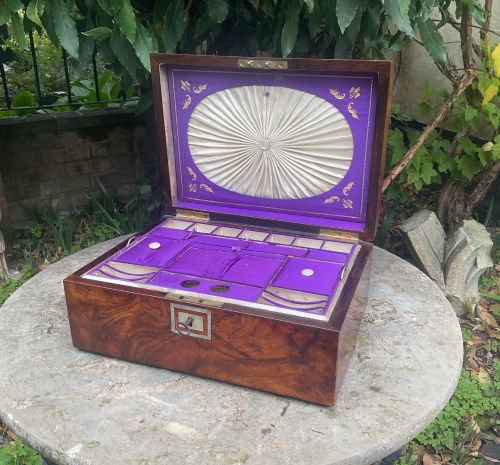
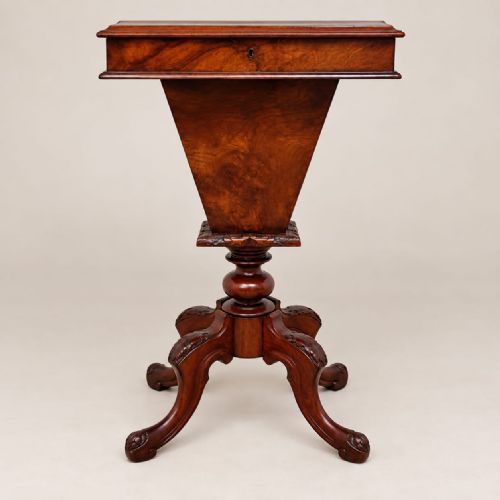
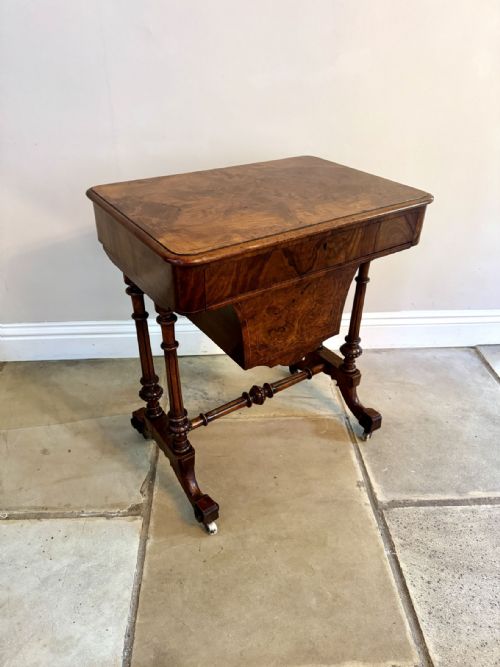
Buyers are most likely to meet walnut and mahogany variants on this page, often standing upon slender legs or resting as table boxes. Many incorporate internal trays and silk linings to organise small implements for daily use.
The styles range from plain Regency mahogany boxes to decorative Victorian Tunbridge Ware and figured walnut tables. Each variation serves the dual purpose of domestic utility and ornamental display.
What varies in quality
The distinction between a standard piece and a superior example rests in the choice of timber figure, such as burr walnut or figured mahogany, and the precision of the cabinetwork. Finer boxes display meticulous marquetry, such as Tunbridge Ware, or intricate carved details on the legs and frame.
Internal arrangement and the retention of original silk linings or fitted trays elevate the desirability of a sewing table. Robust joinery and well-fitted lids that close true indicate a higher standard of original craftsmanship.
Needlework Storage Box Retail Price Guide 2026
Typical asking prices for needlework storage box among the pieces listed under this phrase on Sellingantiques today, from the lower quarter to the upper quarter. They describe what is for sale here now, not the wider market.
Beneath the lid of a Victorian sewing table, tiny lidded compartments waited to guard ivory spools and needles from curious fingers.
Waring & Gillow
The Needlework Storage Box Glossary
- Tunbridge Ware
- A type of woodworking featuring minute mosaic decoration made from differently coloured woods arranged in geometric or pictorial patterns. This technique was used to ornament the lids of fine sewing boxes.
- Work Table
- A small piece of furniture fitted with drawers or a fabric bag underneath to hold sewing materials. These tables combined a usable surface with dedicated storage for domestic needlework.
- Ottoman
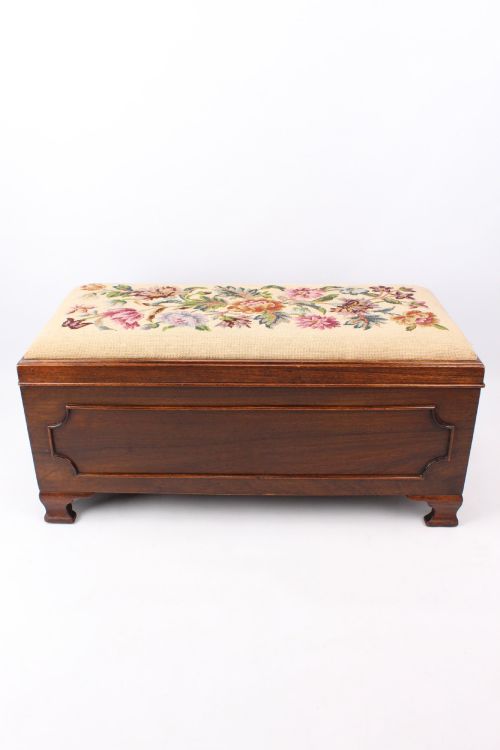
- A low upholstered seat or stool with a hollow interior for storage. In sewing contexts, these feature hinged tops covered in needlework such as gros-point.
- Figured Walnut
- Walnut timber possessing an attractive, irregular grain pattern prized for decorative cabinetwork. It is frequently seen on the exterior surfaces of Victorian sewing boxes.
- Gros-point
- A type of durable needlepoint embroidery stitched on canvas with wool yarn. It often forms the original decorative top of Victorian ottomans and stool seats.
Needlework Storage Box: Frequently Asked Questions
What is a needlework storage box used for?
A needlework storage box provides a secure and organised place to keep sewing threads, needles, thimbles, and fabric scraps. They were designed to sit in a parlour or bedroom for easy access during hand-sewing tasks.
Today, they serve the same practical function while adding period character to a room as a small side table or decorative box.
How do I tell a Regency sewing box from a Victorian one?
Regency pieces often feature clean architectural lines in rosewood or mahogany, sometimes with brass inlay or paw feet. They tend to look lighter and more classical in proportion.
Victorian examples frequently utilise figured walnut, heavier carving, and more elaborate internal fitted trays or Tunbridge Ware decoration on the lids.
Can I use a work table as a normal side table?
A work table functions well as a bedside table or a small lamp table next to a sofa. The top surface holds lamps or books, while the internal compartments or drawers store small household items.
Many period pieces blend easily into modern interiors while offering hidden storage space.
What are ottomans with needlework seats?
Ottomans with needlework seats combine a low upholstered stool with a hinged lid that opens to reveal a storage cavity. The top is typically worked in gros-point or similar heavy stitchery.
They were placed in living spaces to rest feet or provide extra seating while keeping sewing projects tucked away inside.