





Needlepoint Footstool Bench
These needlepoint footstool bench examples bring tactile warmth and traditional craftsmanship into a room.
Needlepoint Footstool Bench
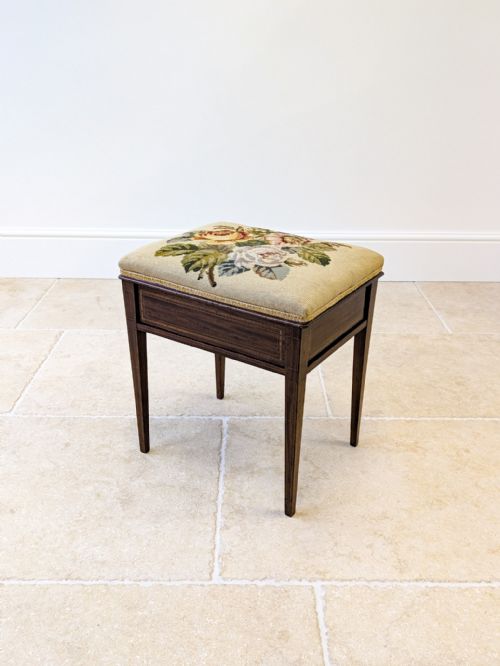
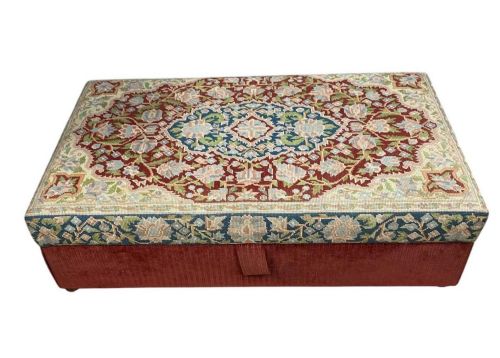
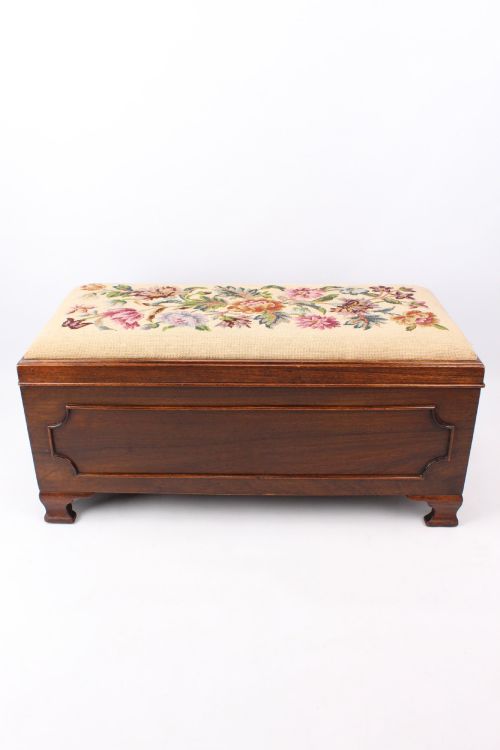
A needlepoint footstool bench serves multiple domestic purposes, appearing as low footstools, long dressing table stools, piano stools, and large centre ottomans. These pieces derive from periods spanning the Victorian era through to the early decades of the twentieth century.
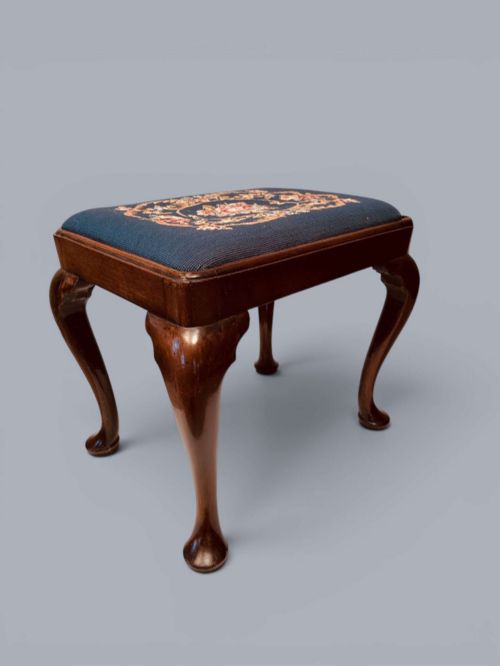
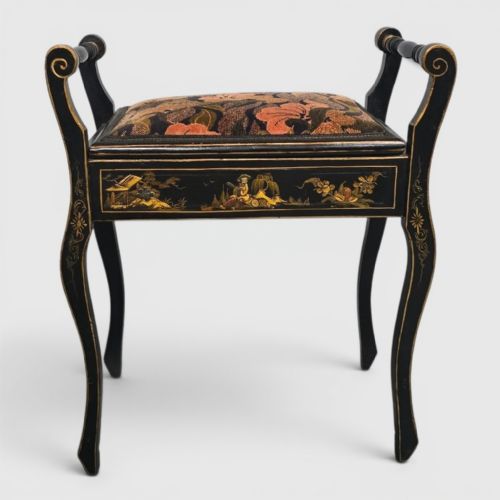
Makers of these items drew upon diverse stylistic traditions, resulting in Queen Anne, Chippendale, Georgian Revival, Chinoiserie, French Provincial, and Swedish Empire designs. Walnut and mahogany form the primary wooden frames, often accompanied by brass details, birch, or painted finishes.
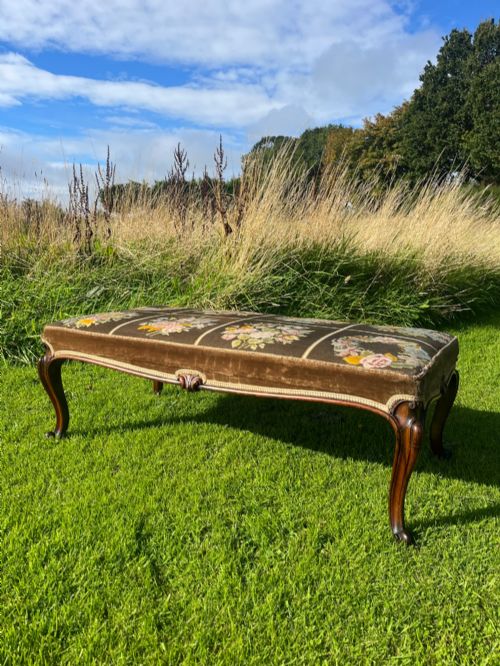
The defining characteristic across these variations remains the upholstered top, utilising tapestry, wool, velvet, and textile needlepoint. Buyers encounter everything from compact footstools to expansive benches designed for the foot of a bed or the centre of a room.
Materials and construction
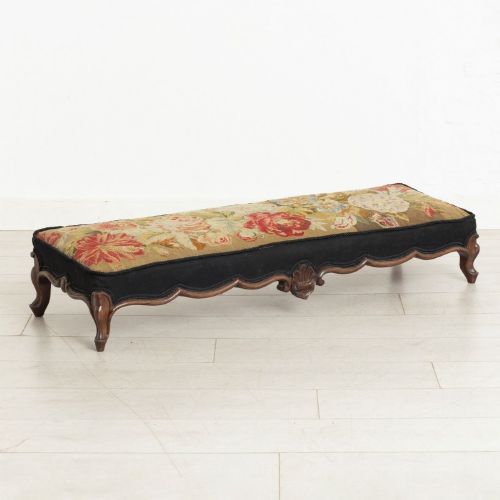
Frames rely on sturdy timbers such as mahogany and walnut, shaped with carved cabriole legs or supported by cross stretchers. Craftsmen utilised traditional joinery to ensure structural stability for daily seating and foot support.
Upholstery techniques combined robust internal foundations with decorative top layers. Wool and textile threads form intricate tapestry and needlepoint patterns secured directly over the wooden frames.
Needlepoint Footstool Bench Retail Price Guide 2026
Typical asking prices for needlepoint footstool bench among the pieces listed under this phrase on Sellingantiques today, from the lower quarter to the upper quarter. They describe what is for sale here now, not the wider market.
Upholstery materials across the selection include wool, velvet, tapestry, and general textile needlework.
Distinguishing quality in frames and needlework
Execution of the wooden framework separates standard production from finer work. Crisp carving on cabriole legs and solid timber selection indicate superior workshop standards.
Jas Shoolbred·Whytock and Reid
The Needlepoint Footstool Bench Glossary
- Needlepoint
- A form of counted or canvas embroidery stitched by hand. It provides the durable, decorative surface seen on the top of these benches and footstools.
- Cabriole leg
- A furniture leg featuring a double curve, typically arching outward at the knee and tapering inward toward the foot. This shape frequently appears on walnut and mahogany frames.
- Cross stretcher
- Wooden bracing members connecting the legs beneath a stool for added stability. They often intersect near the centre.
- Centre stool
- A large freestanding stool designed to sit in the middle of a room rather than against a wall. These items often feature generous proportions and upholstered tops.
- Chinoiserie
- A decorative style reflecting European interpretations of Chinese artistic traditions. It appears on painted wooden frames and specialist piano stools.
Needlepoint Footstool Bench: Frequently Asked Questions
How do I use a needlepoint footstool bench?
These pieces function primarily as footrests before armchairs or sofas, but larger variants serve well as low seating at dressing tables or piano benches. Long benches also sit effectively at the foot of a bed or beneath a window.
Because they combine decorative textile tops with sturdy wooden frames, they add both texture and practical utility to a living space or bedroom.
How should I clean needlepoint upholstery?
Careful surface vacuuming using a low suction setting helps remove dust from wool and tapestry fibres without catching individual stitches. Professional textile cleaning is advisable for deeper stains to protect the historical threads.
Keeping these pieces away from direct sunlight prevents the dyed wool yarns from fading over time.
How do I identify Victorian examples?
Victorian pieces typically employ dark walnut or mahogany with heavier, carved frames and traditional upholstery. They often feature low profiles designed specifically for resting feet.
Examining the underside and the joinery helps confirm the nineteenth-century origin of the woodwork.
What distinguishes Queen Anne style stools?
Queen Anne style frames are characterised by smooth, curved lines and prominent cabriole legs. These designs avoid heavy ornamentation in favour of graceful proportions.
The combination of these fluid wooden supports with decorative needlepoint tops creates a balanced, classic aesthetic.