


Navy Portrait Oil Painting
A navy portrait oil painting captures the authoritative gaze of officers and monarchs across centuries of maritime history.
Navy Portrait Oil Painting
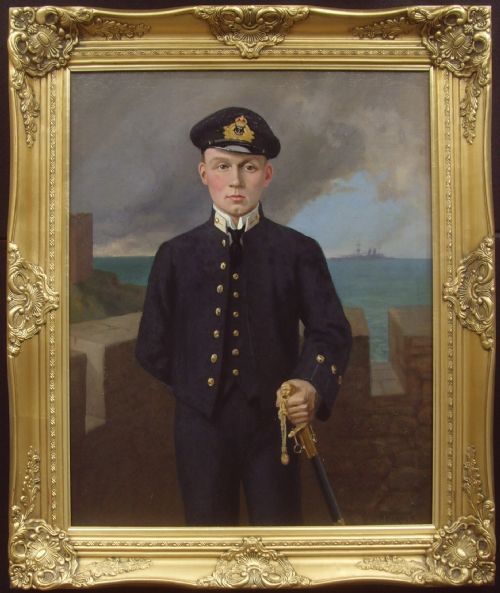
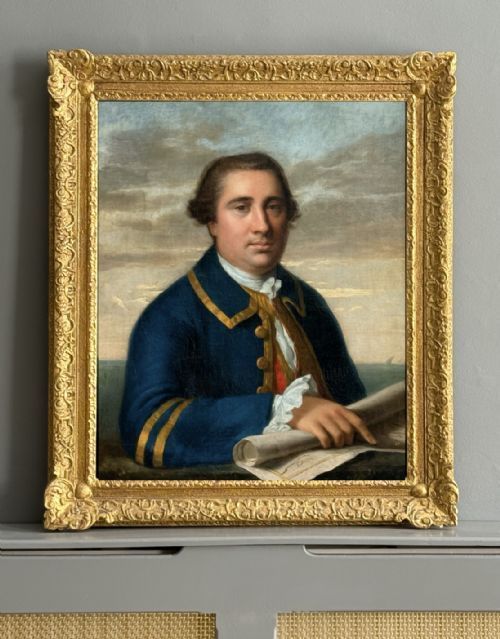
A navy portrait oil painting depicts naval officers, captains, and royalty dressed in formal uniform, capturing the solemnity of British maritime service. These works bridge historical record and fine art, offering direct visual contact with figures who served at sea. Buyers searching this phrase encounter subjects ranging from eighteenth-century captains to mid-century admirals.
The pieces on this page span the eighteenth century, the Victorian and Edwardian eras, and run through the mid-twentieth century. Works frequently depict named historical commanders alongside merchant navy captains and royal figures in naval dress. Formats focus on oil on canvas, often retained within period gilded wood frames.
Styles vary from Georgian maritime portraiture and Regency realism to mid-century British portraiture. The execution shifts from formal eighteenth-century portrait conventions to the more direct realism of the early twentieth century. Each canvas preserves the specific insignia, gold braid, and facial likenesses recorded by the portraitist.
Materials and construction
These works rely on oil paint applied to woven canvas stretched over wooden frames, utilising the slow-drying properties of oil to achieve subtle tonal gradations in flesh and uniform fabric. Artists built up layers of pigment to render the rich darks of naval coats and the reflective glint of metallic buttons and gold lace.
Frames are constructed from wood, frequently finished with giltwood or gilded wood frame treatments to complement the formality of the portrait. The gilding provides a warm metallic boundary that isolates the dark maritime jackets and neutral backgrounds from the surrounding room.
Listed styles range from Georgian and Regency maritime portraiture to mid-century British realism and early twentieth-century naval records.
Assessing quality in naval portraiture
Quality rests in the precision of the facial likeness and the anatomical rendering of the sitter, separating proficient studio output from hurried commercial likenesses. Superior works capture individual psychology and precise uniform details, such as medals and lace, with confident brushwork rather than mechanical stiffness.
The handling of light across the fabric and face distinguishes finer hands, where highlights on brass buttons and epaulettes feel luminous rather than flat. The condition of the original canvas and the harmony of the accompanying period giltwood frame further elevate the standing of a piece.
Lemuel Francis Abbott·John Simmons·George Romney·Samuel Lane·John Laviers Wheatley·William Dring·Maurice Codner·Robert Ker Porter·Richard Hall
The Navy Portrait Oil Painting Glossary
- Oil on canvas
- A painting medium where pigments suspended in drying oils are applied to a woven fabric support. This combination allows for rich colour depth and smooth blending.
- Giltwood
- Wood carved and covered with a thin layer of gold leaf or gold paint. It provides a traditional decorative border for formal portraiture.
- Maritime portraiture
- A genre of painting focused on the likeness of individuals associated with the sea, naval service, or maritime trade. It records both the person and their professional station.
- Georgian
- Relating to the period of British history spanning the reigns of the first four Georges, characterised by specific classical design and portrait conventions.
- Victorian
- Pertaining to the reign of Queen Victoria, marked by distinct shifts in portrait realism and official military documentation.
Navy Portrait Oil Painting: Frequently Asked Questions
How do I identify the rank in a navy portrait?
Rank is typically indicated by the specific arrangement of gold lace, bullion embroidery, and epaulettes on the uniform cuffs and shoulders. Contemporary records and naval dress regulations help correlate these decorative elements with historical officer grades.
Painters often included specific medals, sashes, or background shipping elements to signal the particular achievements and status of the sitter.
Are these portraits usually signed by the artist?
Many works bear the signature or monogram of the artist, frequently placed subtly near the lower edge of the canvas. Other pieces remain unsigned, attributed through stylistic analysis, gallery records, or contemporary exhibition notes.
Attributions to specific painters rely on brushwork comparisons, sitter documentation, and provenance established through previous collections.
How should I care for an oil painting on canvas?
Paintings require stable indoor humidity and temperature away from direct sunlight to prevent the canvas from slackening and the oil paint from cracking. Dusting should be undertaken gently with a soft, dry brush without applying pressure to the canvas surface.
Professional conservation is recommended for any cleaning or structural repair to the canvas support or the surrounding giltwood frame.
What framing is appropriate for these historical portraits?
Period frames, particularly nineteenth-century or eighteenth-century giltwood designs, complement the aesthetic of the canvas and maintain historical consistency. The weight and ornamentation of the frame should reflect the status of the sitter and the decade of execution.
Matching a canvas to a correct period frame enhances the overall visual presentation without compromising the integrity of the artwork.