





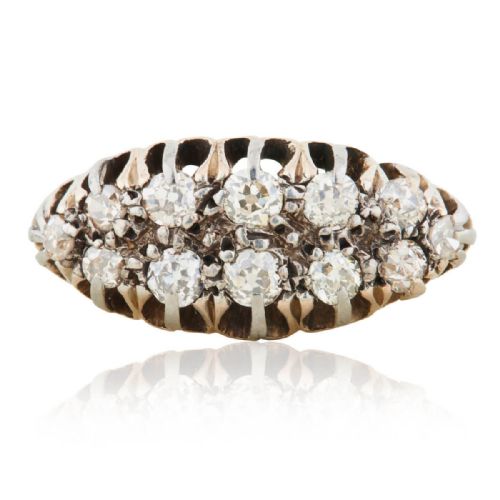

Navette Cut Ring
Navette cut rings are elongated boat-shaped cluster jewels that lengthen the finger, drawn mainly from the Victorian, Edwardian and Art Deco eras.
Navette Cut Ring
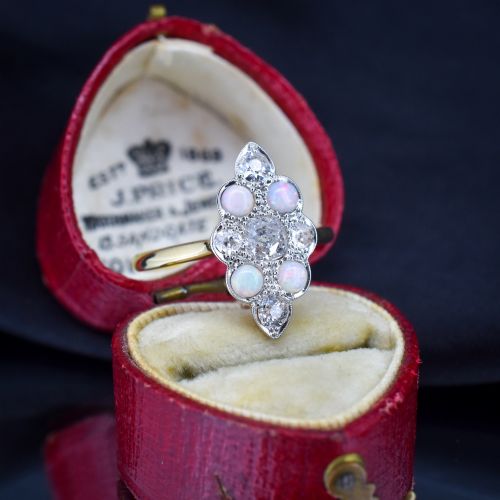
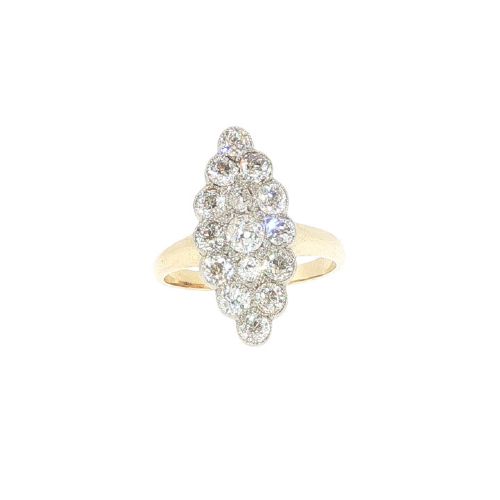
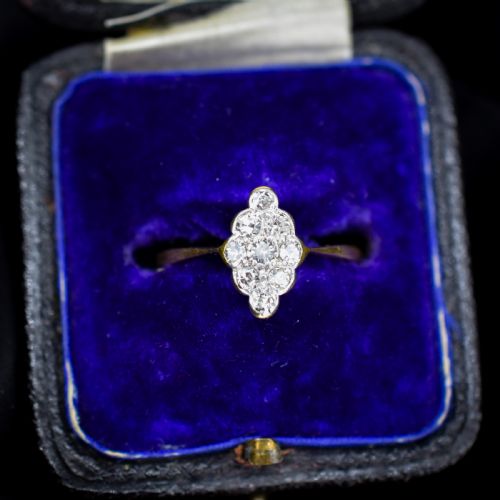
A navette cut ring takes the form of a pointed, boat-shaped cluster that stretches along the length of the finger. This distinctive silhouette, sometimes called a marquise cluster, sits prominently upon the hand.
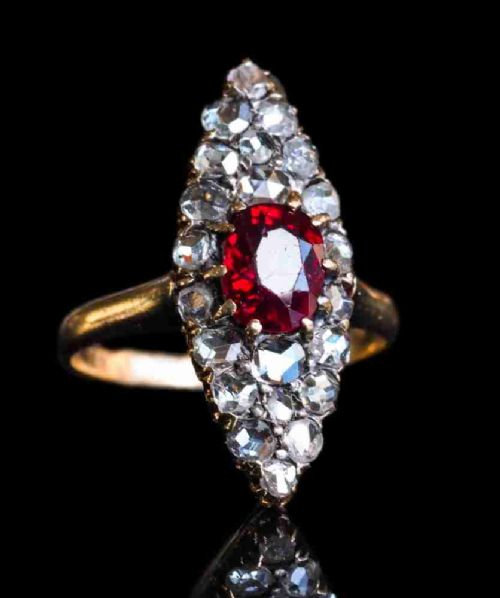
The pieces on this page span from the late Victorian period through the Edwardian years and into Art Deco designs. Edwardian and Victorian examples predominate, often pairing old cut diamonds with rubies, sapphires, emeralds or opals.
Makers constructed these elongated clusters to maximise visual impact, arranging smaller stones around a central gem or assembling a glittering mosaic of old mine and rose cut diamonds. Platinum settings frequently appear alongside yellow gold and white gold bands.
Materials and construction
Goldsmiths combined yellow gold, 18ct gold and platinum to build the intricate framework of a navette cut ring. Platinum settings became common in Edwardian pieces to securely hold diamonds while presenting a bright, white surface.
Cluster arrangements rely on close-set stones such as diamonds, rubies, sapphires and emeralds. Metalsmiths utilised claw settings and bezel mounts to secure old cut and rose cut stones within the narrow boat-shaped outline.
Navette Cut Ring Retail Price Guide 2026
Typical asking prices for navette cut ring among the pieces listed under this phrase on Sellingantiques today, from the lower quarter to the upper quarter. They describe what is for sale here now, not the wider market.
Gemstones seen across these navette cluster designs include diamonds, rubies, sapphires, emeralds, pearls and opals.
Evaluating craftsmanship
Quality rests in the precision of the cluster work and the harmony of the stones. A superior navette cut ring displays balanced proportions, where the curved ends taper smoothly and the central gems match in tone and cut.
The integration of platinum with gold indicates higher-tier workshop practice, particularly in Edwardian examples where metalwork was kept fine and lightweight. The crispness of millegrain edges and the secure seating of small cluster stones separate the finest pieces from simpler production.
The Navette Cut Ring Glossary
- Navette cut
- A boat-shaped gemstone cut or cluster design with pointed ends. This shape is also frequently referred to as a marquise form.
- Old cut diamond
- A diamond cut by hand before modern machinery standardised facets. These stones typically feature smaller tables and larger culets, producing a softer candlelit sparkle.
- Rose cut diamond
- A vintage stone cut with a flat base and a domed crown covered in triangular facets. It resembles an unopened rosebud.
- Cluster ring
- A ring design featuring a central stone surrounded by a group of smaller gems. This layout creates a larger visual presence on the hand.
- Millegrain
- A decorative technique involving a row of tiny metal beads along the edge of a setting. It is characteristic of Edwardian fine jewellery.
Navette Cut Ring: Frequently Asked Questions
What is a navette cut ring?
A navette cut ring is an antique or vintage jewel shaped like a small boat or eye, tapering to points at either end. The term translates from French as little ship.
These rings are built as clusters, arranging diamonds and coloured gemstones across an elongated mounting that sits lengthwise along the finger.
How do I date a navette ring?
Dating relies on the materials, stone cuts and mounting styles visible in the metalwork. Victorian examples often use yellow gold and old mine or rose cut diamonds.
Edwardian and Art Deco pieces frequently introduce platinum top settings, millegrain decoration and sharper geometric lines alongside transitional cut diamonds.
Are navette rings fragile?
Navette rings require sensible care due to their pointed ends and intricate multi-stone clusters. Regular checks by a jeweller ensure the tiny claws holding the outer stones remain secure.
Daily wear is entirely suitable provided the ring is removed during heavy manual tasks to protect the delicate platinum or gold framework.
What stones are in these rings?
Diamonds form the primary brilliance in these clusters, often paired with rubies, sapphires, emeralds or opals. Natural unheated rubies and emeralds occasionally accent the centre.
Makers selected these gemstones to contrast against the bright white of platinum or the warm glow of 18ct yellow gold.