

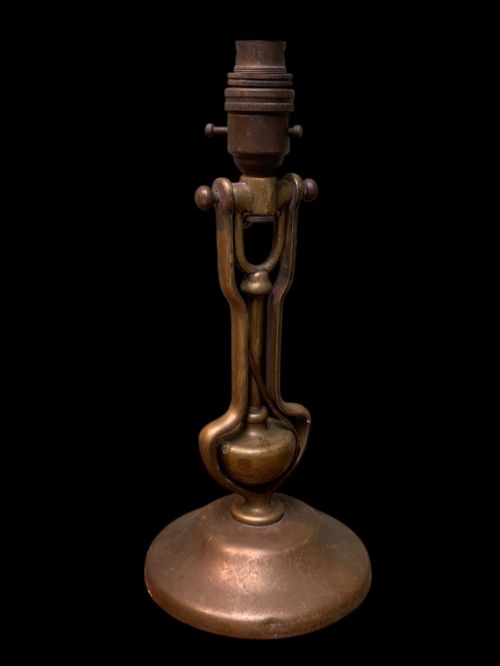


Nautical Table Lights
Nautical table lights bring the character of maritime travel and coastal navigation directly into the room with robust metalwork and original maritime fittings.
Nautical Table Lights
When searching for nautical table lights, collectors encounter converted ship lanterns, gimbal lamps, and novelty designs originating from the Edwardian era through the nineteen-forties. The selection focuses heavily on functional maritime lighting adapted for domestic interiors, alongside decorative pieces shaped like lighthouses and sail yachts.
Brass gimbal lamps and copper ship lanterns dominate the forms seen on this page, representing the practical hardware once fitted in marine vessels and trains. Alongside these utilitarian items, Art Deco table lamps introduce figurative subjects such as seagulls on waves and sail yachts from the nineteen-twenties.
The objects span several decades including the nineteen-tens, nineteen-twenties, and nineteen-forties, capturing both strict utilitarian maritime equipment and stylized decorative homeware. Buyers find standard table lamps alongside specialised navigation lights adapted with fabric and textile shades.
How they were made
Makers constructed these pieces using durable metals suited to marine environments, notably brass, copper, and nickel-plated brass, alongside black enamelled iron. Metal spinning, casting, and riveting formed the robust bodies of the ship lanterns and gimbal mounts required to withstand movement at sea.
Solid oak and glass components appear across lighthouse and lantern forms, combining turned timber with protective panes. Textile and fabric elements complete the fittings where lamps require standard shades.
Nautical Table Lights Retail Price Guide 2026
Typical asking prices for nautical table lights among the pieces listed under this phrase on Sellingantiques today, from the lower quarter to the upper quarter. They describe what is for sale here now, not the wider market.
Listings feature periods from the Edwardian era through the nineteen-forties, constructed in brass, copper, nickel, and enamelled iron.
What varies in quality
The distinction between standard utility items and finer examples rests on the quality of the metal plating, maker attribution, and overall mechanical integrity. Pieces bearing clear marks from established makers demonstrate superior workshop output compared to unmarked equivalents.
The complexity of the casting and the presence of specialised movement mechanisms, such as fully functioning gimbals, elevate certain designs above simpler stationary forms. Materials also dictate grade, with heavy nickel plating and solid brass outlasting thinner enamelled iron constructions.
Alderson & Gyde Ltd·William McGeoch & Co
The Nautical Table Lights Glossary
- Gimbal
- A pivoted support that allows a lamp to remain level regardless of the motion of a ship or train.
- Starboard
- The right-hand side of a ship when facing forward, traditionally marked with green glass on navigation lanterns.
- Port
- The left-hand side of a ship when facing forward, traditionally marked with red glass on navigation lanterns.
- Art Deco
- A design style popular in the nineteen-twenties characterised by streamlined geometric forms and stylized representations of modern subjects like yachts and seabirds.
Nautical Table Lights: Frequently Asked Questions
What are nautical table lights?
These pieces are original maritime fittings, ship lanterns, and marine-themed lamps adapted for domestic table use. They incorporate materials and mechanisms once utilised on vessels and trains.
Items range from utilitarian gimbal lamps in brass and nickel to decorative sail yacht and lighthouse figures from the early twentieth century.
How were gimbal lamps used?
Gimbal lamps utilised a pivoted ring system that kept the oil or electric light upright as vessels rolled or pitched on the water. This ensured steady illumination despite the movement of the ship or train.
In domestic settings, these mechanical mounts provide an adjustable industrial aesthetic that reflects their practical maritime origins.
How do I style nautical lights?
These lamps suit studies, libraries, and rooms with strong woodwork or metal accents. Their robust construction pairs well with traditional and industrial interiors alike.
Placing a polished brass gimbal or copper lantern on a desk or side table introduces an authentic maritime element without overpowering the space.
How do I date these lamps?
Dating relies on stylistic markers such as the geometric lines of Art Deco pieces from the nineteen-twenties or the heavier Edwardian brass forms from around nineteen-ten. Maker stamps and specific patent labels also help establish the exact period of manufacture.
Materials like nickel-plated brass and black enamelled iron point toward specific decades of maritime and industrial production.