

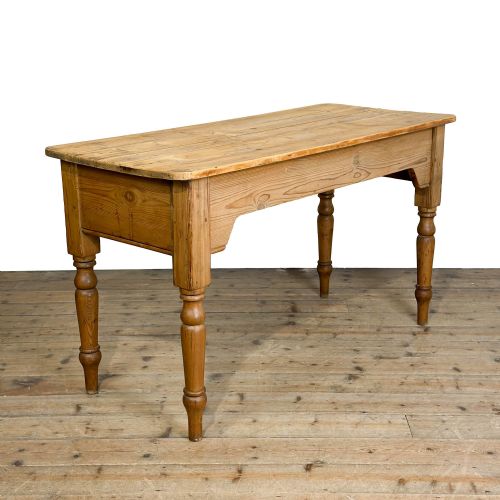
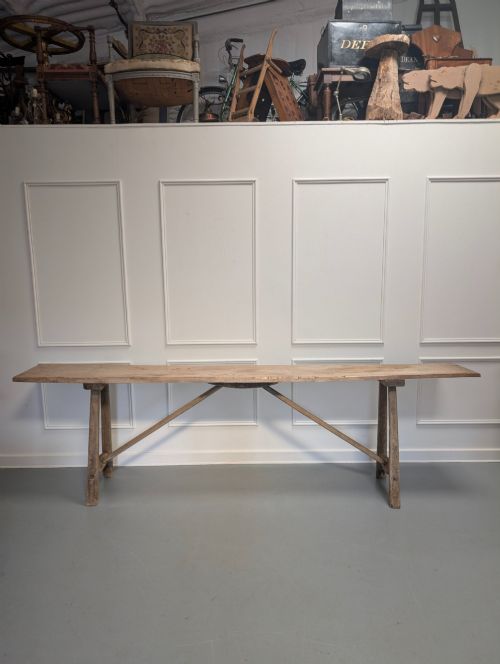
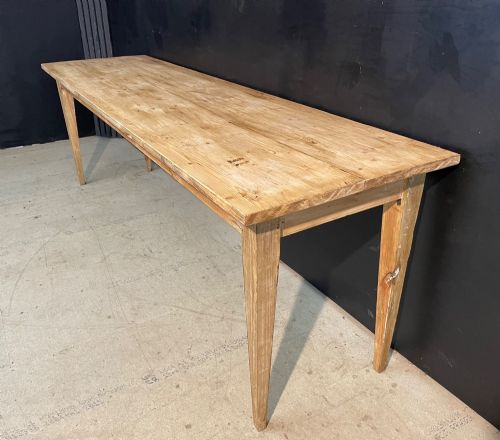
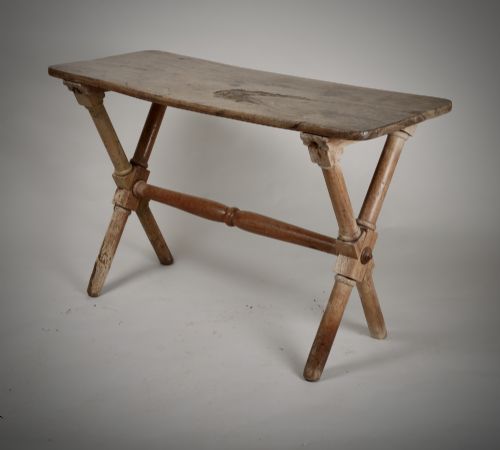


Natural Wood Console
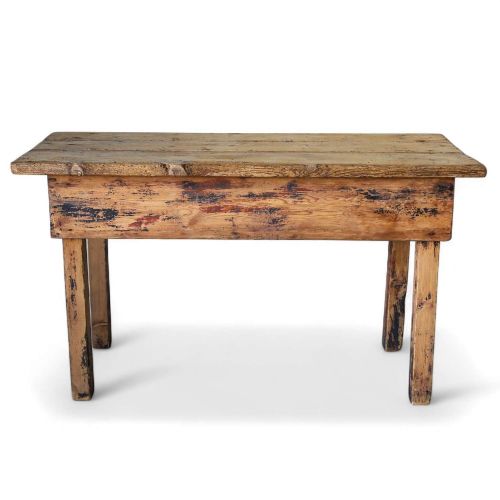
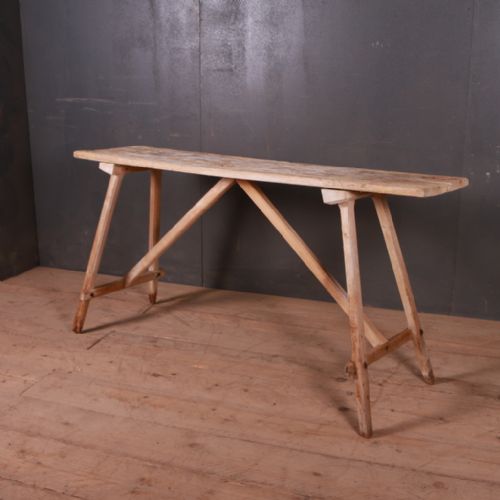
A natural wood console brings honest timber grain and straightforward utility into a hallway or living space.
Natural Wood Console
When you search for a natural wood console, you find practical tables built from pine, oak, elm, ash, and sycamore. The pieces appearing here span the nineteenth century into the nineteen-thirties, taking forms such as work tables, side tables, and trestle structures.
You are most likely to meet French provincial and Scandinavian country designs alongside rustic farmhouse and Welsh pieces. These sturdy items range from scrubbed sycamore surfaces to heavy pine and Chinese elm workbenches adapted for modern rooms.
The utility of these tables stems from their origins in dairies, kitchens, and workshops. Makers built them for heavy daily labour, which explains their enduring structural integrity and functional proportions.
Materials and construction
Carpenters constructed these tables using solid domestic and imported timbers like pine, oak, ash, elm, and sycamore, sometimes reinforced with iron components. Boards were joined simply and stoutly to withstand heavy daily use in farmhouses, workshops, and churches.
Surfaces often show the marks of scrubbed finishes and primitive joinery rather than fine cabinet polish. The natural grain of the wood remains the primary decorative element, shaped by hand tools and decades of honest wear.
Natural Wood Console Retail Price Guide 2026
Typical asking prices for natural wood console among the pieces listed under this phrase on Sellingantiques today, from the lower quarter to the upper quarter. They describe what is for sale here now, not the wider market.
Regional styles include French provincial, Scandinavian country, Swedish folk art, and Welsh farmhouse forms.
Judging quality in rustic tables
Quality in these utilitarian pieces rests in the integrity of the timber and the honesty of the construction. Tables featuring substantial boards of sycamore, elm, or pine with well-proportioned trestle bases stand apart from simpler alterations.
The character of the aged surface dictates much of the appeal, where untouched scrubbed finishes and original patination elevate the piece. The distinction lies in how gracefully the timber has aged through generations of functional service.
The Natural Wood Console Glossary
- Console table
- A table designed to stand against a wall, often narrow in depth to suit hallways and reception rooms. These pieces provide a surface for display while taking up minimal floor space.
- Trestle table
- A table comprising horizontal beams supported by pair of upright frames or trestles. This traditional construction offers sturdy legroom beneath the top surface.
- Scrubbed finish
- A timber surface washed and scoured repeatedly with water and coarse brushes to remove dirt and reveal the pale grain. This treatment is typical of hardworking dairy and kitchen tables.
- Worktable
- A heavy-duty utilitarian table built for trades or domestic labour, featuring thick timber tops and robust framing. Many antique examples now serve as side tables or consoles.
- Primitive
- A descriptive term for furniture made with straightforward local techniques and minimal ornamentation. These items prioritize utility over fashionable ornament.
Natural Wood Console: Frequently Asked Questions
How do I style a natural wood console?
Position the table against a plain wall in an entrance hall or living room where the timber grain can be appreciated. Pair it with simple ceramics or lighting to keep the focus on the historical surface.
Avoid overcrowding the top, as these utility pieces benefit from breathing space. Their neutral wood tones complement both contemporary interiors and traditional settings.
Were these consoles originally made for hallways?
Most of these pieces began life as work tables, dairy tables, or side tables in kitchens and workshops rather than decorative hall furniture. Their narrow proportions and sturdy construction make them natural fits for modern corridors.
Over time, buyers repurposed these functional items into console tables because of their convenient depths and characterful timber.
How do I care for scrubbed timber surfaces?
Clean the wood with a dry or barely damp cloth to remove dust without raising the grain. Avoid harsh chemical polishes that can sink into unsealed antique pine and sycamore.
Applying occasional natural wax helps protect the dry timber while maintaining its historic matte appearance. Keep the table away from direct heat sources to prevent the old boards from splitting.
What is the difference between a side table and a console?
Side tables are generally freestanding pieces designed to sit beside seating or against walls in any room. Consoles specifically hug walls and often feature narrow rectangular tops suited for tight spaces.
In antique vernacular furniture, the two terms frequently overlap because many work tables and side tables perform console duties today.