

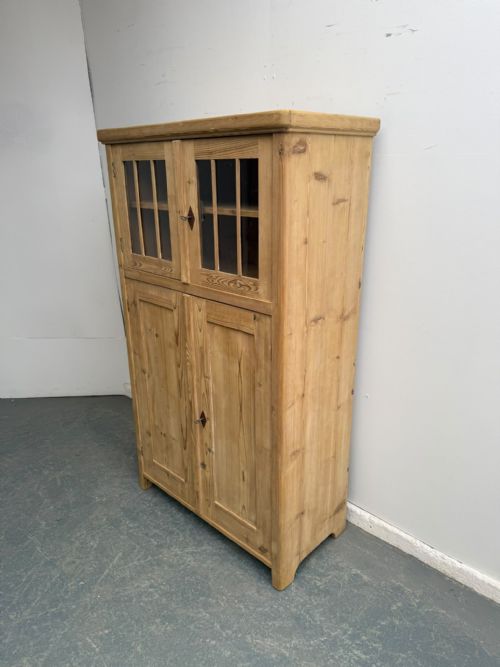
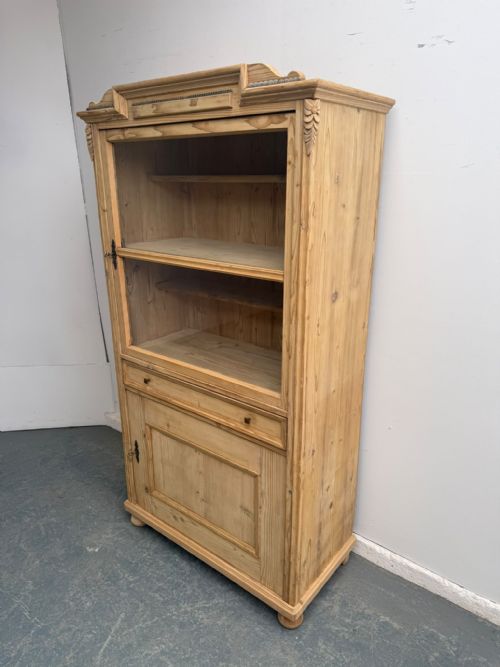
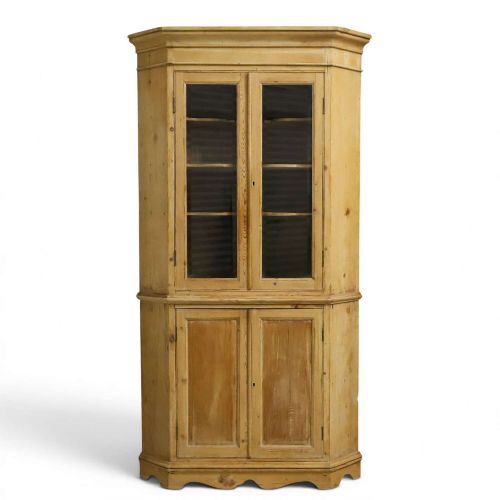
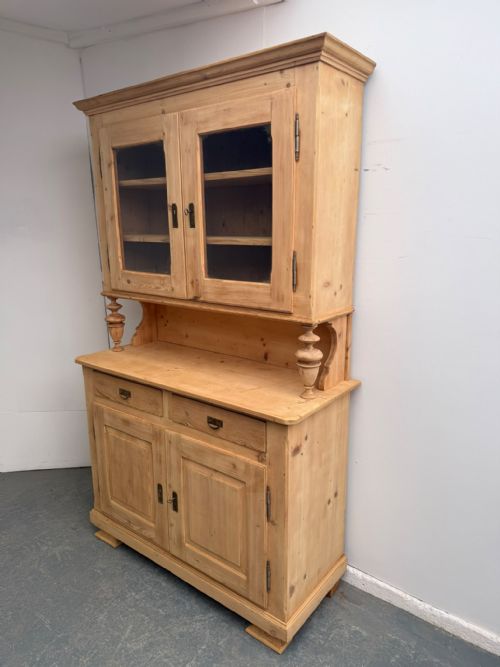
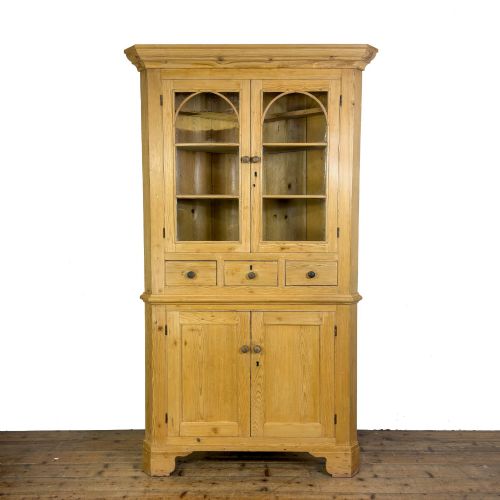


Natural Pine Glazed Dresser
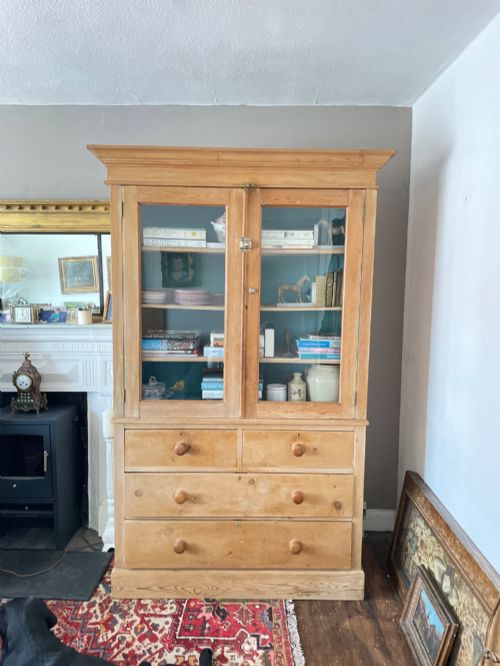
A natural pine glazed dresser brings honest utility and warm timber grain into a room, offering display space above and enclosed storage below.
Natural Pine Glazed Dresser
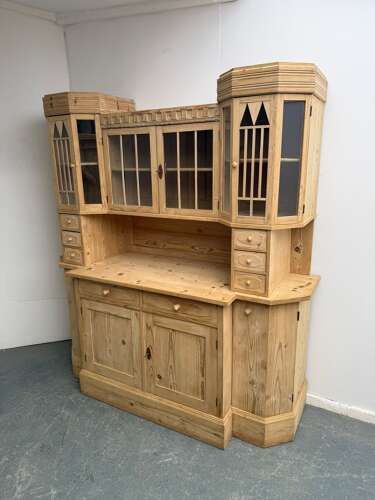
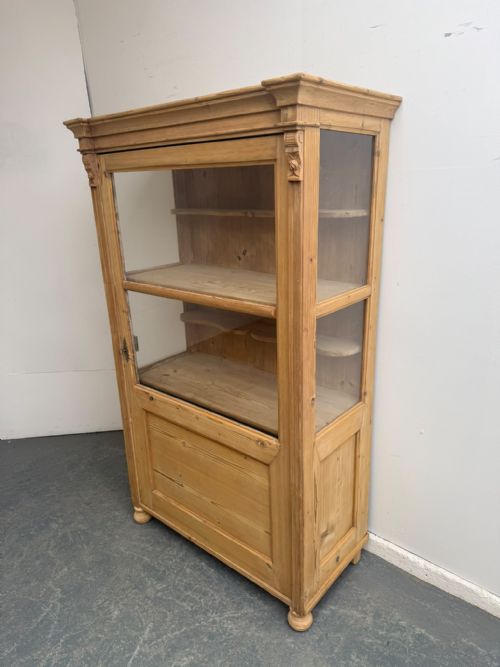
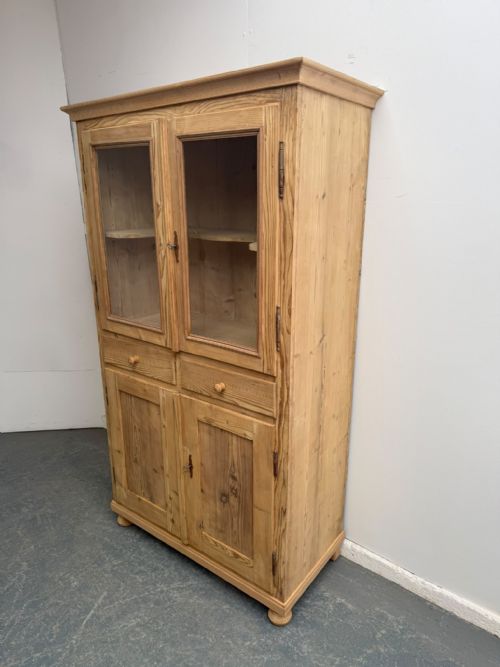
A natural pine glazed dresser combines open or glazed shelving with lower cupboards, serving as a traditional storage and display piece. When exploring the natural pine glazed dresser selection, buyers encounter multi-part kitchen cupboards, corner cabinets, and tall display units.
The pieces span various regional traditions and eras, including Victorian, Arts and Crafts, and rural styles. Forms range from compact single pieces to substantial two-part units featuring glass doors and painted interiors.
Origin points encompass English, Irish, and continental workshops. Makers utilised native timber to construct functional furniture suited to domestic service and display.
How they were made
Construction relies primarily on pine and pitch pine timbers, shaped into robust frames with panelled doors and fitted shelving. Iron and brass hardware, such as hinges and latches, secure the doors and drawers.
Surfaces are often finished with wax to preserve the natural grain, while some examples feature painted interiors or tiled splashbacks. Glass panes are glazed into wooden frames to protect the contents of the upper display section.
Natural Pine Glazed Dresser Retail Price Guide 2026
Typical asking prices for natural pine glazed dresser among the pieces listed under this phrase on Sellingantiques today, from the lower quarter to the upper quarter. They describe what is for sale here now, not the wider market.
The listings feature pine furniture from the nineteenth century onwards, including Victorian, Arts and Crafts, and regional continental styles.
What varies in quality
Construction methods determine durability, separating simply pegged joints from finely proportioned cabinetry with well-fitted doors and original backboards. The choice of timber also influences character, as dense pitch pine or well-figured old pine yields a richer surface texture than standard softwood.
Proportion and scale distinguish finer examples, particularly in multi-part forms where the balance between the glazed upper cabinet and lower storage creates visual harmony. Surviving original glass panes, brass fittings, and untouched waxed surfaces add distinction to a piece.
The Natural Pine Glazed Dresser Glossary
- Pitch pine
- A dense, resinous variety of pine known for its prominent grain pattern and durable quality. It was frequently utilised in nineteenth-century cabinetry.
- Two-part form
- Construction method where a tall cabinet separates into an upper glazed section and a lower cupboard base for ease of transport. This configuration is common in large kitchen dressers and bookcases.
- Glazed door
- A timber frame fitted with glass panes to enclose and protect shelving contents while keeping them visible. These doors appear on display cabinets and bookcases.
- Waxed finish
- A protective treatment applied to timber surfaces to nourish the wood and produce a soft sheen. This finish highlights the natural colour and grain of the pine.
Natural Pine Glazed Dresser: Frequently Asked Questions
How do I date a pine dresser?
Dating relies on construction details, timber characteristics, and hardware styles. Nineteenth-century pieces often feature hand-cut joints and native pine timbers.
Later examples from the early twentieth century, such as those from the Arts and Crafts period, incorporate different design proportions and decorative elements like tiles.
Are these dressers delivered in one piece?
Larger examples, particularly two-part kitchen cupboards and tall display cabinets, are constructed in separate sections. This design aids in transportation and placement within rooms.
Single-piece corner cabinets and smaller cupboards remain intact, requiring careful measurement of doorways and ceiling heights before purchase.
How do I care for waxed pine furniture?
Maintenance involves periodic application of quality beeswax to nourish the timber and maintain the soft sheen. Avoid placing pine furniture in direct sunlight or near heat sources to prevent warping.
Dusting with a dry cloth keeps the surface clean without damaging the historic finish.
Can I paint a waxed pine cabinet?
Many pine cupboards are suited to painting, and numerous examples in the inventory are listed as suitable to wax or paint. Proper preparation involves cleaning and applying a suitable primer to adhere to older timber surfaces.
Retaining the natural waxed finish preserves the historic character for those preferring exposed timber grain.