




Natural Opal Diamond Ring
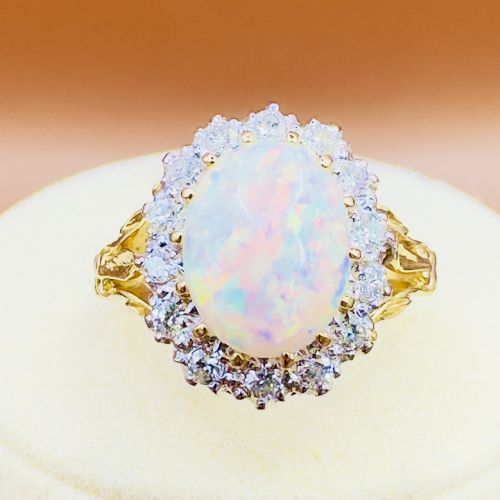
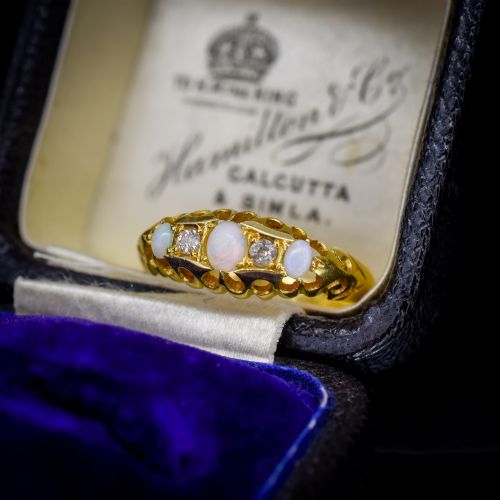
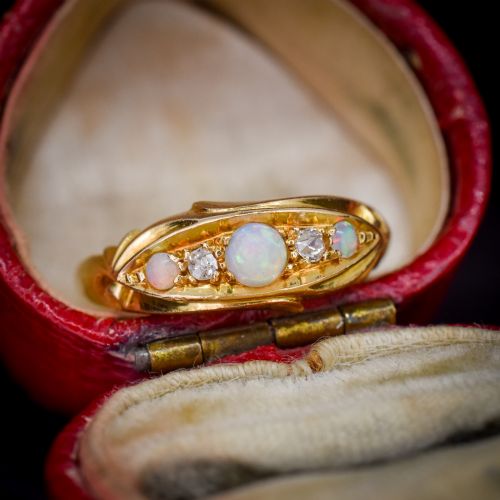
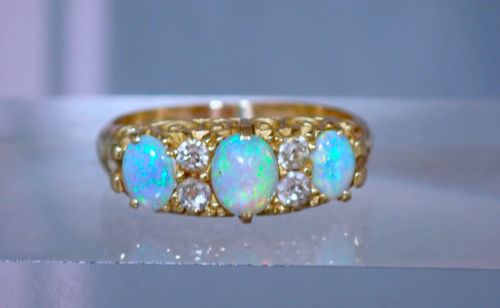
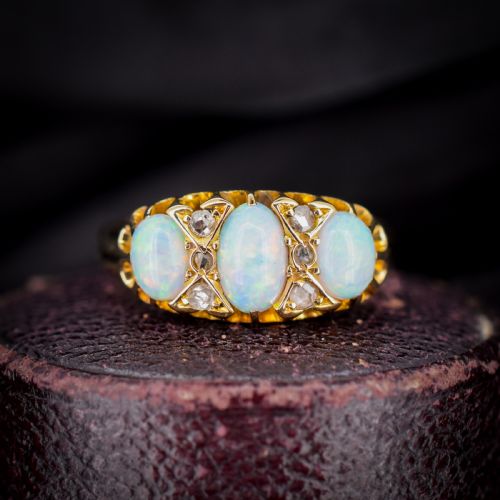
A natural opal diamond ring brings together the shifting play of colour in an opal with the steady fire of old cut diamonds.
Natural Opal Diamond Ring
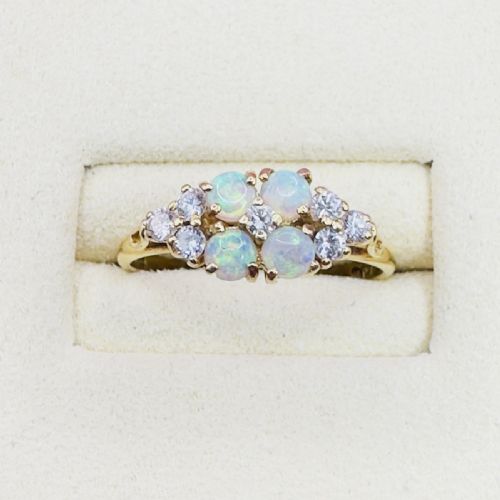
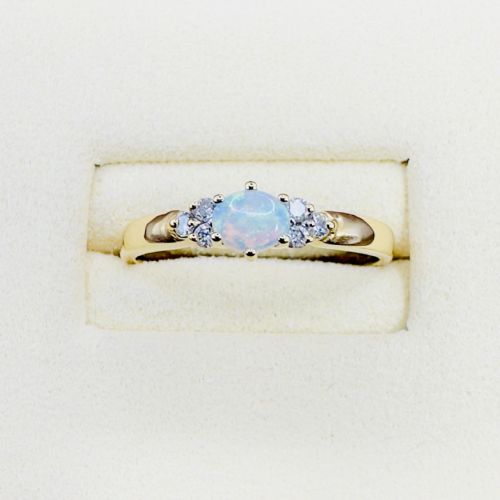
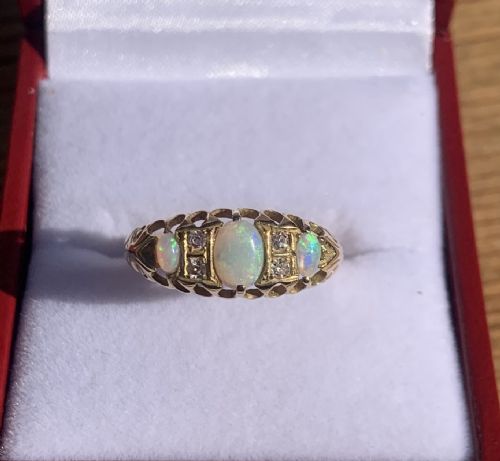
A natural opal diamond ring spans Victorian, Edwardian, and mid-twentieth-century periods, capturing eras that prized intricate stone settings. The boat ring and cluster formation emerge most frequently across these listings, alongside trilogy and three-stone arrangements.
Victorian and Edwardian examples dominate the selection, often pairing natural opals with old cut diamonds in eighteen-carat gold mounts. Buyers will also encounter twentieth-century interpretations, including oval cut east-west settings and nine-carat yellow gold dress rings.
Materials and construction
Jewellers shaped these mounts primarily in eighteen-carat gold and yellow gold, though platinum appears in specific twentieth-century cluster and halo designs. Cabochon opals sit alongside old cut diamonds, secured in claw settings or integrated into boat and cluster silhouettes.
The construction relies on traditional hand-working techniques of the nineteenth and early twentieth centuries. Goldsmiths balanced the softness of natural opals with durable gold shanks, creating secure housing for both centre stones and accent diamonds.
Natural Opal Diamond Ring Retail Price Guide 2026
Typical asking prices for natural opal diamond ring among the pieces listed under this phrase on Sellingantiques today, from the lower quarter to the upper quarter. They describe what is for sale here now, not the wider market.
Listings span the Victorian and Edwardian periods up to the nineteen-sixties, utilising eighteen-carat yellow gold, nine-carat gold, and platinum.
Quality factors in natural opal and diamond rings
The play-of-colour within the natural opal dictates the visual impact of the piece, with broader flashes and more intense spectral hues commanding greater attention. Clear crystal or solid body colours that display deep greens, reds, and blues set the finer examples apart.
Diamond selection and mount preservation further define the tier of the piece. Crisp old cut diamonds paired with substantial, uncompromised eighteen-carat gold or platinum shanks represent the upper end of the surviving selection.
The Natural Opal Diamond Ring Glossary
- Cabochon
- A gemstone shaped and polished with a smooth, rounded surface rather than faceted. This style highlights the internal play-of-colour in natural opals.
- Boat ring
- A boat-shaped ring mounting featuring a curved, elongated setting that tapers towards the shoulders. This form accommodates multiple stones in a graceful arc.
- Trilogy ring
- A ring set with three stones representing past, present, and future. In these pieces, an opal typically sits flanked by diamonds.
- Old cut diamond
- A hand-faceted diamond cut before modern machinery standardisation, featuring a smaller table and higher crown. These stones produce a softer, candlelit sparkle.
- Play-of-colour
- The optical phenomenon where spectral colours shift as the stone moves under light. It is the defining characteristic of quality opals.
Natural Opal Diamond Ring: Frequently Asked Questions
Are these opals all natural?
The pieces listed feature natural opals, often combined with diamonds in gold or platinum settings. These stones display organic colour play characteristic of mined material rather than synthetic substitutes.
Examining the stone under magnification reveals natural growth patterns and inclusions. This distinguishes genuine antique specimens from modern lab-created alternatives.
Can I wear an opal ring every day?
Wearing an opal ring daily requires care because opals have a moderate hardness compared to diamonds. Take the ring off during heavy manual work, gardening, or sports to protect the stone from knocks and scratches.
Storing the piece separately from harder jewellery prevents abrasion. With mindful wear, these antique rings remain durable companions for regular use.
How do I tell a Victorian ring from an Edwardian one?
Victorian rings often display heavier gold work and robust boat or cluster silhouettes, sometimes incorporating rubies alongside diamonds. Edwardian pieces lean towards lighter, airier designs in yellow gold or platinum with intricate openwork.
Assay office marks and date letters stamped inside the shank provide definitive chronological markers. Stylistic clues like millegrain detailing also point towards the Edwardian era.