


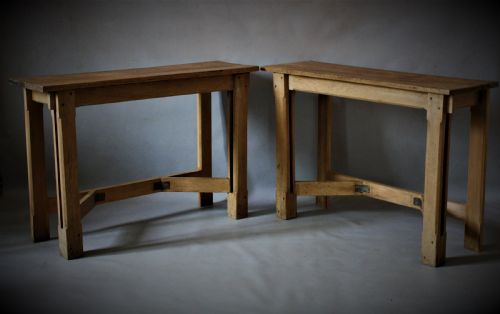
Narrow Wooden Server
These narrow wooden server options bring honest utility and modest footprints to busy hallways, kitchens, and dining spaces.
Narrow Wooden Server
A narrow wooden server takes several distinct forms across nineteenth and early twentieth century domestic interiors. Buyers searching for a narrow wooden server commonly find console tables, preparation tables, trestle tables, and dresser bases suited to restricted floor spaces.
The pieces on this page span Victorian Britain, provincial France, and Scandinavia, reflecting diverse regional needs for compact surfaces. Makers constructed these items from sturdy timbers like pine, oak, and mahogany to withstand daily household tasks.
Stylistic influences range from restrained Sheraton Revival and Arts & Crafts designs to rustic farmhouse and French country traditions. Such variety ensures that a narrow wooden server integrates smoothly into both period properties and modern rooms.
Construction and materials
Carpenters built a narrow wooden server using durable domestic and imported hardwoods and softwoods. Evidence shows frequent reliance on oak, pine, pitch pine, and mahogany, chosen for their structural strength and reliable grain.
Workshops utilised traditional joinery methods alongside functional additions such as brass fittings and decorative wood inlay. Painted surfaces and bleached oak finishes also appear, showing how makers altered timber to suit contemporary tastes.
Form followed function closely, whether the piece served as a kitchen preparation table, a potboard trestle, or a hallway console. Simple plank construction and sturdy under-tier shelves provided necessary stability for heavy domestic use.
Narrow Wooden Server Retail Price Guide 2026
Typical asking prices for narrow wooden server among the pieces listed under this phrase on Sellingantiques today, from the lower quarter to the upper quarter. They describe what is for sale here now, not the wider market.
Regional styles represented on this page include French provincial, Scandinavian country, and British Arts and Crafts.
Judging quality and character
Quality in a narrow wooden server rests upon the integrity of the timber and the honesty of the construction. Superior examples display thoughtful proportions and sound joinery that has survived decades of practical service without losing stability.
Surface patination plays a central role in distinguishing finer pieces from ordinary items. Natural wear, aged paint, and the warm glow of polished mahogany or bleached oak indicate decades of genuine utility rather than artificial distressing.
The Narrow Wooden Server Glossary
- Potboard
- An open lower shelf fitted beneath a table or server for storing pots and pans. This practical feature is typical of country furniture and preparation tables.
- Console table
- A narrow table designed to stand against a wall, frequently used in hallways or reception rooms. These pieces often feature decorative brackets or slender legs.
- Trestle table
- A table supported by two or more upright frames connected by a horizontal beam. This construction provides excellent legroom and sturdy support.
- Sheraton Revival
- A late nineteenth century design movement inspired by the lighter neoclassical furniture of the eighteenth century. Pieces in this style often feature mahogany and delicate inlay work.
- Arts and Crafts
- A design movement valuing handcraftsmanship, simple forms, and visible construction methods over mass-produced ornamentation.
Narrow Wooden Server: Frequently Asked Questions
Where should I place a narrow wooden server?
These compact pieces fit exceptionally well in narrow hallways, tight dining rooms, and smaller kitchens where floor space is limited. Their shallow depth allows them to sit flush against walls without obstructing walkways.
They also function effectively as serving stations during meals or as display surfaces for lamps and decorative objects in living areas.
How do I clean antique timber surfaces?
Dust your narrow wooden server regularly with a soft, dry cloth to prevent dirt buildup in the grain. Avoid modern silicone polishes, which can leave a sticky residue and damage historic finishes over time.
Apply a traditional beeswax occasionally to nourish bare or waxed wood and maintain a gentle, protective sheen.
Can I use a preparation table for cooking?
Many nineteenth century preparation tables and potboard servers were built specifically for heavy kitchen work. Solid timber tops can handle daily domestic tasks if treated with appropriate food-safe oils.
Consider the existing finish on the surface before undertaking heavy food preparation to protect historic paint or polished timber.
What distinguishes Arts and Crafts furniture?
Arts and Crafts pieces emphasise honest construction, straightforward forms, and the natural beauty of materials like oak. Makers avoided excessive ornamentation in favour of solid craftsmanship and functional utility.
Items from this movement often display subtle details that highlight the maker's hand and the inherent qualities of the wood.