
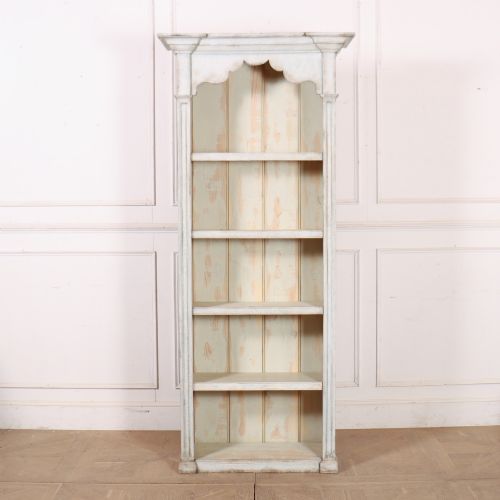
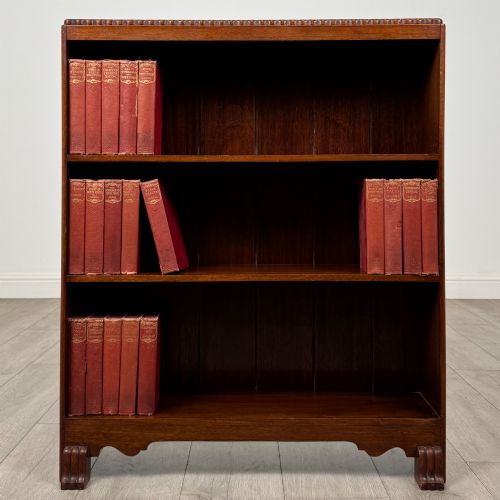
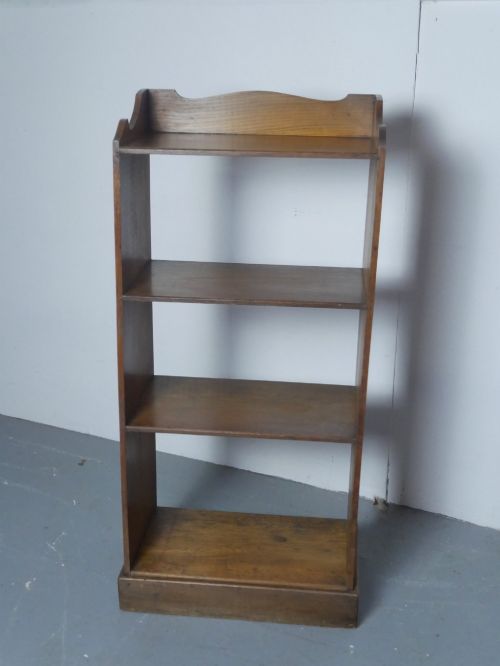
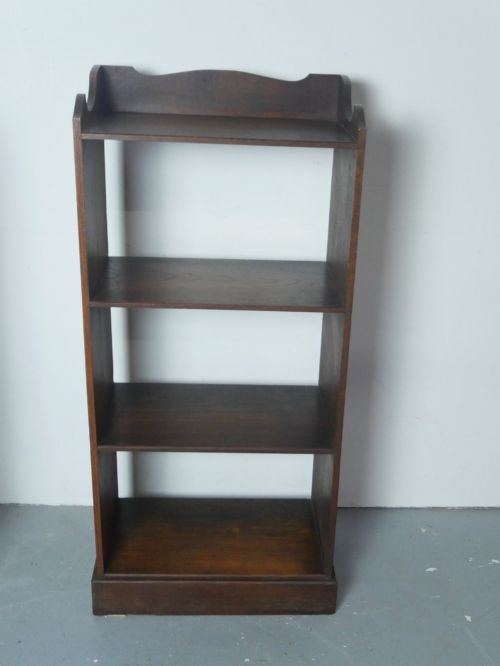
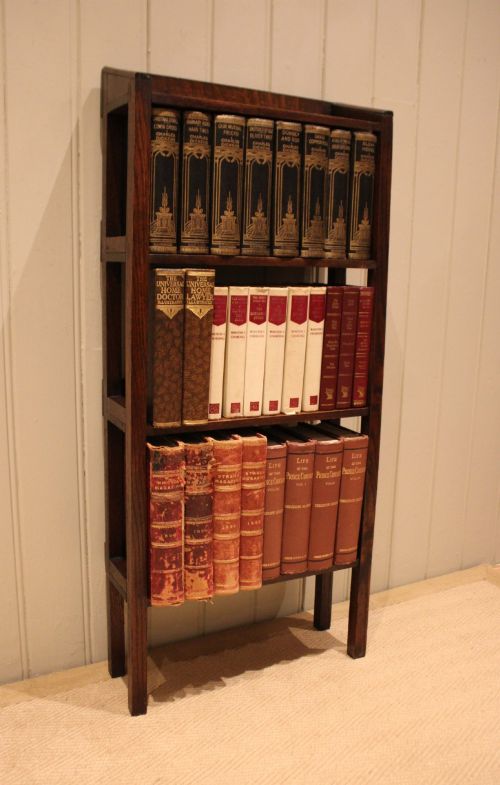
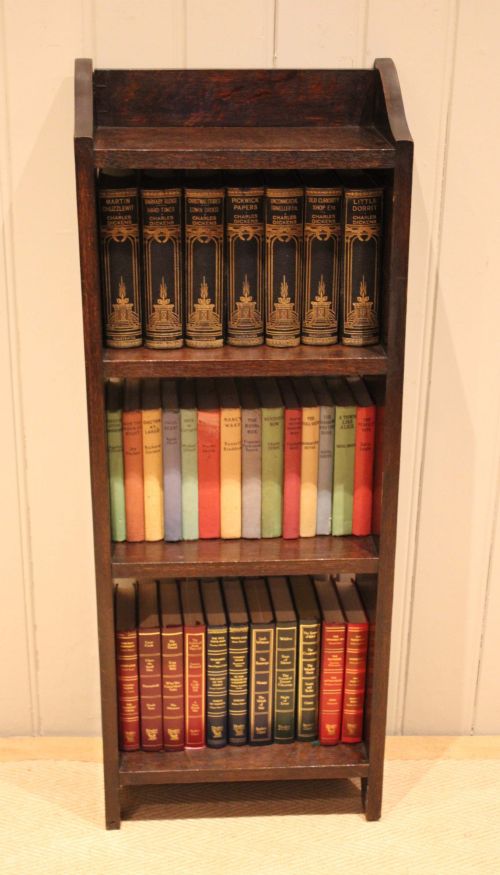
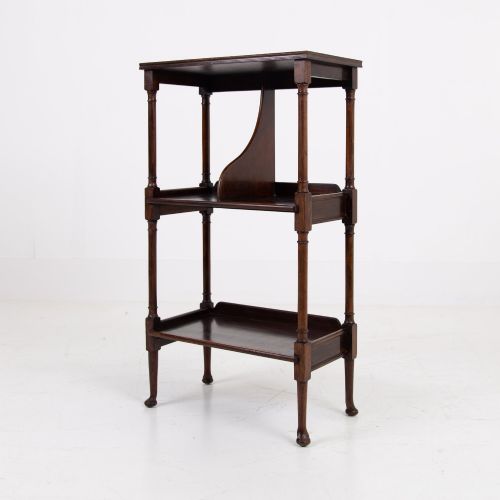
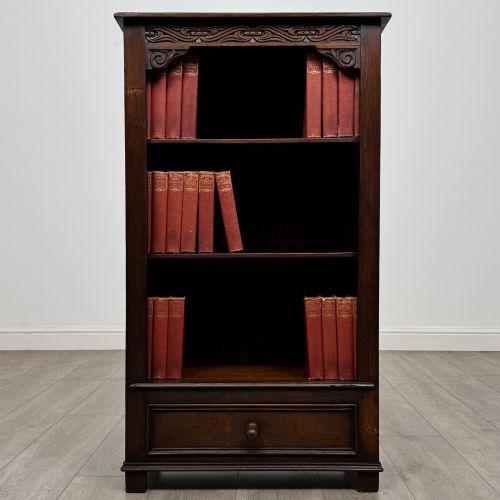
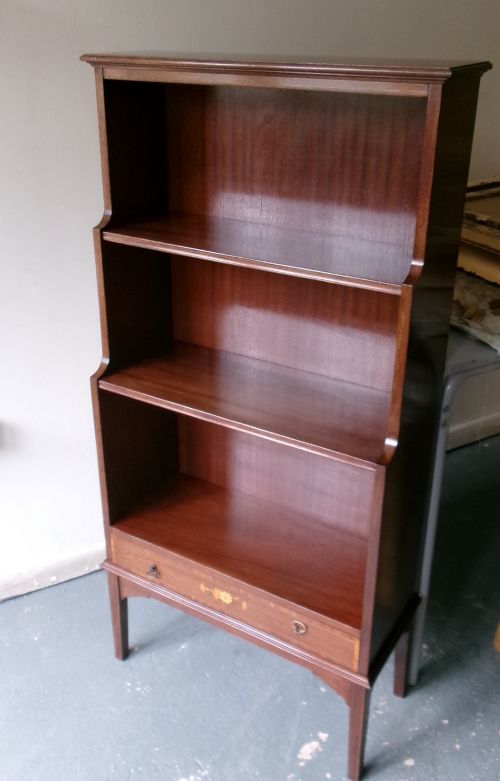

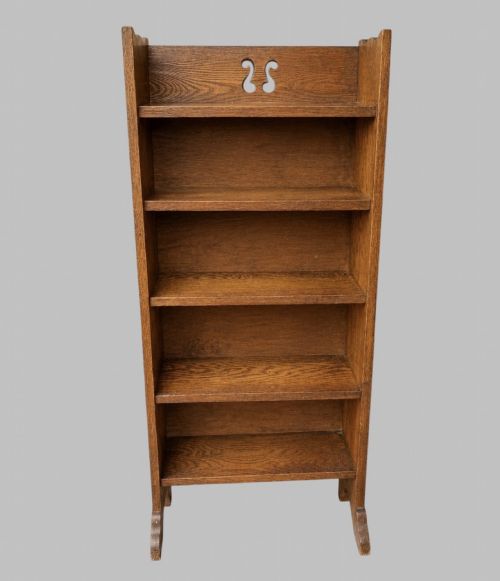

Narrow Wooden Bookshelf
A narrow wooden bookshelf brings order to tight corners, offering upright timber tiers to hold a personal library without dominating the floor space.
Narrow Wooden Bookshelf
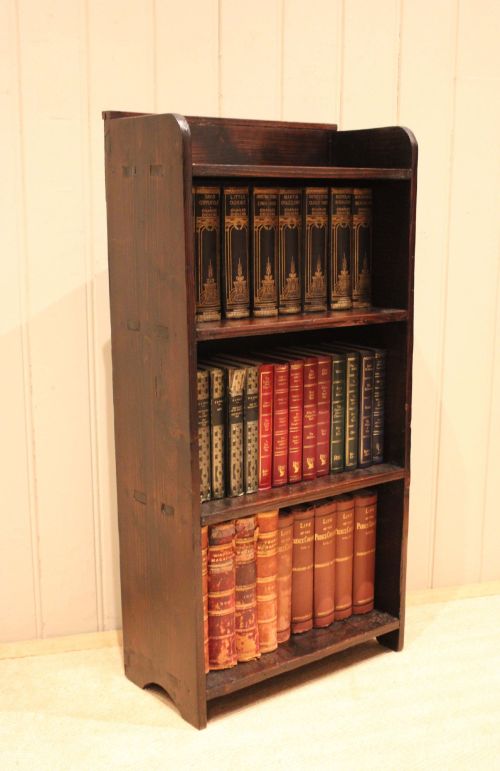
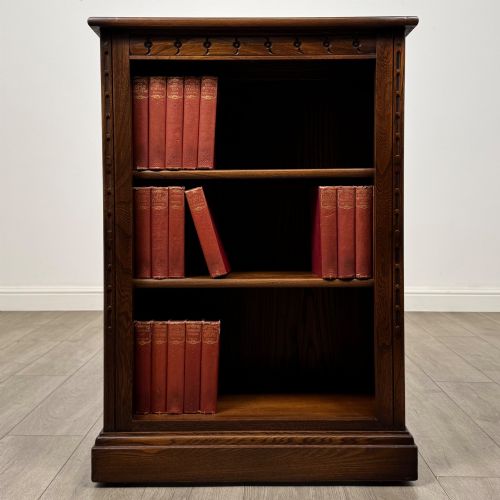
A narrow wooden bookshelf provides compact vertical storage, standing in upright open formats across Victorian, Edwardian, and early twentieth-century periods. These pieces serve as slim repositories for volumes, fitting into alcoves and narrow passages where standard furniture fails to clear.
How they were made
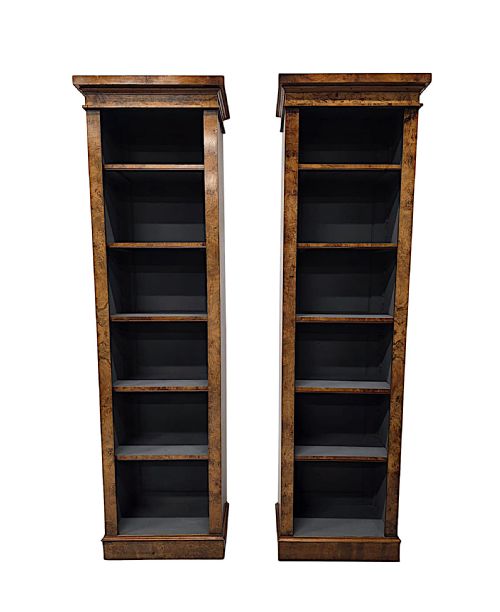
Cabinetmakers utilised solid timbers such as oak, mahogany, pine, and elm, building standing carcasses with fixed or adjustable shelving. Surface treatments range from clear polish to paint and faux burr finishes.
Detailing on these pieces includes brass fittings, inlaid stringing in satinwood or other contrasting woods, and moulded cornices. Construction methods rely on traditional joinery suited to supporting heavy loads of books over decades.
Listings feature timbers including oak, mahogany, pine, satinwood, burr walnut, and yew wood across periods from the nineteenth century through the 1930s.
What varies in quality
The distinction between tiers rests upon the choice of timber and the precision of the cabinetwork. Selected burr walnut or figured mahogany denotes a higher tier of production than standard utility pine or plain oak.
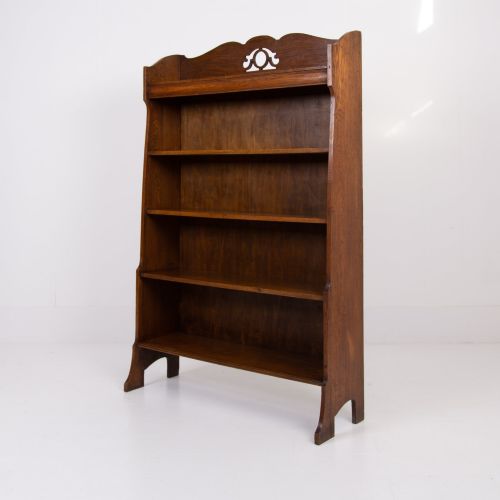
Subtleties of proportion and decorative restraint elevate certain examples. Pieces featuring fine inlay, balanced waterfall tiers, or thoughtful decorative cut-outs demonstrate superior craftsmanship compared to plain vernacular versions.
The Narrow Wooden Bookshelf Glossary
- Waterfall bookcase
- A shelving unit where each successive shelf steps back from the one below it, creating a cascading profile. This form gained popularity during the Edwardian period.
- Whatnot
- A small open shelving unit designed for displaying books or ornaments, often fitted with multiple tiers. They appear frequently in nineteenth-century and early twentieth-century interiors.
- Inlay
- A technique where pieces of contrasting wood, such as satinwood, are inserted into depressions in the primary timber to form decorative patterns. It adds visual refinement to mahogany and walnut surfaces.
- Burr walnut
- A highly figured wood veneer derived from the growth burls of the walnut tree, prized for its swirling patterns. It is seen on select early twentieth-century pieces.
Narrow Wooden Bookshelf: Frequently Asked Questions
Where should I place a narrow wooden bookshelf?
These slim pieces fit naturally into tight alcoves, narrow hallways, or beside windows where floor space is limited. Their modest footprint allows them to utilise dead corners without crowding a room.
Position them away from direct heat sources to protect the timber and veneers from drying out over time.
How do I distinguish Edwardian bookcases from Victorian ones?
Victorian examples tend to utilise heavier proportions and denser timbers like mahogany or stained pine, sometimes with rich, dark finishes. Edwardian pieces often display lighter oak construction, simpler lines, and occasional inlay.
Examine the backboards and interior construction for clues, as Victorian joinery frequently employs different saw marks and fixings than later twentieth-century work.
Can these shelves hold heavy modern books?
Most period bookcases were built to support substantial volumes of nineteenth-century literature, so standard hardcover books present no difficulty. Solid oak and mahogany frames offer considerable structural strength.
Check whether the shelves are fixed or adjustable before loading them with exceptionally heavy folios or textbooks.
What maintenance do old wooden bookshelves need?
Regular dusting with a dry cloth keeps the timber surface clean, while occasional application of appropriate wax nourishes the wood. Avoid using modern silicone sprays that can damage antique polishes.
Keep the room humidity relatively stable to prevent the wood from expanding or contracting excessively.