

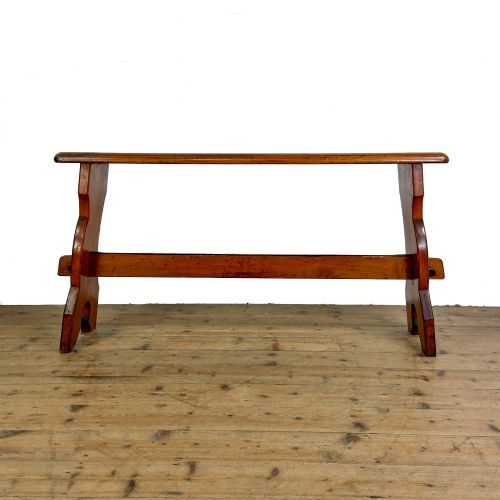
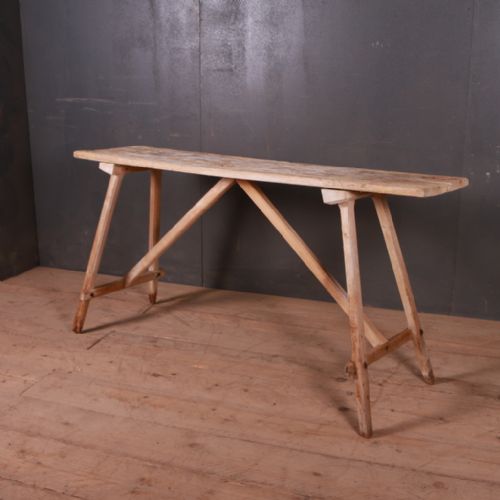
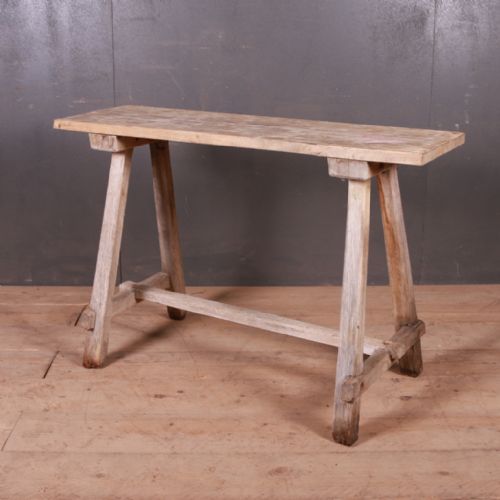


Narrow Pine Table
A narrow pine table brings utility and warmth to a hallway, kitchen or living space without crowding the room.
Narrow Pine Table
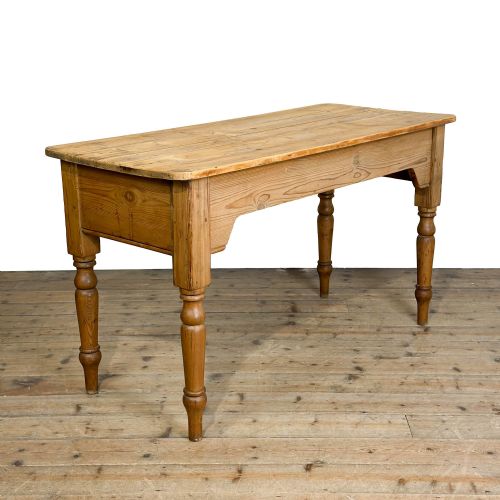
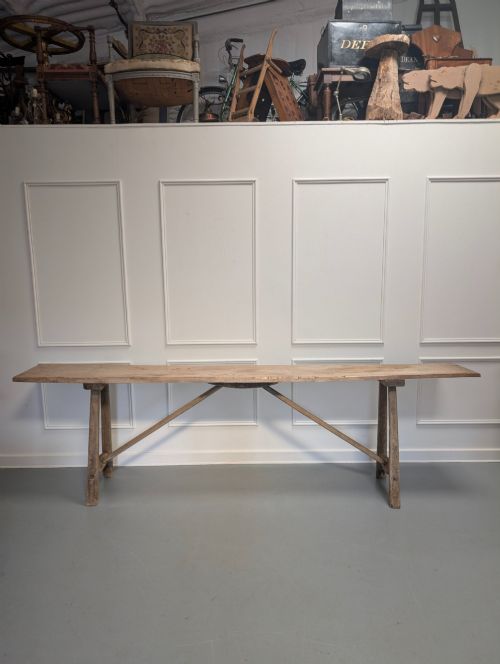
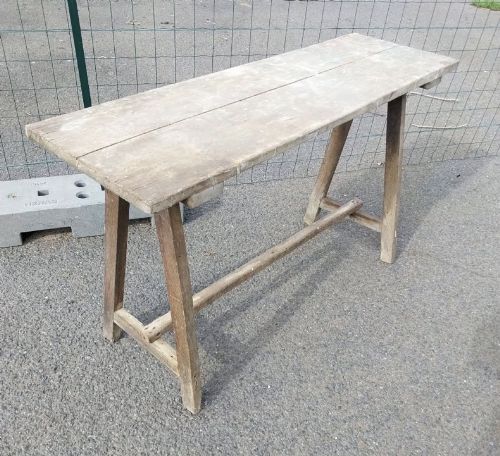
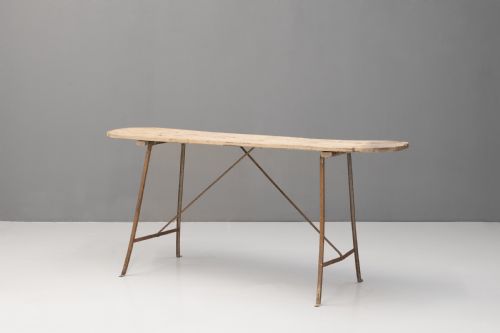
A narrow pine table meets the demand for compact surface space in tighter domestic layouts. These pieces draw from nineteenth-century forms, including French laundry tables, wash stands, preparation tables, and trestle designs.
The selection on this page spans several regional variations, featuring English country pieces alongside French provincial and Scandinavian country examples. Makers built these tables for practical utility in laundries, kitchens, and hallways.
Buyers encounter formats ranging from slender console tables and side tables to long, narrow trestle tables and wash tables. Timelines stretch from the late nineteenth century into the early twentieth century, encompassing Victorian interpretations and provincial styles.
Materials and construction methods
Makers constructed these tables primarily from solid pine and pitch pine, occasionally incorporating scrubbed poplar or timber. Structural framing frequently relies on sturdy trestle supports, turned legs, or wrought iron reinforcement.
Surfaces range from scrubbed timber tops to fitted marble slabs on classical revival and hallway stands. Paint finishes appear on various pieces, reflecting traditional country decorating practices across English, French, and Scandinavian workshops.
Narrow Pine Table Retail Price Guide 2026
Typical asking prices for narrow pine table among the pieces listed under this phrase on Sellingantiques today, from the lower quarter to the upper quarter. They describe what is for sale here now, not the wider market.
Pine and pitch pine dominate the timber selection across these listings, accompanied by occasional oak, poplar, and marble elements.
Assessing quality in antique tables
Quality rests on the integrity of the timber and the honesty of the surface wear. Tables with original scrubbed tops or authentic historic paint finishes command greater interest than heavily altered examples.
Proportion and structural joinery differentiate standard utility items from finer provincial pieces. The connection between the top and the base must remain stable, whether the table uses a trestle format or four legs.
The Narrow Pine Table Glossary
- Trestle table
- A table comprising two or more supports, or trestles, connected by a longitudinal beam that holds a long, narrow top. This form provides maximum legroom along the length of the table.
- Wash table
- A low or narrow table originally designed to hold washbasins and pitchers in bedrooms. They frequently feature lower shelves or marble inserts.
- Pitch pine
- A dense, resinous variety of pine timber prized for its durability and prominent grain patterns. It withstands heavy daily use better than softer white pines.
- Scrubbed top
- A wooden surface washed repeatedly with water and stiff brushes to clean the grain, leaving a pale, matte texture. This finish is typical of utilitarian kitchen and laundry tables.
- Console table
- A narrow table designed to stand flat against a wall, frequently utilised in hallways. Examples often incorporate decorative elements such as marble tops or turned supports.
Narrow Pine Table: Frequently Asked Questions
Where should I put a narrow pine table?
These tables fit easily into narrow hallways, behind sofas, or along kitchen walls where floor space is limited. Their modest depth allows them to provide surface area without obstructing movement through a room.
They also serve well as auxiliary preparation spaces in kitchens or as compact side tables in bedrooms and living areas.
How do I clean a scrubbed pine top?
Scrubbed pine surfaces respond best to dry dusting or wiping with a slightly damp cloth using mild, non-alkaline soap. Avoid soaking the wood or using harsh chemical cleaners that strip the natural dry texture.
Allow the timber to dry completely after any cleaning to prevent warping or water staining.
What is the difference between pitch pine and regular pine?
Pitch pine contains a higher resin content, making the timber significantly denser, heavier, and darker in tone than standard soft pine. This resin provides natural durability against moisture and wear.
Tables made from pitch pine often display a pronounced, striking grain pattern compared to more uniform standard pine boards.
How can I date a nineteenth-century pine table?
Dating relies on examining the construction marks, tool traces on the underside, and the type of fixings used in the frame. Hand-sawn boards, pegged joints, and square-headed nails point toward nineteenth-century production.
Comparing the turned legs or trestle design to known Victorian and provincial vernacular styles helps narrow the manufacturing period further.