




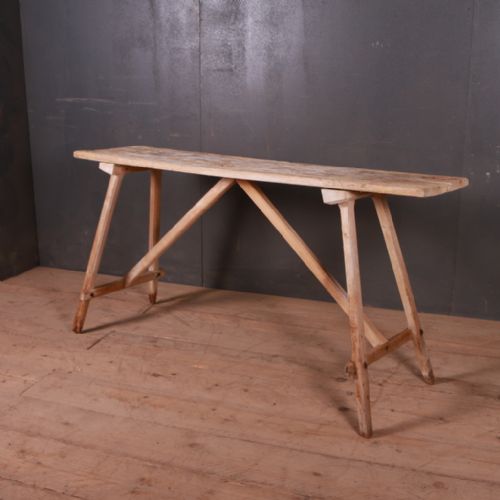


Narrow Farmhouse Table
These narrow farmhouse table examples bring honest utility and timeworn timber into modern spaces.
Narrow Farmhouse Table
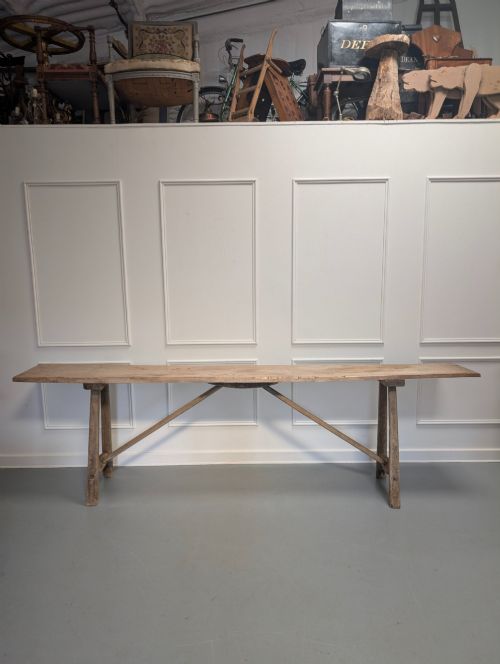
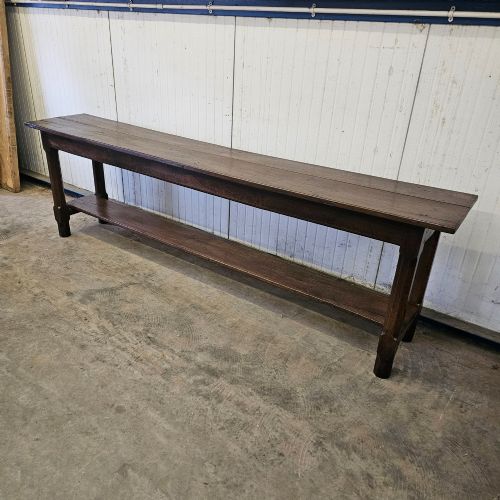
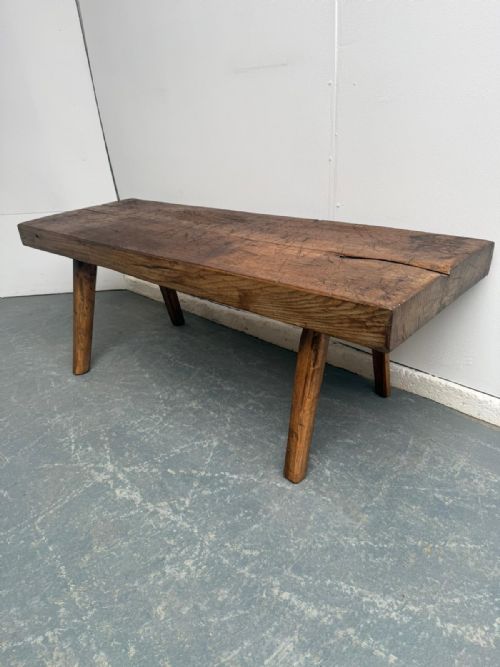
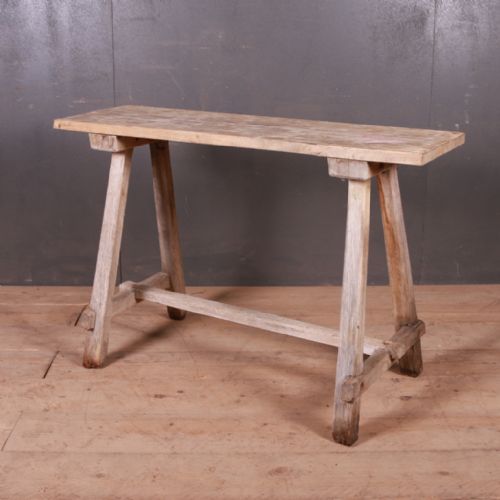
A narrow farmhouse table provides a practical surface in compact rooms where standard dining furniture overwhelms the floor plan. These pieces span utility forms such as scrubbed laundry tables, pig benches, serving tables and trestle tables created across the nineteenth century.
Most examples originate from French provincial workshops or regional European settings, favouring elongated proportions over standard width. They include oak, pine, poplar, sycamore and elm constructions designed for daily domestic labour rather than formal dining.
Buyers encounter formats with potboards, potshelves or trestle bases that elevate simple timber boards into functional furniture. The nineteenth century yields the bulk of these listings, encompassing Victorian pieces and specific dates like 1880, 1890 and 1920.
How they were made
Local artisans constructed these tables using solid hardwoods and softwoods sourced regionally, pairing oak and elm with poplar or pine. Surfaces often display a scrubbed finish that exposes the grain after generations of scouring and use.
Trestle supports, potboard lower shelves and integrated potshelves provide structural stability without requiring wide frames. Iron components occasionally appear in fixings or hardware, complementing the heavy timber tops.
Narrow Farmhouse Table Retail Price Guide 2026
Typical asking prices for narrow farmhouse table among the pieces listed under this phrase on Sellingantiques today, from the lower quarter to the upper quarter. They describe what is for sale here now, not the wider market.
Current listings span the nineteenth century, including specific years like 1880, 1890 and 1920, alongside Victorian examples.
What varies in quality
The integrity of the timber top sets the baseline for quality, distinguishing boards with rich patination from those with excessive degradation. Scrubbed surfaces that retain a smooth, clean texture without heavy warping demonstrate superior historical upkeep.
Construction methods also dictate worth, particularly the rigidity of trestle joints and the attachment of undershelves like potboards. Original proportions that remain unaltered by later cutting down command greater appreciation among collectors.
The Narrow Farmhouse Table Glossary
- Potboard
- A lower shelf fitted beneath the main surface of a table or dresser base, traditionally used for storing pots and pans.
- Trestle table
- A table consisting of two or more support frames connected by a horizontal beam, allowing maximum legroom along the length.
- Scrubbed finish
- A timber surface repeatedly washed with water and sand or stone, removing soft fibres to leave a pale, clean grain.
- Pig bench
- A low, narrow wooden bench or low table originating from rural farm use, often repurposed today as a compact side or serving surface.
Narrow Farmhouse Table: Frequently Asked Questions
Where do narrow farmhouse tables fit best?
These pieces suit narrow hallways, compact kitchens and galley dining areas where standard furniture blocks movement.
Their restrained depth allows them to function as serving consoles, sideboards or breakfast surfaces without dominating the room.
How were these tables used originally?
Rural households utilised these narrow formats for food preparation, laundry tasks and general domestic labour in farm kitchens.
Lower potshelves and potboards held heavy earthenware vessels, keeping workspace surfaces clear for daily chores.
How do I clean a scrubbed timber top?
Maintain scrubbed wood using a dry or barely damp cloth to remove everyday dust without driving moisture into the grain.
Avoid harsh chemical cleaners that strip the historic patination accumulated across the nineteenth century.
What defines a French trestle table?
French provincial trestle tables rely on distinct end supports joined by a central stretcher rather than four corner legs.
This design provides structural bracing while maintaining an open profile beneath the long timber top.