


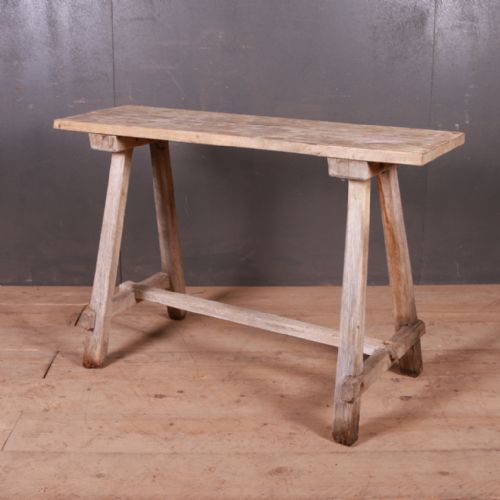


Narrow Dining Table
These narrow dining table designs save floor space while offering surface area for meals, spanning periods from Regency to the twentieth century.
Narrow Dining Table
A narrow dining table provides the surface area required for meals without dominating compact rooms, which explains its enduring appeal in modern and period homes alike. When you search for a narrow dining table, you encounter diverse forms ranging from French trestle tables to English gateleg and dropleaf designs.
The selection includes refectory formats alongside Sutherland tables and preparation tables made from timber. Oak and pine dominate the domestic examples, while French country and Scandinavian country styles appear frequently across the periods.
Earlier pieces from the Regency era demonstrate formal extending mechanisms in mahogany, whereas nineteenth-century examples often utilise scrubbed poplar or deal planks. Drop-leaf formats from the early twentieth century offer adjustable widths for flexible dining arrangements.
Materials and Construction
Makers utilised native hardwoods such as oak, mahogany, elm, and sycamore alongside softwood varieties including pine, poplar, and deal. Solid timber tops sat upon pegged frames, trestle bases, turned legs, or gateleg supports depending on the regional tradition and period.
Extending versions incorporated brass mechanisms and additional leaves for adjustment, while simpler scrubbed kitchen tables relied on plank construction fixed with stretchers. French provincial workshops favoured poplar and oak for trestle tables designed to withstand daily domestic labour.
Several French trestle tables retain the flour dust settled deep within their scrubbed poplar grain from decades of kitchen prep.
Assessing Quality and Character
Quality rests in the selection of timber and the integrity of the original construction rather than decorative excess. Tables retaining their unpainted, scrubbed timber surfaces or patinated polish demonstrate superior survival through active kitchen use.
Finer cabinet-made examples from the Regency period exhibit precise mahogany joinery and functional brass extending tracks. Country pieces show honest vernacular construction with pegged joints and substantial timber planks that bear the marks of long service.
Gillows
The Narrow Dining Table Glossary
- Gateleg table
- A table with hinged legs that swing out to support drop leaves when raised. This clever mechanism allows the surface area to expand or contract according to space requirements.
- Trestle table
- A long board resting on two or more supports, which were traditionally connected by a horizontal stretcher. This design provides sturdy legroom beneath the dining surface.
- Refectory table
- A long, narrow dining table originally used in communal dining halls and monastic refectories. These substantial pieces frequently feature heavy stretchers and plank tops.
- Sutherland table
- A narrow drop-leaf table featuring exceptionally slender hinged flaps and folding legs. It was designed to occupy minimal floor space when placed against a wall.
- Scrubbed finish
- A wooden surface washed repeatedly with water and coarse brushes to remove old finishes and dirt. This process leaves the pale, clean grain exposed.
Narrow Dining Table: Frequently Asked Questions
How do I choose the right width?
Consider the clearance needed around the room for chairs and movement when the table is in use. Narrow formats generally measure under one hundred and twenty centimetres across.
Drop-leaf and gateleg versions allow you to adjust the footprint daily, while fixed refectory boards provide a permanent surface for narrow spaces.
Were these tables meant for kitchens?
Many examples originated in domestic kitchens, farmhouses, and prep rooms where surface depth had to remain restricted. Scrubbed pine and poplar tables served practical culinary functions before entering dining rooms.
Formal mahogany and oak versions were produced for parlours and dining halls, showing finer grain selection and polished finishes.
How do I care for scrubbed timber?
Scrubbed wood surfaces respond well to gentle cleaning with warm water and mild soap, followed by thorough drying. Avoid excessive moisture to prevent warping in old pine and poplar planks.
Applying occasional clear wax helps protect the grain from spills while preserving the dry, historic texture of the timber.
How can I date a wooden table?
Examine the tool marks, construction methods, and timber species used in the underframe and drawer linings if present. Hand-cut joints and pegged tenons typically indicate nineteenth-century or earlier craftsmanship.
Hardware such as brass hinges and extending tracks also provides clues, though repairs and replacement parts occur frequently on older furniture.