



Napoleon III Style Table
These pieces for a napoleon iii style table bring together ebonised wood, kingwood, and ormolu mounts to capture nineteenth-century French revivalism.
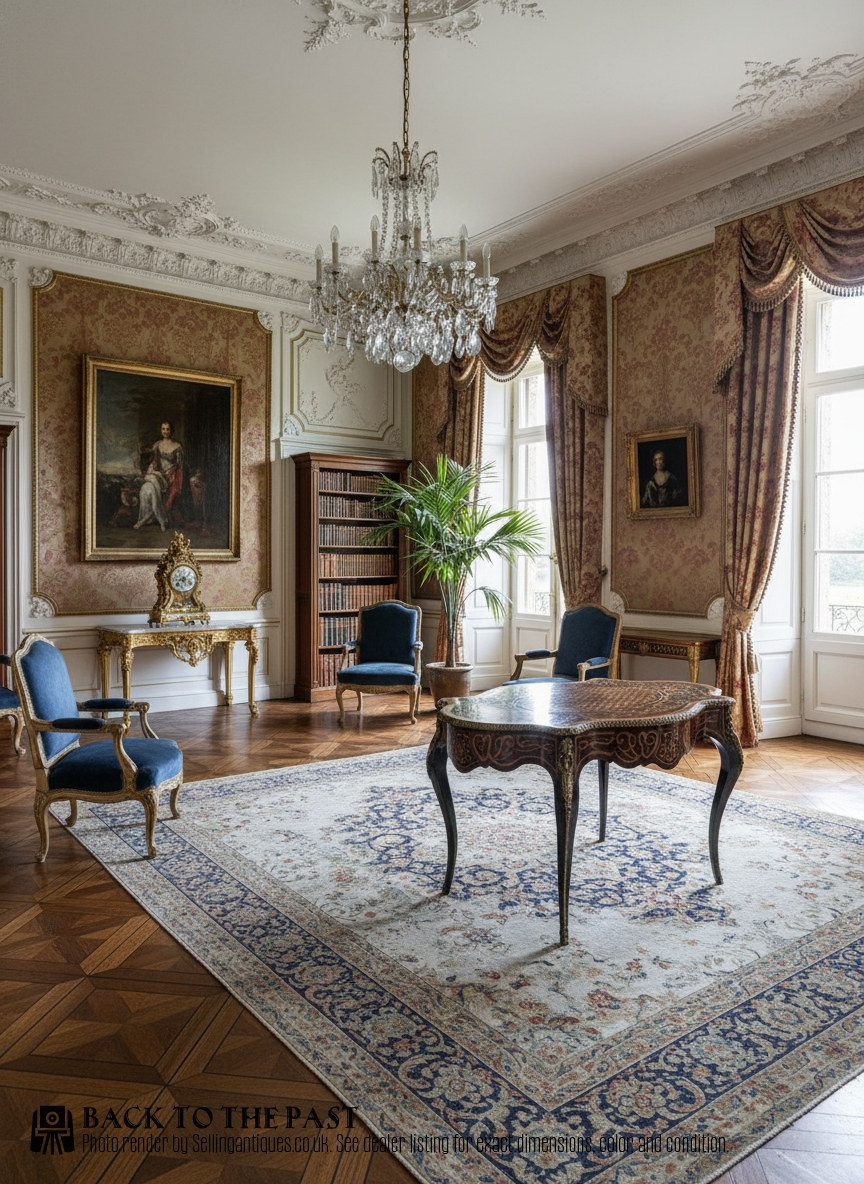
Napoleon III Style Table
When searching for a napoleon iii style table, a buyer meets an array of nineteenth-century French occasional, centre, writing, and games tables. These forms span the periods from eighteen-fifty to nineteen-hundred, originating from a distinct era of eclectic revivalism.
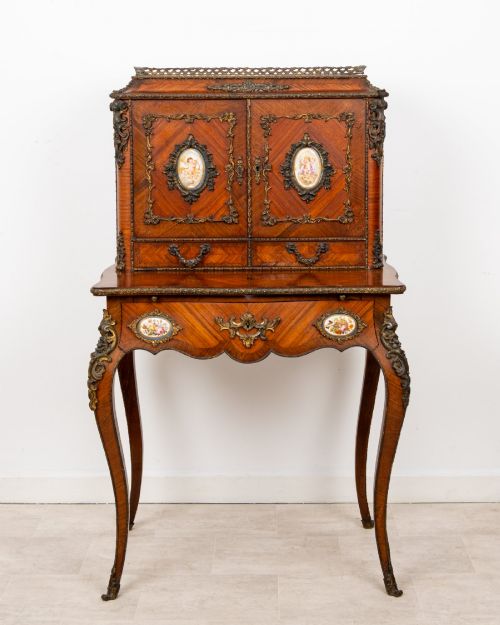
The most common versions on this page are centre tables, writing desks, and side tables constructed with exotic woods and decorative metal mounts. Many pieces combine structural utility with display, incorporating porcelain plaques and intricate marquetry.
Makers and workshops of the nineteenth century drew heavily on Louis XV and Louis XVI styles, adapting them for opulent domestic interiors. The resulting forms range from freestanding centre tables to tiered tea tables and compact writing desks.
How they were made
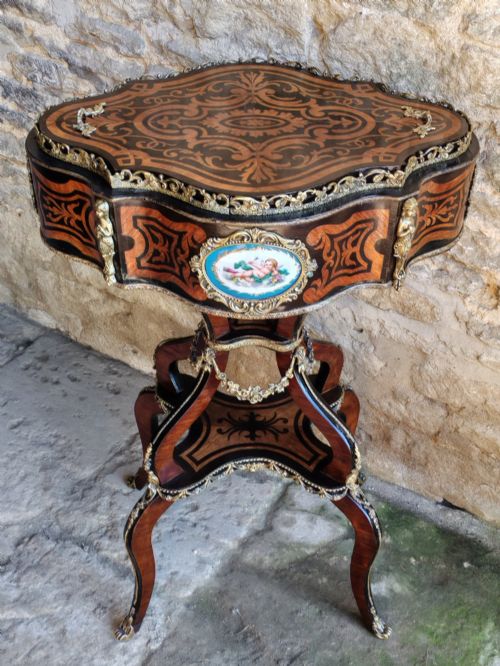
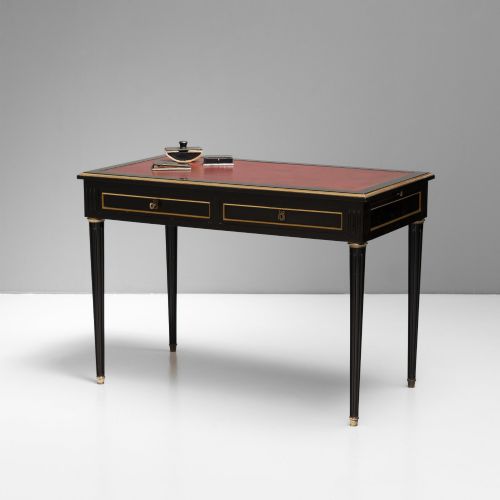
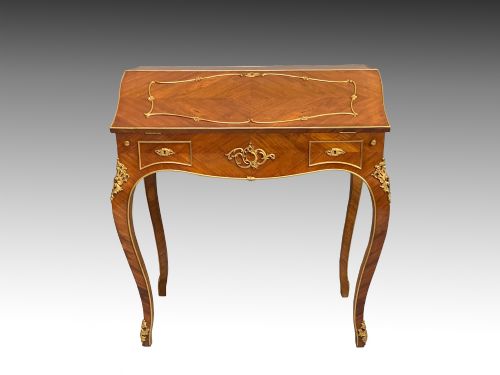
Cabinet makers utilised dense hardwoods such as ebonised wood, kingwood, walnut, and tulipwood as foundational structures for these tables. Surfaces frequently display elaborate marquetry, parquetry, and brass inlays known as Boulle work.
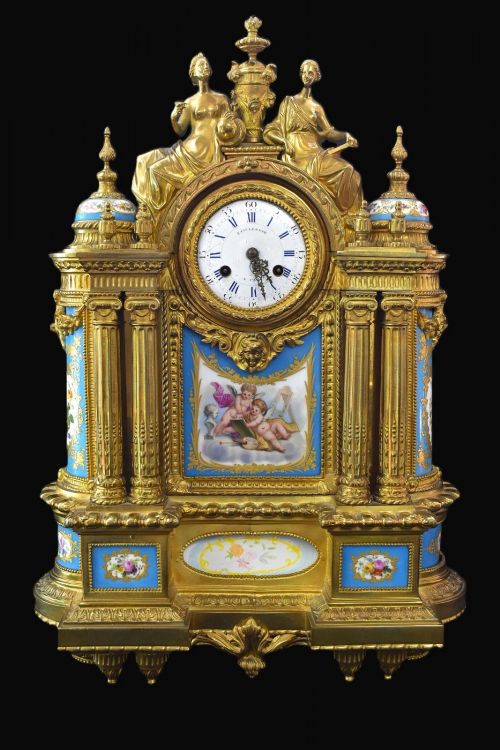
Gilt bronze and ormolu mounts provide structural accents, edge guards, and figural details across the pieces. Sèvres-style porcelain plaques and painted panels are frequently inset into the timber surfaces to add colour and contrast.
Joinery techniques matched the ostentatious appearance, employing stable carcases to support heavy stone or wood tops alongside delicate bronze castings. Surface finishes relied on French polishing to accentuate the grain of exotic veneers.
Listings feature nineteenth-century ebonised wood, kingwood, and walnut alongside gilt bronze mounts and porcelain plaques.
What varies in quality
The standard of ormolu casting largely distinguishes finer examples from simpler workshop output. Crisp chasing, deep mercury gilding, and substantial weight in the bronze mounts indicate superior production.
Veneer selection and inlay precision reveal the hand of skilled cabinet makers. Tightly patterned parquetry and well-matched exotic timbers retain their alignment and stability far better than hastily assembled panels.
The integration of porcelain plaques and decorative hardware affects overall harmony. High-quality pieces display careful fitting where metal mounts meet timber, maintaining smooth contours without gaps.
Achille Brocot·Henry Marc·Etienne Lenoir·Maison Millet·PH Mourey
The Napoleon III Style Table Glossary
- Ormolu
- Gilded bronze used for decorative mounts and hardware. This technique involves applying a gold amalgam to bronze before heating.
- Boulle work
- Marquetry of tortoiseshell and brass inlaid into ebonised wood. Developed in France, it creates a rich patterned surface.
- Kingwood
- A dense, richly grained tropical timber utilised for high-end furniture veneers. It provides dark purple and brown tones.
- Marquetry
- Decorative patterns formed from fitted pieces of wood veneer applied to a carcase. Craftsmen use various timbers to create pictorial designs.
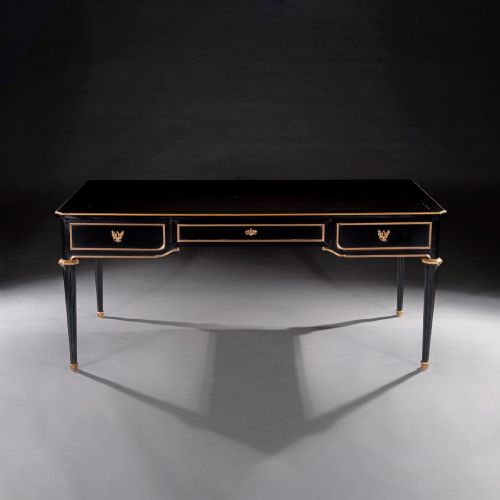
- Bureau plat
- A freestanding double-sided writing desk featuring a flat top and drawers. These typically stand on cabriole or tapered legs.
Napoleon III Style Table: Frequently Asked Questions
Were these tables used for writing?
Many examples function as writing desks, bureau plats, or bon-heur du jour tables with integrated compartments. They served domestic administrative tasks in nineteenth-century salons.
Other variations were designed purely as centre tables or occasional display furniture.
How should I clean the wood?
Maintain polished timber surfaces using a soft cloth and micro-abrasive free wax formulated for antiques. Avoid modern chemical sprays that degrade nineteenth-century polishes.
Keep bronze mounts free of dust with a dry brush rather than liquid cleaners.
Can these tables support heavy items?
Most occasional and centre tables safely hold lamps, books, or decorative objects. Writing tables and heavy marble-top pieces offer greater structural weight capacity.
Regular checks on leg joints ensure stability over time.