





Muted Brown Watercolour Painting
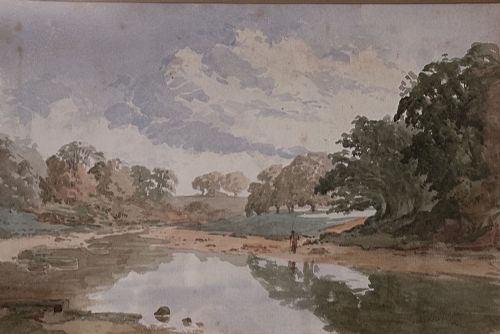
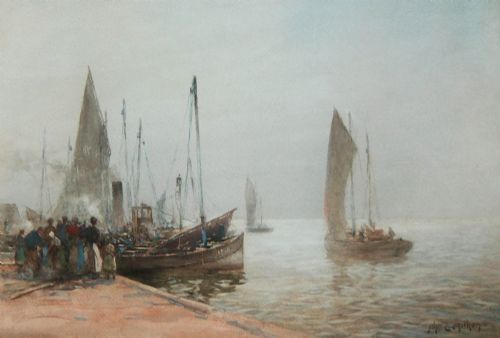
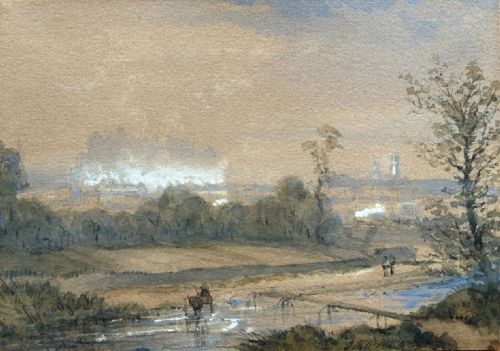
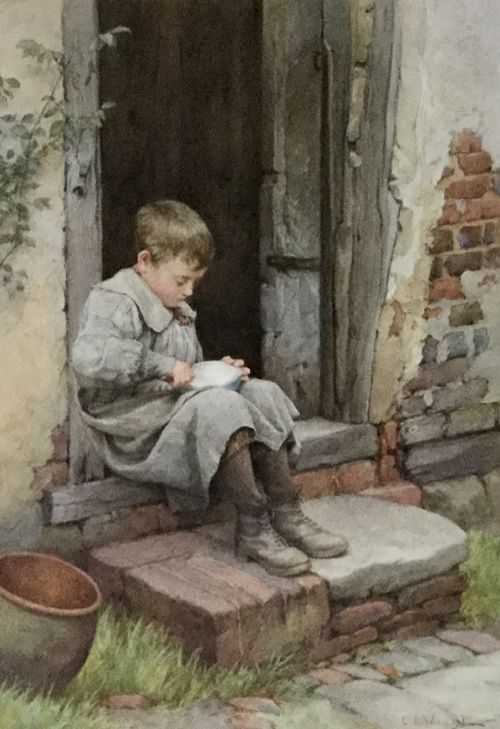
A muted brown watercolour painting captures atmospheric British landscapes and coastal scenes in subtle earth tones.
Muted Brown Watercolour Painting
A muted brown watercolour painting represents original works on paper spanning from the nineteenth century through the mid-twentieth century. Buyers encounter coastal views, rural landscapes, and historical village scenes created by British and continental artists.
The selection includes framed works executed in subdued palettes, focusing on sepia and earthy brown tones rather than bright primary colours. These paintings document historical docks, Scottish landscapes, and quiet country cottages.
Materials and technique
Artists applied watercolour pigment directly onto paper supports, occasionally combining watercolour paint with pastel or ink to build texture and depth. Wood and glass typically enclose these pieces within period frames.
The technique relies on washes of watercolour paint to create subtle gradients of brown, allowing the texture of the paper to show through the lighter areas of the composition.
Muted Brown Watercolour Painting Retail Price Guide 2026
Typical asking prices for muted brown watercolour painting among the pieces listed under this phrase on Sellingantiques today, from the lower quarter to the upper quarter. They describe what is for sale here now, not the wider market.
Assessing quality
Quality rests upon the artist's handling of tone and perspective, where confident brushwork distinguishes skilled compositions from ordinary sketches. Strong draughtsmanship and effective use of the monochromatic palette elevate a piece.
Condition of the paper and pigment stability also influence standing, as exposure to light can fade delicate watercolour paint over decades. Original framing and clear provenance add to the desirability of nineteenth and twentieth-century works.
John R Prentice·James E. Aitken·JAMES HAYLLAR·Alfred George Morgan·Fred Lawson·Sir Thomas Newenham Dean·Ernest Pile Bucknall·TOM CLOUGH·James Orrock·Louie Stanley Maurice Prince·HENRY CHARLES FOX·EDMUND MORRIS WIMPERIS·John D. Walker·HAROLD SWANWICK·Fred Mayor·EDWARD KILLINGWORTH JOHNSON·GEORGE GRAHAM·ROBERT LESLEY HOWEY·William Collins·Arthur Netherwood·Maurice Asselin·William A. Macdonald·WILLIAM STEPHEN COLEMAN·Cuthbert Crossley·GEORGE GOODWIN KILBURNE
The Muted Brown Watercolour Painting Glossary
- Watercolour pigment
- Finely ground colour particles suspended in a water-soluble binder, forming the primary medium for these works on paper.
- Wash
- A thin, fluid layer of diluted watercolour paint spread across the paper to create smooth background tones or skies.
- Wove paper
- A smooth paper stock manufactured on a fine wire sieve, commonly used for nineteenth and twentieth-century watercolours.
- Provenance
- The documented history of ownership of an artwork, establishing its authenticity and origin.
Muted Brown Watercolour Painting: Frequently Asked Questions
How should I hang a watercolour painting?
Watercolour paintings require protection from direct sunlight to prevent the pigments from fading over time. Position them on interior walls away from moisture and direct heat sources.
Ensure the frame is sealed properly behind glass to protect the paper from atmospheric dust and humidity fluctuations.
What periods do these paintings cover?
The available selection spans from the mid-nineteenth century through the Victorian and Edwardian eras, extending into mid-century twentieth-century works.
Styles range from traditional Victorian realism and British impressionism to early twentieth-century school landscapes.
Are these paintings original works?
Every piece listed is an original artwork executed by hand on paper rather than a modern mechanical reproduction. Artists utilised watercolour paint and pigment directly on the sheet.
Many bear the signature or attribution of the original nineteenth or twentieth-century painter.
What subjects appear in these works?
Common subjects include Yorkshire harbours, Scottish landscapes, coastal docks, and quiet rural village scenes. Artists also captured architectural views and historical streetscapes.
The palette remains predominantly earthy and muted, emphasising natural browns and sepia tones.