





Moulded Ceramic Jug
A moulded ceramic jug brings tactile relief work and functional form to the table, uniting sculptural depth with practical pouring.
Moulded Ceramic Jug
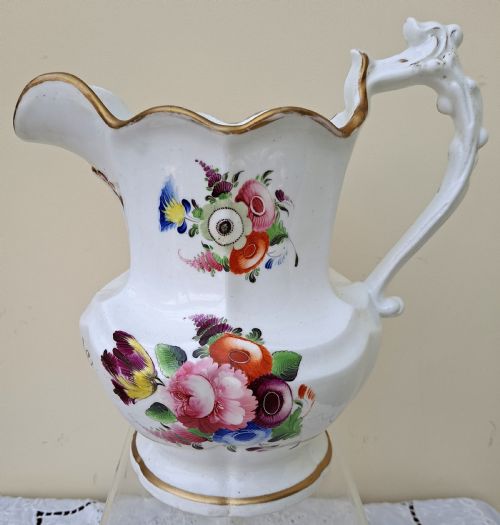
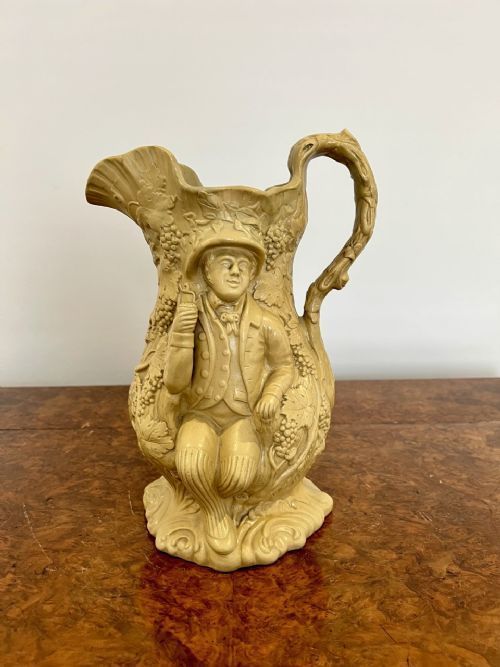
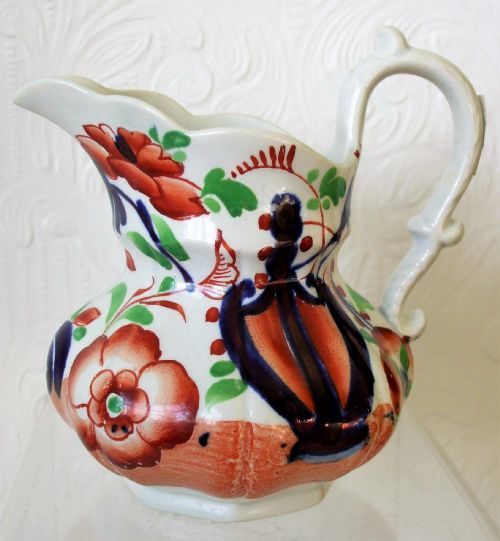
A moulded ceramic jug is a vessel shaped in a mould to produce raised patterns, figures, or botanical motifs across the body. When you search for a moulded ceramic jug, you encounter forms ranging from utilitarian milk vessels to large exhibition pitchers.
The pieces on this page span the eighteenth and nineteenth centuries, taking in Georgian and Victorian periods alongside Edwardian examples. You meet earthenwares, stonewares, pearlware, and porcelain vessels designed for daily service or display.
Makers utilised various pressing techniques to achieve crisp exterior designs, from classical bacchanalian revels to cabbage leaf textures and animal handles. These pitchers appear in diverse glazes, including majolica colours, black basalt, and monochrome buff tones.
Materials and Techniques
Potters formed these vessels using clay bodies such as earthenware, heavy stoneware, pearlware, and soft-paste porcelain. Many pieces relied on press moulding or slip casting in two-part moulds to transfer intricate relief details directly onto the body.
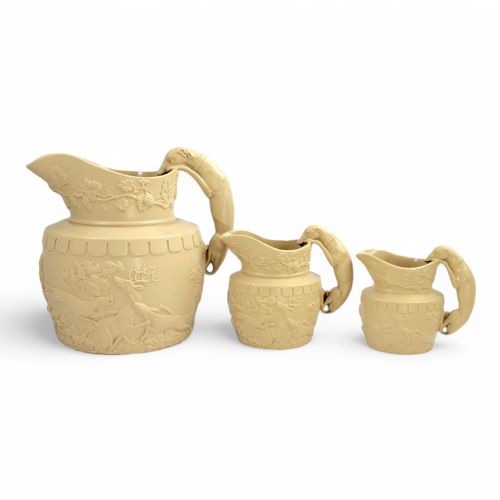
Coloured glazes, enamels, and salt glazing added surface durability and decorative contrast to the moulded textures. Potters frequently applied handle types shaped as dolphins, hounds, or lampreys to complement the sculptural bodies.
Moulded Ceramic Jug Retail Price Guide 2026
Typical asking prices for moulded ceramic jug among the pieces listed under this phrase on Sellingantiques today, from the lower quarter to the upper quarter. They describe what is for sale here now, not the wider market.
Hound handles grip pitcher necks with theatrical intensity, turning a simple milk pour into a woodland hunt.
Assessing Quality
Quality rests upon the crispness of the moulded relief and the depth of the modelled details against the body. Superior pieces retain sharp edges on figures and foliage without blurring from worn production moulds.
The handling of glaze and colour application distinguishes finer examples, where enamel work or majolica tones remain precise and evenly distributed. Well-proportioned handles and balanced potting reveal the skill of the original workshop.
John Baley·Charles Meigh·Ridgway and Sons·Jones and Walley·Phillips and Bagster·George Jones
The Moulded Ceramic Jug Glossary
- Relief moulded
- A decorative technique where designs are pressed outward in three-dimensional form on the ceramic body. This process creates tactile surface patterns that catch the light.
- Pearlware
- A refined earthenware developed in the late eighteenth century featuring a subtle bluish glaze over a white body. It bridged the gap between creamware and later whitewares.
- Majolica
- A colourful, lead-glazed earthenware introduced during the Victorian era with vibrant botanical or figural themes. The glazes pool richly in the recesses of moulded designs.
- Salt glazed
- Stoneware fired at high temperatures with common salt thrown into the kiln to produce an orange-peel textured finish. This technique creates a durable, vitrified surface.
- Black basalt
- A fine-grained, unglazed black stoneware perfected by eighteenth-century potters for classical subjects. Its matte surface accentuates sharp relief modelling.
Moulded Ceramic Jug: Frequently Asked Questions
How do I clean an antique jug?
Wash ceramic vessels by hand in warm water using a mild, non-abrasive detergent. Avoid submerging pieces with old repairs or metal mounts for extended periods.
Dry them thoroughly with a soft cloth to protect the glaze and any delicate enamel details from moisture damage.
Were these vessels used for daily dining?
Many examples served practical household functions such as pouring milk, water, beer, or cream at the table. Larger pitcher forms handled heavier service during meals or social gatherings.
Others functioned primarily as commemorative or decorative pieces intended for display on sideboards rather than kitchen use.
How do I date a relief moulded piece?
Examine the clay body, glaze characteristics, and registration marks stamped on the base of the vessel. Early pieces often feature creamware or pearlware bodies, while Victorian examples show rich majolica or Parian finishes.
Stylistic cues such as Gothic revival motifs or classical bacchanalian scenes help narrow the decade of production.
Can I use antique jugs for serving drinks?
Most antique ceramic vessels remain structurally sound for serving cold liquids if handled with care. Inspect the interior for any hairline cracks or crazing that might absorb moisture before use.
Due to historical glazes and delicate handles, hand washing is essential after any service.