



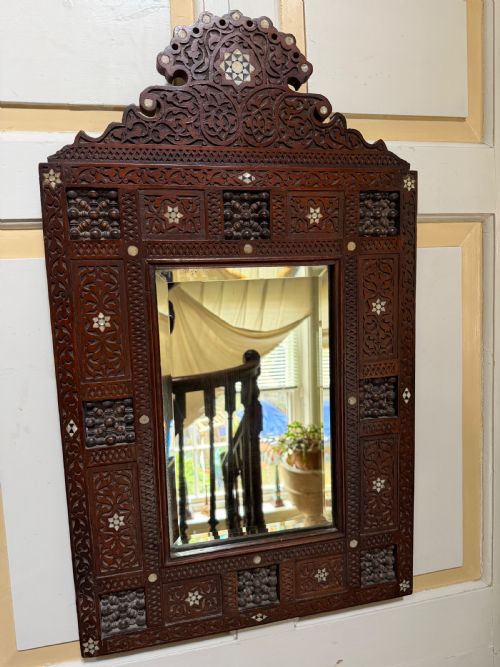

Mother of Pearl Frame
A mother of pearl frame brings iridescent depth and intricate pattern to a room, catching the light in a way ordinary wood or metal cannot.
Mother of Pearl Frame
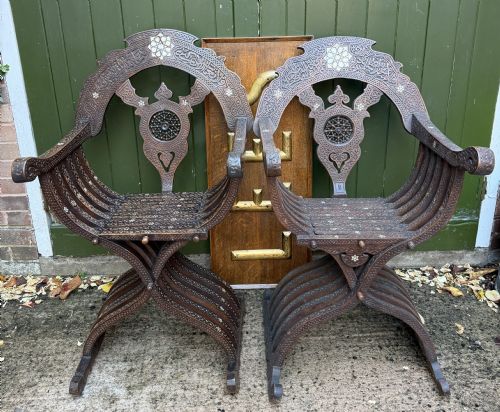
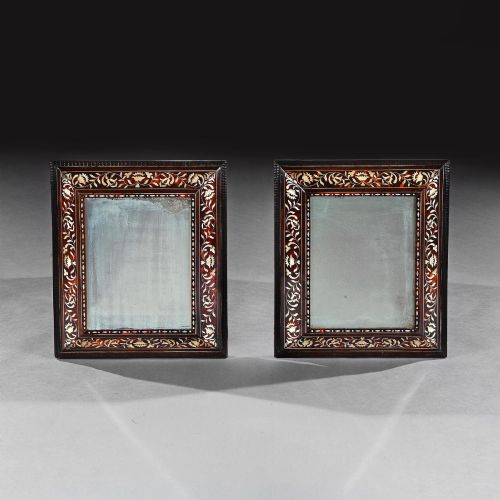
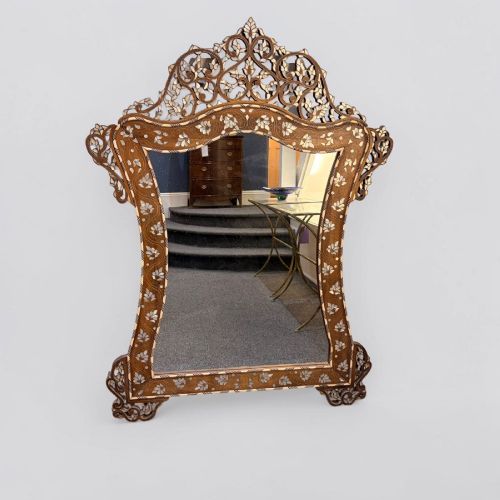
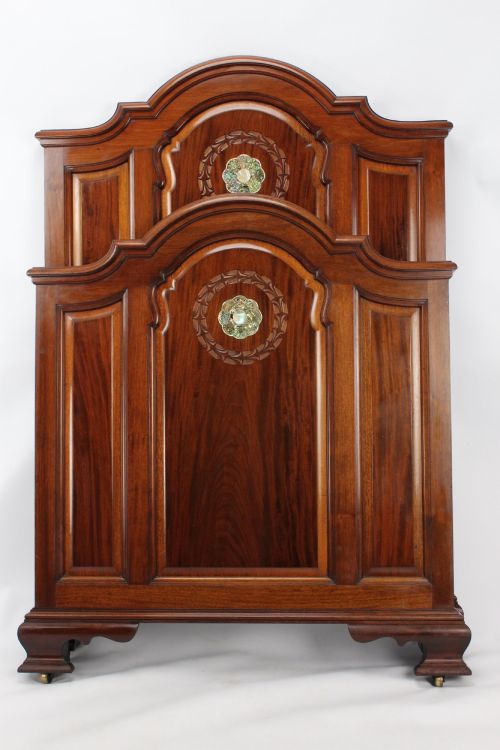
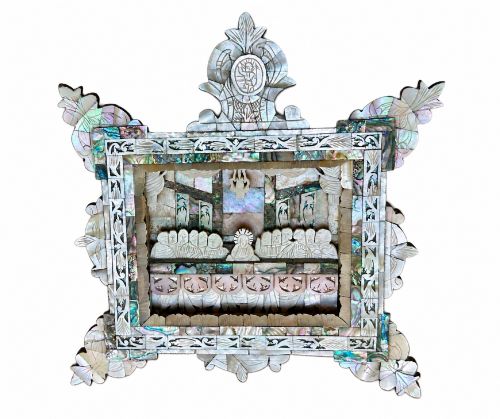
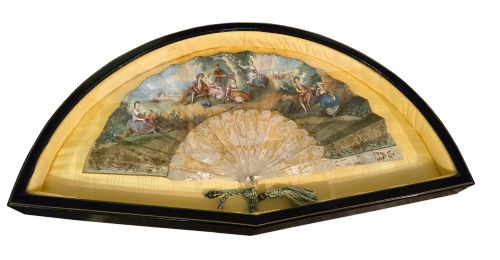
A mother of pearl frame encompasses pieces where nacre shell forms the primary decorative surface, appearing across mirrors, wall plaques, and display enclosures. These items span various origins, from Syrian workshops and European parlours to Spanish Colonial pieces.
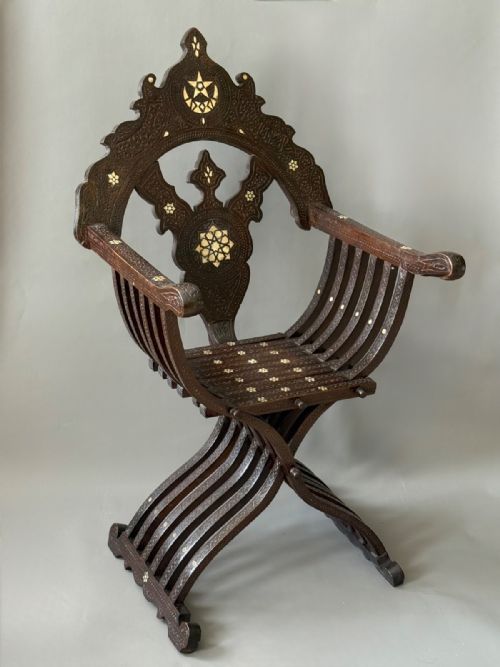
The inventory shows a strong representation of Syrian and Levantine joinery, alongside Victorian walnut furniture and French timepieces incorporating shell work. Buyers encounter items ranging from small religious dioramas to substantial wall mirrors.
Geographic origins dictate the distinct visual language of these items, with Middle Eastern pieces favouring geometric bone and nacre inlay on walnut cores. European examples often utilise ebonised wood or delicate metal wire alongside the shell.
Materials and construction
Craftsmen built these pieces using solid timbers such as walnut, oak, and fruitwood, often applying ebonised finishes or red lacquer to darken the ground. Into these wooden bases, artisans set thin geometric segments of mother of pearl and abalone shell.
Workshops employed bone, metal wire, and brass elements to partition the iridescent shell fragments and create complex mosaic patterns. Adhesive compounds and wooden pegs secured the nacre pieces within hand-cut channels in the timber.
Mother of Pearl Frame Retail Price Guide 2026
Typical asking prices for mother of pearl frame among the pieces listed under this phrase on Sellingantiques today, from the lower quarter to the upper quarter. They describe what is for sale here now, not the wider market.
Some Victorian frames double as unexpected pulpits, holding pious printed mottoes rendered in shimmering shell.
Assessing craftsmanship and condition
Quality rests upon the precision of the inlay work and the uniformity of the shell segments embedded within the timber frame. Superior pieces maintain tight joints between the nacre tesserae without excessive gaps filled with dark mastic.
The depth and variety of the mother of pearl and abalone iridescence separate standard decorative items from finer examples. Finer joinery exhibits crisp carving in the surrounding wood, particularly in Levantine and Syrian work.
The Mother of Pearl Frame Glossary
- Mother of pearl
- The iridescent internal layer of mollusc shells, harvested for decorative inlay. This material reflects shifting tones of silver, pink, and green under changing light.
- Nacre
- An alternative term for mother of pearl, frequently used to describe the shell inlay found on Levantine and Syrian woodwork. It provides the smooth, lustrous surface seen on mirrors and chairs.
- Abalone
- A marine mollusc shell yielding highly colourful, deep blue and green iridescent fragments. It often appears alongside standard mother of pearl in nineteenth-century inlay work.
- Mashrabiya
- An architectural turned wood lattice technique common in Middle Eastern joinery. It frequently frames nacre-inlaid mirrors and panels from the Levant.
- Ebonised wood
- Timber treated with chemical stains or dark finishes to imitate ebony. This dark ground contrasts sharply with the pale iridescence of inlaid shell.
Mother of Pearl Frame: Frequently Asked Questions
Where were these inlaid frames made?
The pieces originate from diverse regions, with notable groups coming from Syrian and Levantine workshops known for intricate geometric woodwork. Other examples hail from Victorian European centres, French cabinet makers, and Spanish Colonial contexts.
Regional traditions dictate the timber used and the specific arrangement of the nacre shell. Middle Eastern items typically employ walnut or fruitwood carved with dense mosaic patterns.
How do I date a mother of pearl frame?
Dating relies on examining the underlying timber, the construction techniques of the frame, and the style of the inlay. Pieces from the nineteenth century often feature walnut frames with dense geometric nacre and bone tesserae.
Earlier eighteenth-century examples display different joinery methods and distinct regional motifs, such as Peruvian or Mexican tortoiseshell work. Comparing the secondary woods and backing materials helps confirm the period of manufacture.
Can I hang a heavy inlaid mirror safely?
Assess the structural integrity of the wooden frame and the security of the joints before mounting any heavy wall mirror. Many older frames require professional reinforcement or specialised hanging hardware to distribute the weight evenly.
Ensure wall fixings match the substantial weight of solid timber and dense shell inlay. Consult a specialist framer if the original backing or hanging points show signs of wear.