



Moorish Style Chair
These moorish style chair examples combine intricate joinery with exotic inlay, offering an eclectic seating choice for any interior.
Moorish Style Chair
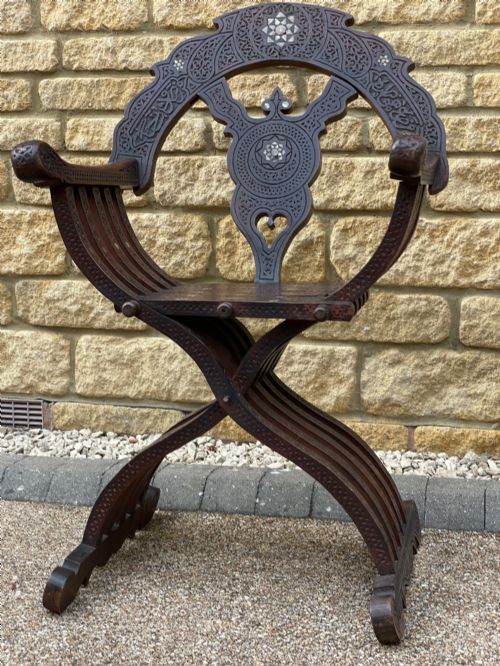
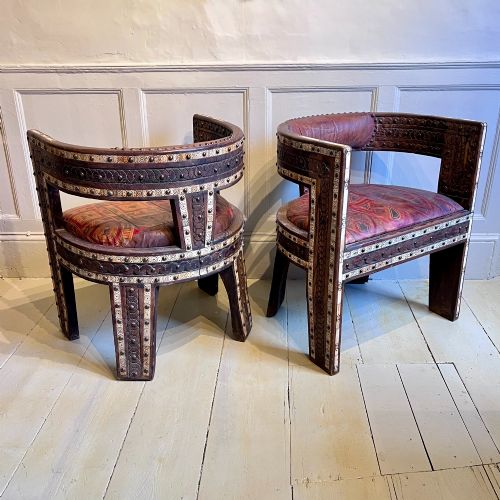
When you search for a moorish style chair, you encounter a distinct genre of seating defined by complex geometric woodwork and ornate surface decoration. The pieces available range from corner chairs and side chairs to larger armchairs and conversation seats.
You are most likely to meet examples originating from the nineteenth and early twentieth centuries, spanning Edwardian interpretations to regional variants. These incorporate diverse regional aesthetics including Syrian, Moroccan, Andalusian, and Spanish traditions.
The forms often utilise architectural elements such as Mashrabiya panels and folding frames. Such seating serves as both a functional item and an ornamental statement within a room.
How they were made
The construction relies on dense hardwoods such as walnut, shaped through traditional carving and joinery techniques. Frames frequently incorporate folding mechanisms or rigid structural supports designed to bear daily weight.
Surface adornment distinguishes the craft, utilising detailed bone and mother-of-pearl inlay set precisely into the wooden matrix. Painted finishes and leather upholstery further complement the carved wooden structures.
Moorish Style Chair Retail Price Guide 2026
Typical asking prices for moorish style chair among the pieces listed under this phrase on Sellingantiques today, from the lower quarter to the upper quarter. They describe what is for sale here now, not the wider market.
Some folding chairs manage to look like intricate puzzles until you sit down and realise they are entirely collapsible.
What varies in quality
Quality rests primarily on the precision of the woodwork and the intricacy of the inlay work. Tighter geometric patterns and complete bone or mother-of-pearl tessellation indicate superior craftsmanship.
The integration of structural elements like Mashrabiya panels also dictates the overall standard. Sound joinery that maintains stability without compromising decorative detail separates standard production from finer examples.
Liberty and Co
The Moorish Style Chair Glossary
- Mashrabiya
- A traditional architectural element featuring turned wooden lattices assembled into complex geometric screens. These panels provide decorative ventilation and privacy in furniture design.
- Bone Inlay
- The technique of embedding small carved pieces of bone into wood to create contrasting patterns. It forms intricate white motifs against dark timber backgrounds.
- Mother-of-Pearl
- The iridescent inner layer of mollusc shells used for decorative inlay. It reflects light to create shimmering surface highlights on the chair frame.
- Hip-Joint Chair
- A historical seating form characterised by interlocking wooden components held together without standard glue or nails. This construction allows the chair to be easily disassembled.
- Corner Chair
- A seat designed to fit into the corner of a room, featuring a diagonal orientation with a supportive backrest wrapping around two adjacent sides.
Moorish Style Chair: Frequently Asked Questions
Where were these chairs placed?
These chairs typically served in reception rooms, smoking rooms, or hallways where exotic furnishings added a cosmopolitan touch. Their decorative nature meant they functioned equally as conversation pieces and occasional seating.
In period interiors, they stood out against conventional upholstery, contrasting European styles with North African and Middle Eastern motifs.
How do I care for inlaid wood?
Maintain inlaid furniture by keeping it away from direct sunlight and extreme temperature fluctuations, which can cause the wood to shrink and loosen the bone or mother-of-pearl elements. Dust gently with a dry, soft cloth.
Avoid liquid polishes that might seep into the microscopic gaps between the inlay and the surrounding timber, as moisture can degrade the adhesives.
Are folding chairs sturdy?
Many historical folding chairs utilise precise interlocking wooden hinges that distribute weight evenly across the frame. While they offer portability, their stability depends on the soundness of the original wooden pins and hinges.
Careful inspection of the pivot points ensures the folding mechanism operates smoothly without placing undue stress on the carved members.
How do I distinguish regional styles?
Regional variations reveal themselves through specific decorative motifs, such as Syrian mother-of-pearl patterns or Spanish hip-joint construction methods. Examining the choice of hardwood and the style of carving clarifies the geographic origin.
Cross-referencing the joinery techniques with known period aesthetics helps determine whether a piece leans toward Anglo-Moorish taste or authentic North African production.