


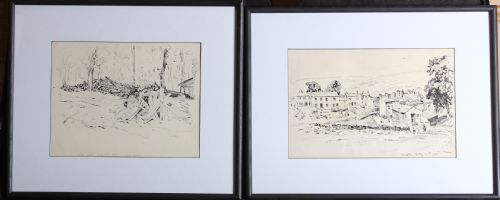


Monochrome Watercolour
Monochrome watercolour works rely on tonal restraint, capturing depth through ink, sepia and wash rather than a full palette of colour.
Monochrome Watercolour
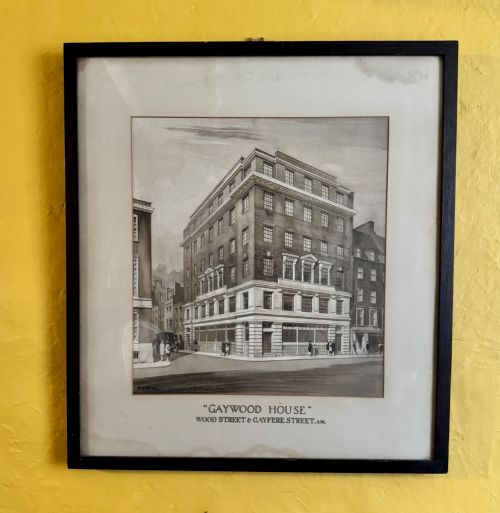
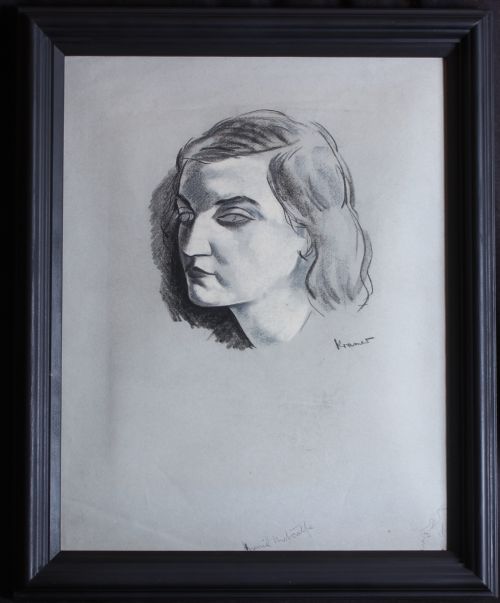
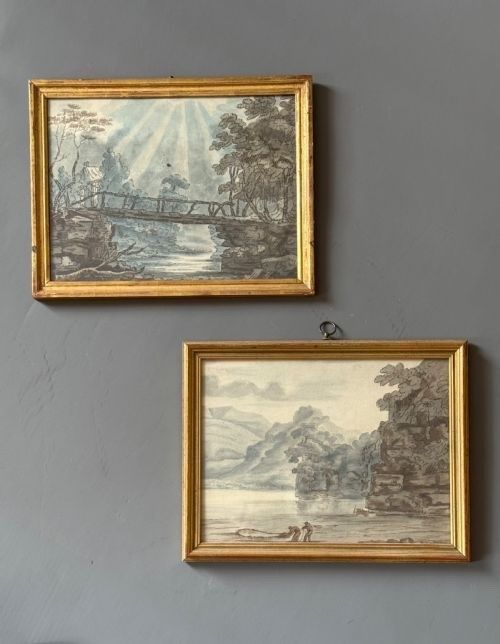
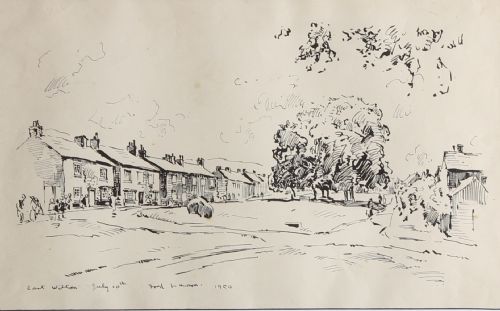
A monochrome watercolour brings together draughtsmanship and tonal painting, spanning landscape views, architectural studies and character portraits. Buyers searching for a monochrome watercolour will find works ranging from late eighteenth-century topographical sketches to mid-century British landscapes and townscapes.
The selection leans heavily toward British production, featuring framed artwork executed in ink, sepia and pencil wash on paper. Early examples often record pastoral scenes or regional architecture, while later twentieth-century pieces capture northern towns and rural Yorkshire settings.
Materials and technique
Artists built these compositions on paper supports, frequently combining pencil underdrawing with pen and ink outlines. Washes of watercolour, sepia ink or monochrome pigment were then applied to establish shadows, atmosphere and architectural detail.
Framing typically involves glass protection paired with wood or gilded wood surrounds, preserving the delicate paper surface from atmospheric moisture and handling over the centuries.
Monochrome Watercolour Retail Price Guide 2026
Typical asking prices for monochrome watercolour among the pieces listed under this phrase on Sellingantiques today, from the lower quarter to the upper quarter. They describe what is for sale here now, not the wider market.
Framing materials across the inventory include plain wood, gilded wood, and protective glass enclosures.
Markers of distinction
Quality rests primarily on the confidence of the initial line work and the subtlety of the tonal wash. Stronger pieces display precise pen control and a balanced distribution of light and dark that creates spatial depth without relying on colour.
The distinction between standard decorative pieces and finer works also depends on the clarity of provenance, attribution to documented artists, and the preservation of the original paper surface without excessive fading or discoloration.
Jacob Kramer·Fred Lawson·William Manners·Stanley Orchart·Samuel Palmer·Amos Green·Thomas Lound
The Monochrome Watercolour Glossary
- Sepia ink
- A brown pigment traditionally derived from the ink sac of the cuttlefish. It produces warm, enduring monochromatic tones favored for landscape sketches.
- Wash
- A thin, semi-transparent layer of diluted watercolour or ink applied evenly across paper. This technique establishes uniform backgrounds and subtle shadow gradients.
- Topographical
- Representing specific real-world locations, buildings or landscapes with accuracy. Many early works served as visual records before the widespread use of photography.
- Gouache
- An opaque water-based medium containing pigment and a binding agent, sometimes added to watercolours to create solid highlights and dense coverage.
Monochrome Watercolour: Frequently Asked Questions
How do I hang a monochrome watercolour?
Keep works out of direct sunlight to prevent the paper and ink from fading over time. Maintain stable room temperatures to protect the paper support and framing materials.
Ensure framing uses acid-free backing boards and glass separation to prevent moisture condensation against the delicate surface of the drawing.
What periods do these artworks cover?
The works span from the eighteenth century through the Victorian era and into the mid-twentieth century. Earlier examples focus on topographical and pastoral subjects, while later pieces explore townscapes and magazine illustration.
Stylistic shifts reflect changing approaches to draughtsmanship, moving from classical picturesque landscapes toward modern British realism and regional observation.
Are these works original or printed?
The selection consists of original hand-drawn and painted works on paper rather than mechanical reproductions. Close inspection reveals hand-applied brushstrokes, ink lines, and pencil underdrawings unique to each sheet.
Signatures, artist ciphers, and period framing further confirm the status of these pieces as unique historical artworks.
What is sepia ink?
Sepia is a dark brown pigment that yields warm, stable monochromatic tones ideal for tonal sketching and wash drawings. It allows artists to model form and shadow without introducing full colour.
In many historical works, sepia provides greater longevity and distinct tonal richness compared to standard iron gall or carbon inks.