


Monochrome Watercolour Art
Monochrome watercolour art brings together delicate washes and ink lines across the eighteenth, nineteenth and twentieth centuries.
Monochrome Watercolour Art
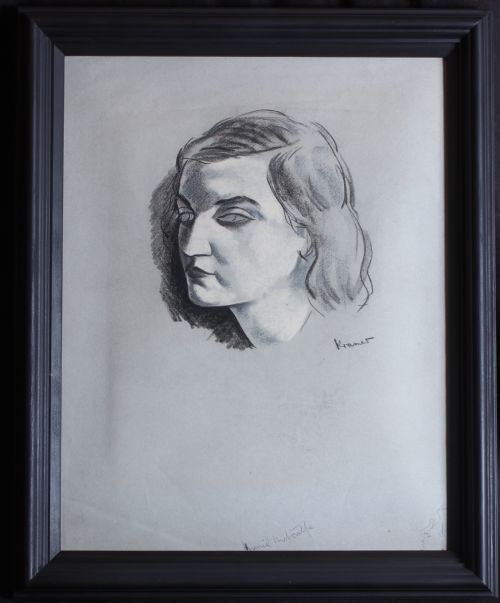
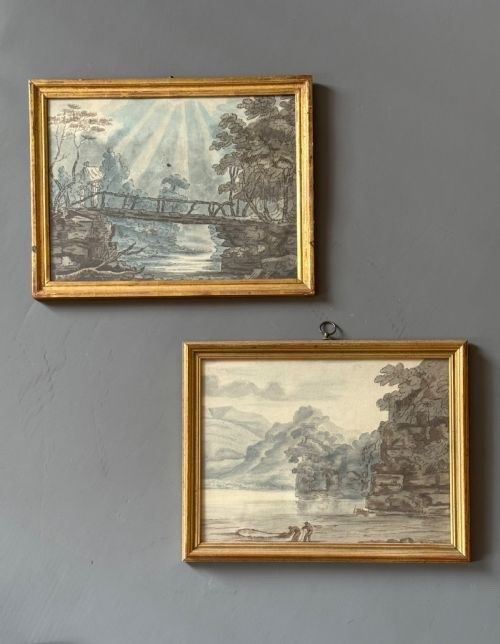
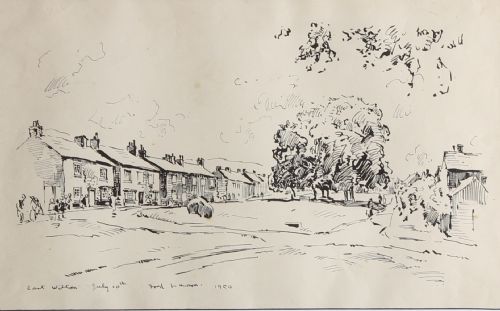
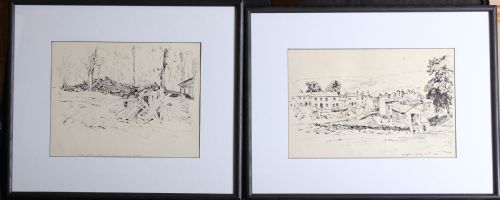
Monochrome watercolour art encompasses original paintings, drawings, framed artwork and wall art executed in single-colour tones, ink, sepia ink and pencil on paper. Buyers seeking monochrome watercolour art will encounter Victorian scenes, Edwardian portraits, Georgian sketches and mid-century British landscapes.
The selections span architectural townscapes, pastoral views, moody moonlit street scenes and intimate figure studies. Most examples date from the nineteenth and twentieth centuries, featuring works by listed British artists and anonymous hands alike.
Materials and technique
These works are created on paper supports using watercolour pigments, ink, sepia ink, pencil and occasional gouache washes. Artists layered fluid washes over precise ink or pencil outlines to build depth and shadow in a restricted palette.
Framed presentation typically includes glass and wood surrounds to protect the delicate paper works from atmospheric moisture and handling.
One commercial illustration created for a Harrods advertisement proves that even department stores once relied on delicate monochrome washes.
Factors of quality
Quality rests upon the sureness of the draughtsmanship beneath the wash and the atmospheric control of the monochrome pigment. Stronger pieces display confident brushwork and precise ink or pencil definition that anchors the composition.
Condition of the paper and the preservation of the delicate tonal gradations also determine the standing of an individual piece.
Fred Lawson·William Manners·Stanley Orchart·Edward Dayes·Samuel Palmer·Amos Green·William J Hodgson·Charles Prosper Sainton·Montagu Barstow·Owen Bowen·Arthur E Gonne·Thomas Lound
The Monochrome Watercolour Art Glossary
- Watercolour
- A painting method where the paints are made of pigments suspended in a water-based solution. These are typically applied to paper supports.
- Sepia
- A brown pigment derived from the ink sac of the cuttlefish. It was widely used for monochrome drawings and wash paintings.
- Gouache
- An opaque water-based paint that includes a white pigment to create density. Artists use it to add highlights to watercolour and ink works.
- Wash
- A thin, fluid layer of diluted watercolour or ink spread across paper. It provides even background tones or broad areas of shadow.
Monochrome Watercolour Art: Frequently Asked Questions
What is monochrome watercolour art?
Monochrome watercolour art refers to paintings, drawings and illustrations created using a single colour tone, ink, sepia or pencil wash on paper. These works rely on tonal contrast rather than full colour to define form, light and shadow.
Items in this category range from detailed Georgian architectural sketches and Victorian pastoral landscapes to twentieth-century townscapes and magazine illustrations.
How should I hang these pieces?
Paper works require careful placement away from direct sunlight to prevent the monochrome pigments and paper supports from fading over time. Standard conservation framing with glass helps protect the delicate surfaces from household humidity and dust.
Pairing frames with acid-free mounts ensures the paper remains stable and visually separated from the glass.
How do I identify the period?
Period identification relies upon stylistic clues, subject matter, clothing in portraits and framing materials. Eighteenth and nineteenth-century works often feature distinct paper types, handwritten inscriptions and traditional framing methods.
Twentieth-century examples often display modernist compositions, distinct signature styles or publication notes associated with magazine illustration.