






Modular Library Shelving
Modular library shelving delivers adaptable storage through sectional bookcases built in oak, mahogany, and glass.
Modular Library Shelving
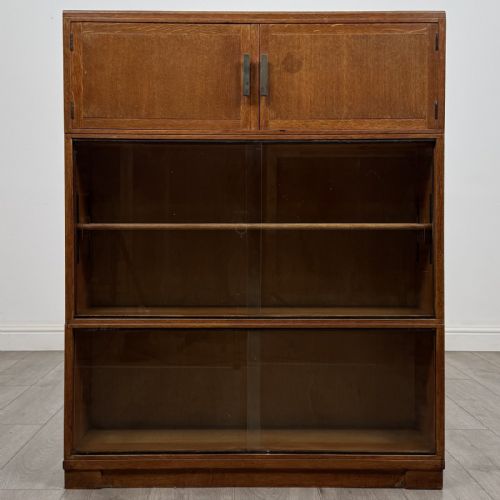
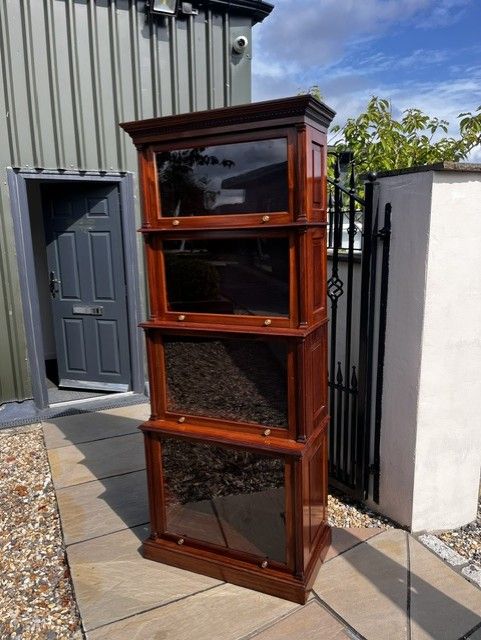
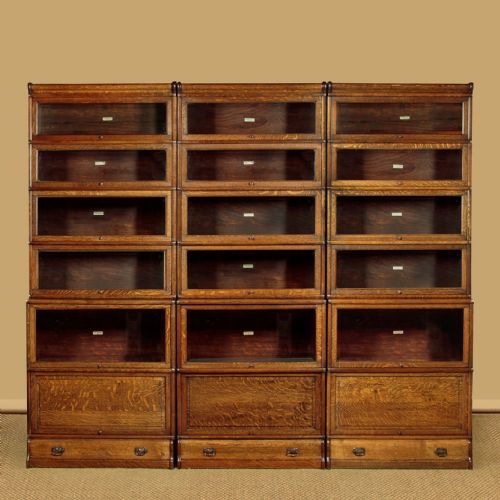
Modular library shelving comprises sectional bookcases designed to be stacked in tiers, offering flexible storage that adapts to growing collections. These adaptable units appear in various forms, including barrister bookcases with glazed up-and-over doors and stacking office bookcases.
The versions most commonly met on this page span the Edwardian period, the nineteen-twenties, and the nineteen-thirties, reflecting popular designs of the early twentieth century. Pieces from the nineteenth century also appear alongside later iterations, showing how the form evolved from traditional cabinetry into modular sections.
How they were made
Makers constructed these bookcases using solid timbers like oak and mahogany, often pairing the wood with glass panels and brass fittings. The modular design relies on individual stacked sections that fit together without permanent fixings, allowing each tier to be separated.
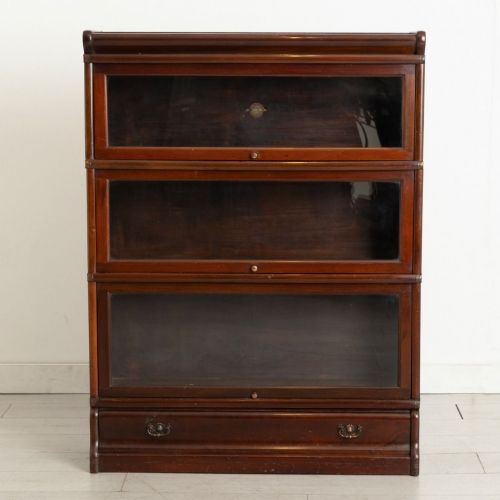
Glazed doors on many examples utilise a lifting and sliding mechanism, protecting books behind glass while maintaining easy access. Wood selection varied from sturdy oak used in office settings to fine solid mahogany suited for domestic libraries.
Modular Library Shelving Retail Price Guide 2026
Typical asking prices for modular library shelving among the pieces listed under this phrase on Sellingantiques today, from the lower quarter to the upper quarter. They describe what is for sale here now, not the wider market.
Some barristers supposedly kept their lunch behind the sliding glass doors alongside their leather-bound statutes.
What varies in quality
Quality in modular library shelving rests on the selection of timber, the robustness of the stacking mechanism, and the finish of the woodwork. Finer examples display carefully matched grain patterns across the stacked sections and incorporate solid brass hardware.
Globe Wernicke·Heal's·Lebus
The Modular Library Shelving Glossary
- Barrister bookcase
- A sectional bookcase with glazed doors that lift and slide into the cabinet above each shelf. This design kept legal texts dust-free in busy offices.
- Sectional bookcase
- A piece of modular library shelving made from independent tiers stacked one upon another. Individual sections can be added or removed as storage needs change.
- Globe-Wernicke-style
- A stacking bookcase design originating from the system patented by the Globe-Wernicke company. Many subsequent makers adopted this modular format.
- Edwardian
- A period spanning the reign of King Edward VII from nineteen hundred and one to nineteen hundred and ten. Furniture from this era often retains lighter proportions than Victorian pieces.
Modular Library Shelving: Frequently Asked Questions
How do modular bookcases separate?
Each tier rests upon the section below it using interlocking wooden lips or pin connections rather than fixed joints. Lifting a top section frees it from the tier beneath.
This interlocking construction allowed offices and libraries to reconfigure or expand their shelving stacks easily without dismantling heavy cabinetry.
What woods were used for modular shelving?
Makers predominantly built these bookcases using oak and mahogany, sometimes selecting solid mahogany for finer domestic pieces. Pine and general hardwoods also appear in utility contexts.
Timber choice generally reflected the intended environment, with durable oak favoured for offices and rich mahogany chosen for formal rooms.
Are stacking bookcases stable?
The weight of the stacked wooden tiers and the books inside provides natural stability when assembled correctly. Base plinths anchor the lowest section to the floor.
Tall stacks require careful placement against a wall to prevent tipping, particularly when upper tiers hold heavy volumes.
How do I date an oak stacking bookcase?
Dating relies on stylistic markers, hardware details, and maker signatures stamped into the wood or metal brackets. Pieces from the Edwardian era often feature lighter oak tones and simpler mouldings.
Nineteen-twenties and nineteen-thirties examples incorporate Art Deco influences or distinct patent plates from manufacturers like Globe Wernicke.