

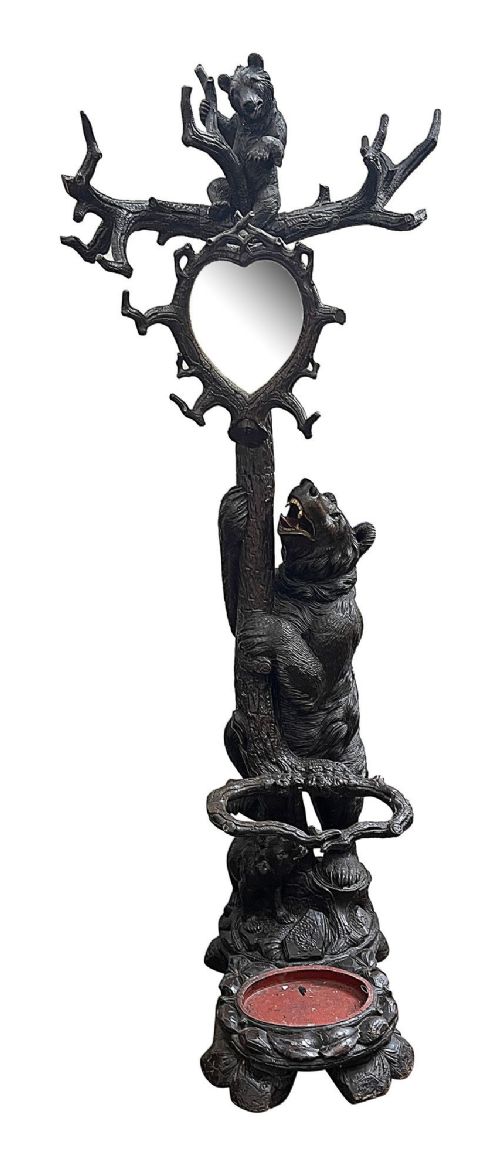
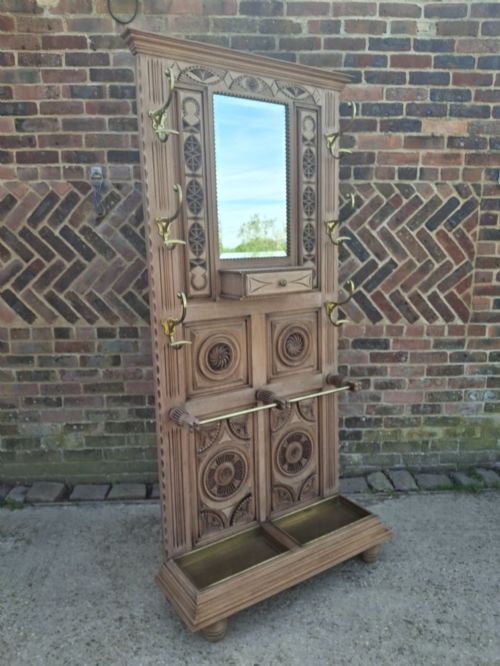
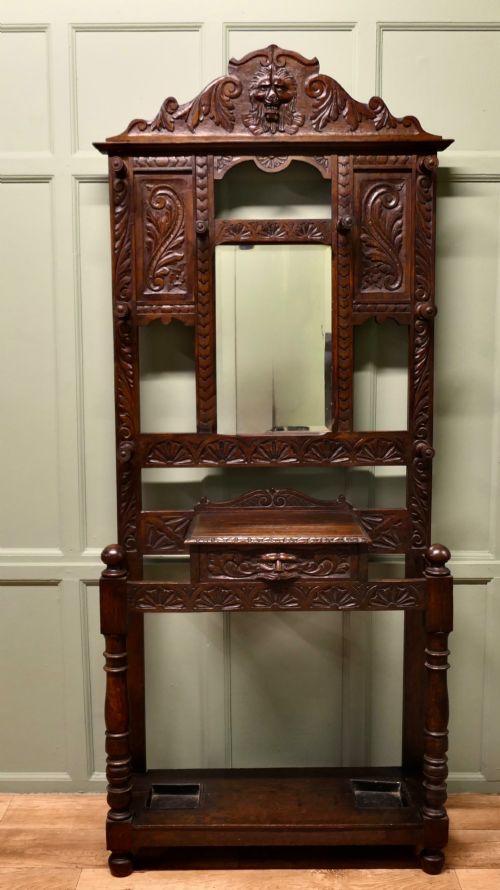
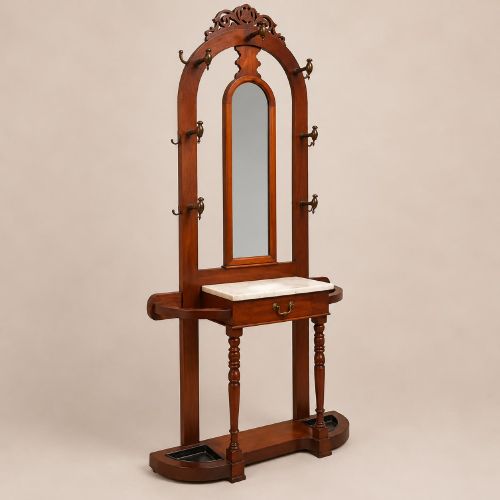


Mirrored Hat Rack
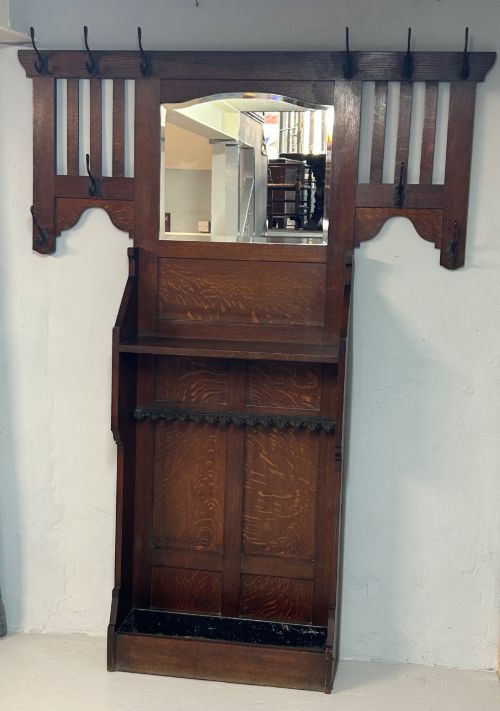
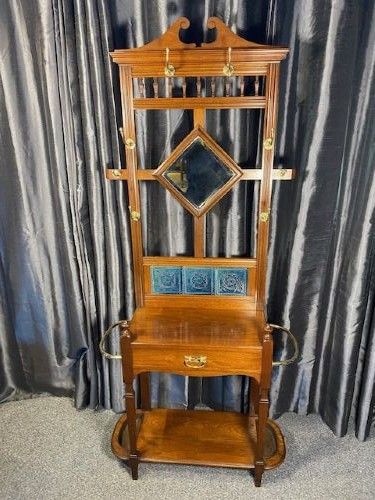
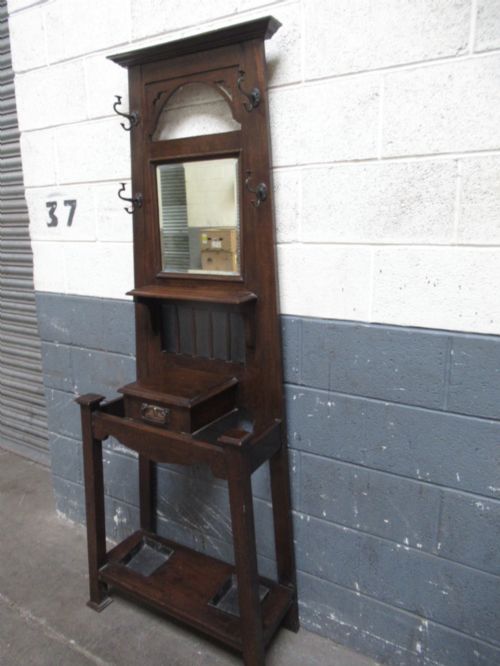
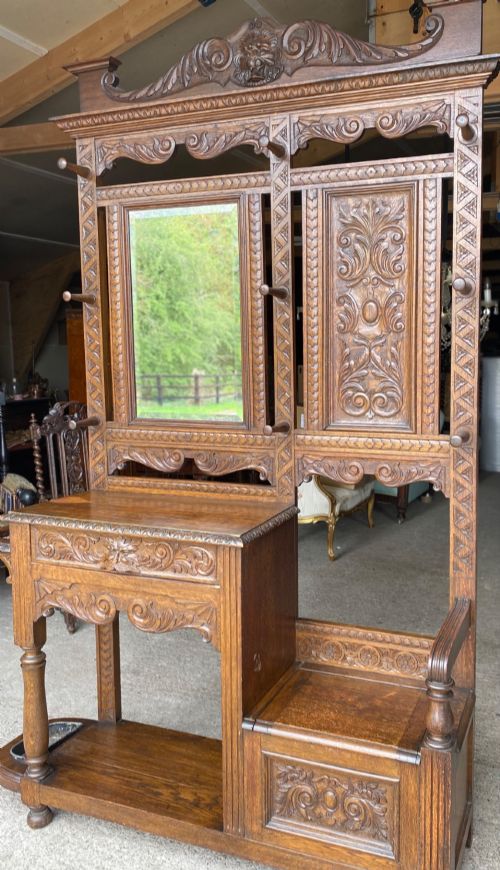
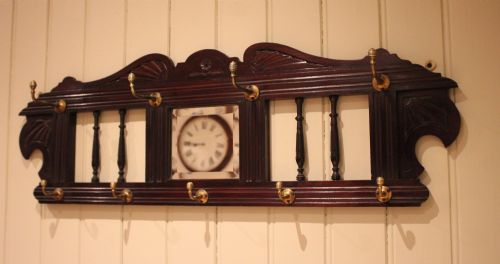
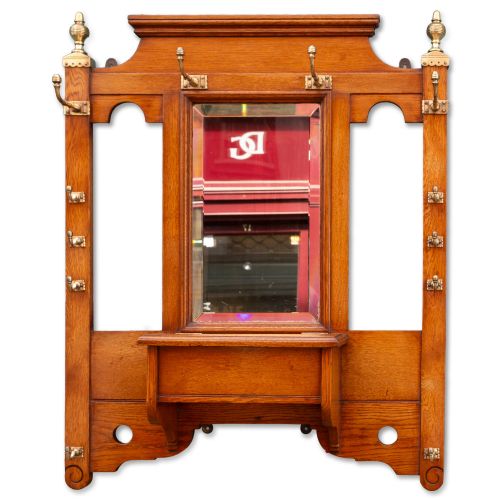
A mirrored hat rack brings immediate utility and reflection to an entrance hall, combining brass hooks and a central looking glass within solid wood or metal frames.
Mirrored Hat Rack
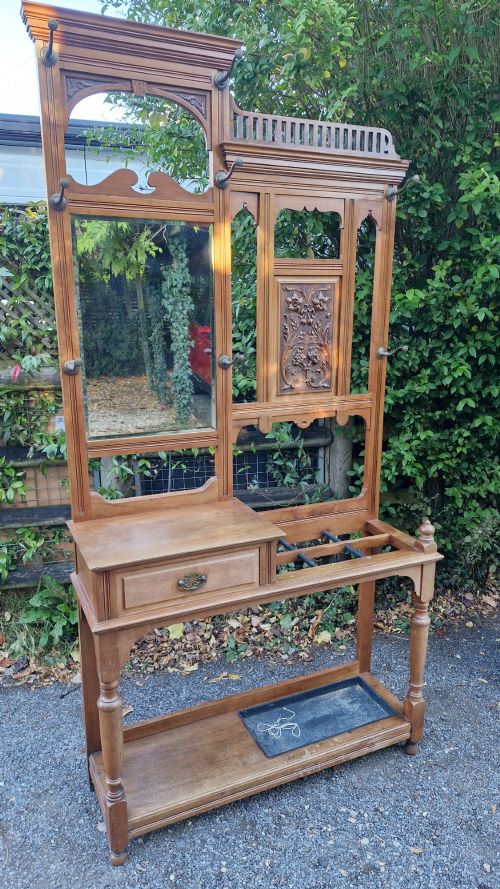
A mirrored hat rack combines a wall-mounted or freestanding hall stand with coat hooks, a mirror plate, and umbrella storage, originating predominantly from the Victorian, Edwardian, and early twentieth-century periods. These hall pieces serve entranceways by holding garments, hats, and sticks while offering a final check of one's appearance before leaving the house.
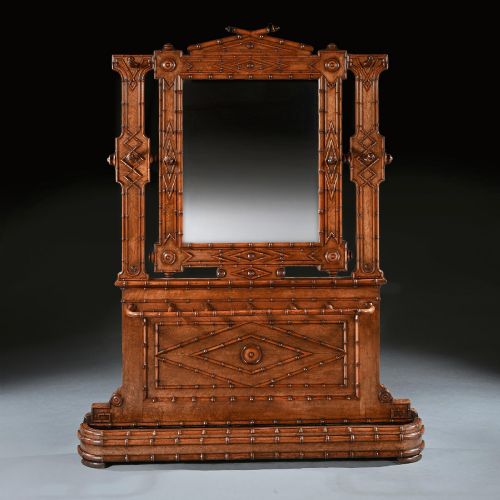
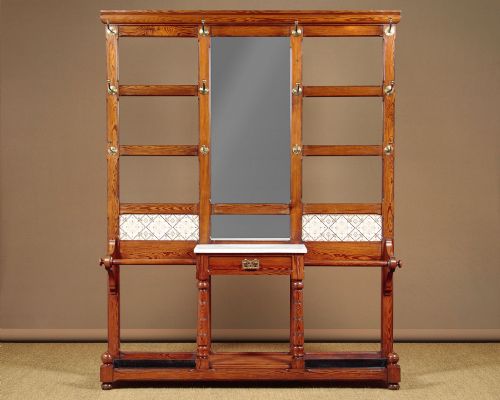
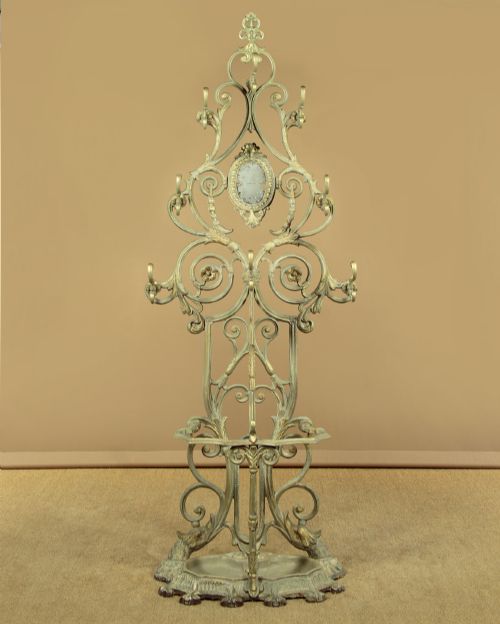
The pieces on this page appear in various timber forms, including oak, walnut, mahogany, pine, and exotic bamboo, alongside cast iron and bentwood frames. Freestanding hall stands and wall-mounted coat racks dominate the selection, often incorporating marble shelves or brass fittings into their construction.
Makers and designers span traditional British workshops as well as continental European manufacturers, producing styles from the Aesthetic Movement and Arts and Crafts to Art Nouveau. These objects reflect domestic hall organisation from the nineteenth century through to the nineteen-twenties.
How they were made
Makers utilised solid timbers such as oak, mahogany, and walnut, often applying deep bevels to mirror glass and securing heavy cast brass hooks directly to wooden backboards. Bamboo construction involved steam-bending canes and binding joints with wicker or cord, while cast iron versions utilised foundry moulds for intricate scrollwork and drip pans.
Carving, turning, and inlays defined the decoration of wooden examples, with cabinetmakers employing walnut, birdseye maple, and golden oak alongside brass rails and marble inset shelves. Bentwood pieces relied on heat and moisture to shape beech tubing into flowing, lightweight frameworks.
Mirrored Hat Rack Retail Price Guide 2026
Typical asking prices for mirrored hat rack among the pieces listed under this phrase on Sellingantiques today, from the lower quarter to the upper quarter. They describe what is for sale here now, not the wider market.
Listings feature items from the Victorian, Edwardian, and Art Nouveau periods, constructed from oak, walnut, mahogany, bamboo, and cast iron.
What varies in quality
Construction methods and material selection divide standard utility pieces from finer cabinet work, seen in the depth of wood carving, the thickness of mahogany or oak boards, and the retention of original mirror plates. Superior examples display substantial cast brass hooks, sound joints, and integrated marble surfaces that remain firmly seated within the frame.
Stylistic ambition and maker attribution elevate certain pieces, particularly those featuring complex Aesthetic Movement bamboo work, distinctive Art Nouveau curves, or documented foundry production. The preservation of original finishes, hardware, and structural stability dictates the standing of each hall stand.
Thonet·Fischel·Coalbrookdale
The Mirrored Hat Rack Glossary
- Hall stand
- A large hall furniture piece combining a mirror, coat hooks, umbrella stands, and often a small shelf or glove box. They anchor entrance halls by consolidating multiple cloakroom accessories into one wooden or metal structure.
- Bentwood
- Wood softened by steam and bent into curved structural forms, famously utilised by makers like Thonet and Fischel. This technique creates lightweight yet robust frames for coat stands and chairs.
- Bevelled plate
- Mirror glass with angled, polished edges that catch the light and add depth to the reflection. Higher quality pieces feature wider, hand-ground bevels.
- Aesthetic Movement
- A late nineteenth-century design style emphasising visual beauty over narrative content, frequently incorporating Japanese motifs, bamboo, and ebonised wood. Pieces from this movement celebrate decorative asymmetry and artistic craftsmanship.
- Faux bamboo
- Wood carved, turned, or painted to imitate the segmented nodes and texture of natural bamboo. Cabinetmakers used this method to achieve exotic aesthetics using domestic timbers.
Mirrored Hat Rack: Frequently Asked Questions
Where were mirrored hat racks placed?
These furnishings stood in entrance halls, corridors, and lobbies of Victorian and Edwardian homes to greet visitors and hold outdoor wear.
Their placement near the front door allowed residents to hang hats, coats, and scarves while storing walking sticks and umbrellas in the base trays.
How do I distinguish Victorian from Edwardian pieces?
Victorian examples tend to feature heavier carved decoration, darker woods like walnut or mahogany, and elaborate ornamentation reflecting high-Victorian taste.
Edwardian designs often display lighter oak timbers, simpler geometric lines, and influences from the Arts and Crafts or Art Nouveau movements.
What is the purpose of the marble shelf?
The marble insert provided a durable, water-resistant surface for placing calling cards, keys, or gloves upon entering the house.
It also served as a decorative accent that contrasted with the surrounding oak, walnut, or mahogany framing.
Are these racks suitable for modern walls?
Wall-mounted coat racks require secure fixing into solid masonry or studwork to support the weight of heavy winter garments and wooden frames.
Freestanding hall stands offer an alternative that requires no wall attachment, utilising a broad footprint and umbrella wells for stability.