



Mirror Backed Etagere
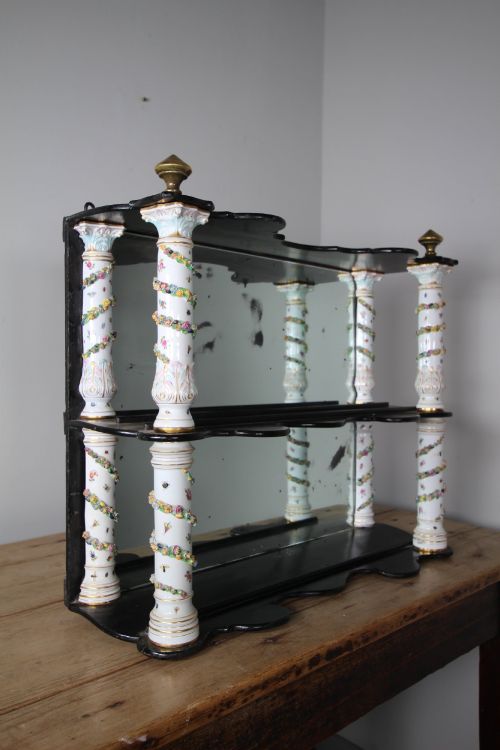
These mirror backed etagere pieces combine display shelving with reflective glass surfaces to amplify light and showcase small objects.
Mirror Backed Etagere
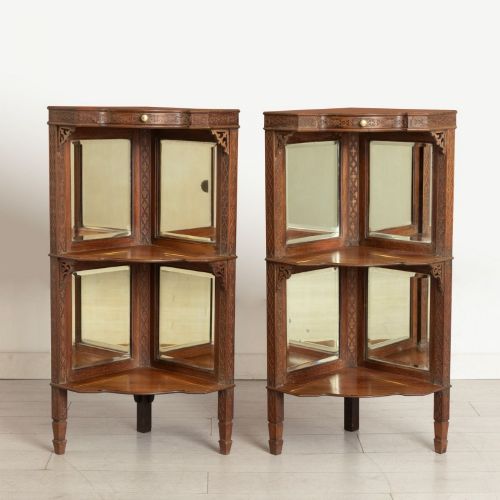
A mirror backed etagere provides tiered shelving combined with a glass mirror panel to reflect both the objects displayed and the surrounding room. These pieces appear across Victorian, Regency, and Georgian periods, manifesting in forms such as whatnots, corner cabinets, and console tables.
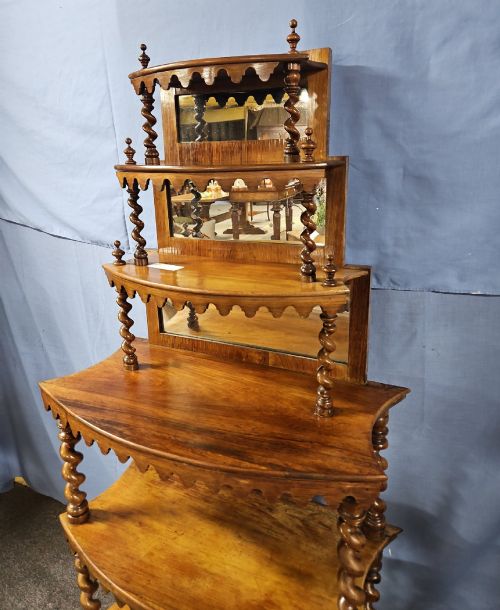
Buyers seeking a mirror backed etagere will encounter variations including multi-tiered walnut display shelves, mahogany corner cabinets, and rosewood pieces equipped with drawers or barley twist supports. The integration of glass and mirror glass defines this group, offering both functional storage and decorative impact.
The materials recorded across these items centre on rosewood, mahogany, walnut, and satinwood, frequently paired with brass and mirror glass. Styles range from Victorian Gothic Revival and Louis XVI Revival to Grand Regency and Edwardian interpretations.
How they were made
The construction of these pieces relies heavily on dense timbers such as rosewood, mahogany, and walnut, shaped into multi-tiered shelves, console tables, and corner cabinets. Marquetry inlay and parcel gilding frequently enrich the wooden surfaces, demonstrating precise cabinet-making techniques.
Mirrors and glass form an essential structural and decorative component, integrated neatly behind shelves to cast light through displayed objects. Brass fittings and carved wooden details, including barley twist supports and intricate framing, complete the fabrication.
Mirror Backed Etagere Retail Price Guide 2026
Typical asking prices for mirror backed etagere among the pieces listed under this phrase on Sellingantiques today, from the lower quarter to the upper quarter. They describe what is for sale here now, not the wider market.
Listings feature multiple timber types including rosewood, mahogany, walnut, and satinwood, paired with mirror glass and brass.
What varies in quality
Quality in these pieces is distinguished by the refinement of the timber selection and the precision of any marquetry inlay or carved detailing. Dense grains in rosewood, mahogany, and walnut elevate the visual weight of the item.
The integration of the mirror back and the structural integrity of tiered shelving dictate the upper tier of execution. Finer examples display harmonious proportions between the reflective glass and the surrounding woodwork, whether built in a Victorian or Regency aesthetic.
Edwards & Roberts·Donald Ross
The Mirror Backed Etagere Glossary
- Etagere
- A piece of furniture consisting of a set of open shelves for displaying small objects. These tiered units often incorporate mirrors to enhance the visibility of placed items.
- Whatnot
- A multi-tiered piece of open shelving used for storage or display in nineteenth-century interiors. They frequently feature turned columns and occasionally include small drawers.
- Marquetry
- Decorative veneer applied to furniture in geometrical patterns or pictures using thin slices of wood. This technique showcases contrasting tones of timber such as satinwood and walnut.
- Barley Twist
- A form of woodturning resembling the twist of a barley sugar stick, popular in Victorian furniture supports. It adds dynamic visual rhythm to upright posts and shelf columns.
Mirror Backed Etagere: Frequently Asked Questions
What is a mirror backed etagere used for?
These pieces were traditionally designed to display decorative objects, porcelain, and small collectables in principal rooms. The reflective glass back serves to multiply the light and showcase the pieces from multiple angles.
Today, they function similarly in domestic spaces, offering vertical display capacity while taking up relatively little floor area. Their combination of shelving and mirror glass makes them practical for adding depth to smaller or darker rooms.
How do I identify the period of a whatnot?
Dating relies on observing the primary timbers utilised, such as rosewood and mahogany in earlier nineteenth-century pieces versus later walnut and satinwood variations. Construction methods and decorative motifs like barley twist supports or marquetry also provide clear chronological markers.
Stylistic cues such as Victorian Gothic Revival or Grand Regency influence help narrow down the decade of manufacture. Comparing the specific turning and joinery against documented examples confirms the era.
Where should I place an etagere at home?
An etagere suits corners, alcoves, or wall spaces where vertical display height is desired without heavy blockish furniture. Placing them opposite windows allows the mirror back to capture and reflect natural daylight across the room.
They pair well with console tables and side cabinets, functioning as focal points for curated collections of ceramics or glassware. Ensure the floor is level, particularly for taller tiered shelving units.
What timbers are most common in these cabinets?
Mahogany and rosewood dominate the earlier nineteenth-century and Regency examples, offering rich dark tones and strong grain patterns. Walnut becomes prominent in Victorian pieces, frequently enhanced with inlay work.
Secondary woods and occasional exotic veneers like satinwood appear in specific revival styles. These materials dictate the overall weight and colour palette of each individual piece.