






Miniature Mantle Clock
These small timepieces and miniature mantle clock examples pack the presence of much larger pieces into pocket-sized brass and silver frames.
Miniature Mantle Clock
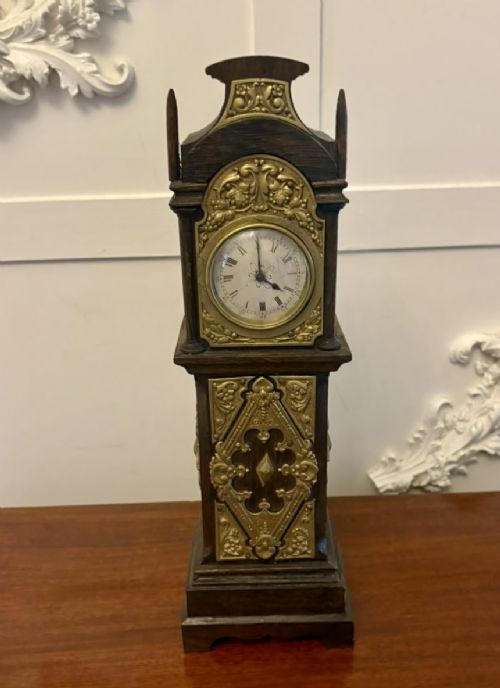
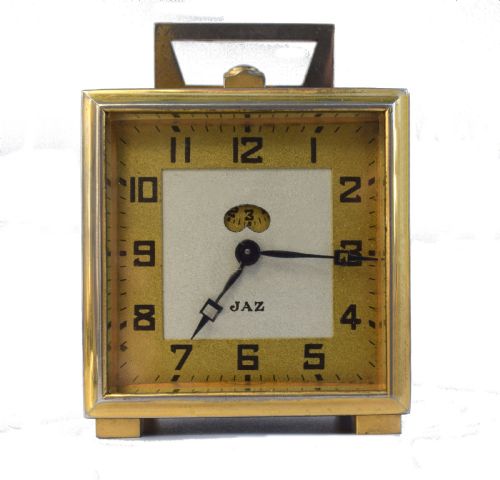
When you search for miniature mantle clock items, you enter a field dominated by portable brass carriage clocks, diminutive bracket clocks, and small bedside timepieces. The pieces span from the late nineteenth century into the twentieth century, covering Victorian, Edwardian, and Art Deco designs.
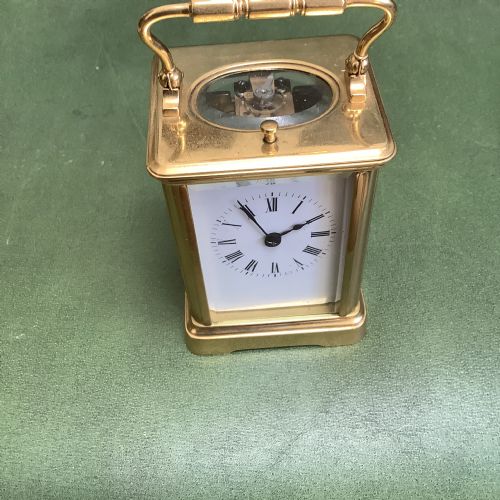
The most common formats on this page are brass and glass carriage clocks with white enamel dials, alongside silver-cased boudoir clocks and French alarm timepieces. These objects were originally designed for travel or for smaller domestic spaces like bedrooms and studies.
How they were made
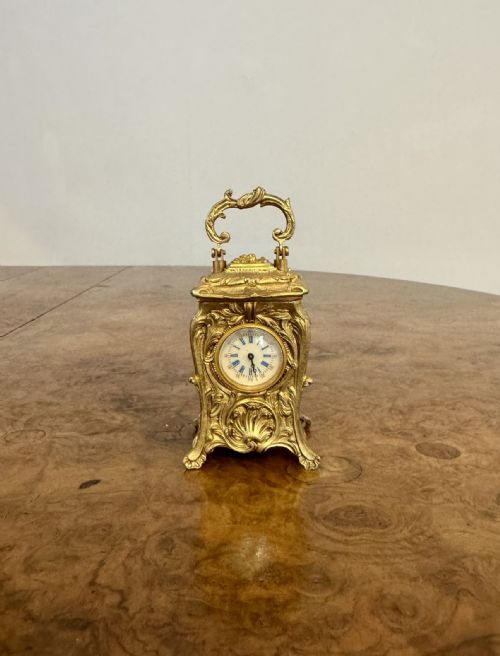
The construction of these pieces relies heavily on cast and gilt brass frameworks fitted with bevelled glass panels to display the mechanical movements within. Metal casings often receive chased surface decoration or smooth polished finishes.
Dial faces frequently feature white enamel with distinct Roman or Arabic numerals, while specialist examples incorporate blue guilloche enamel or Limoges enamel panels. Silver versions utilise hallmarked sterling silver cases, sometimes accompanied by fitted leather travel cases.
Miniature Mantle Clock Retail Price Guide 2026
Typical asking prices for miniature mantle clock among the pieces listed under this phrase on Sellingantiques today, from the lower quarter to the upper quarter. They describe what is for sale here now, not the wider market.
What varies in quality
Quality in these timepieces rests upon the crispness of the cast brass or the weight and thickness of the silver casing. Hand-chased detailing and the condition of delicate enamel dials separate standard production items from finer workshop examples.
The complexity of the internal movement also dictates value, with eight-day striking mechanisms and alarm complications sitting above basic timepieces. Original fitted leather cases remaining intact alongside the clock elevate the overall integrity of the piece.
Mappin & Webb·Adams of Lombard Street·Jaz·Bayard
The Miniature Mantle Clock Glossary
- Carriage clock
- A small, portable spring-driven timepiece designed for travel, typically featuring a brass frame with glass panels.
- Guilloche enamel
- A decorative technique where a precise, intricate pattern is engraved beneath a translucent layer of coloured enamel.
- Ormolu
- Gilded bronze, widely utilised in French decorative arts to create rich, gold-toned metalwork mounts and clock cases.
- Bracket clock
- A traditional form of table clock, often miniaturised, originally built to sit upon a dedicated wall bracket.
Miniature Mantle Clock: Frequently Asked Questions
What is a miniature mantle clock?
A miniature mantle clock is a scaled-down timepiece, typically encompassing carriage clocks, boudoir clocks, and small bracket clocks from the Victorian and Edwardian eras. They are designed to occupy minimal space on a shelf, desk, or bedside table.
These pieces use compact spring-driven movements rather than large pendulums, allowing them to remain fully functional despite their small stature.
How do I wind my clock?
Most of these small timepieces require a matching key inserted into the rear winding square, turning gently until resistance is felt. Care must be taken not to overwind the mainspring.
Time setting is usually achieved by using a separate arbor or by delicately moving the minute hand directly, depending on the specific movement design.
Were these clocks meant for travel?
Many of the brass and glass examples originated as carriage clocks, built specifically for nineteenth-century travellers who needed accurate time on the move. They frequently came with sturdy leather carrying cases to protect the glass panels.
Over time, many of these portable clocks transitioned into permanent domestic ornaments for bedrooms and small sitting rooms.
How do I date a miniature clock?
Dating relies on stylistic clues such as the transition from ornate Victorian Rococo revival brass cases to geometric Art Deco silver designs. Hallmarks on silver-cased models provide precise assay office years.
Maker signatures on the enamel dials or backplates also help establish the decade of production and the workshop of origin.