





Millinery Hat Stand
These millinery hat stand pieces are practical shop displays and workshop tools that bring authentic haberdashery character into domestic interiors.
Millinery Hat Stand
A millinery hat stand covers practical workshop items and shop display pieces designed to support, stretch, or showcase headwear. When you search for a millinery hat stand, you find forms that range from utilitarian work tools to decorative display items.
The selections span multiple periods, featuring Georgian and 18th-century yew and mahogany pieces alongside 19th-century oak and fruitwood forms. Later examples from the 1900s, 1910s, 1920s, and 1930s bring industrial haberdashery and Art Deco influences into the mix.
You are most likely to encounter wooden hat blocks, wig stands, and adjustable stretchers made for trade use. These objects served milliners and hatters before finding a second life in modern interiors.
Materials and construction
Makers utilised timber suited to heavy workshop handling, turning to oak, beech, yew wood, fruitwood, and walnut for solid strength. Wood was frequently carved, shaped, and turned on a lathe to create smooth profiles that would not snag delicate fabrics.
Metal components also appear, with cast iron and brass providing sturdy counter bases and mechanical adjustments for stretchers. Fabric elements occasionally pad specific display forms, combining rigid wooden cores with softer exterior textures.
Millinery Hat Stand Retail Price Guide 2026
Typical asking prices for millinery hat stand among the pieces listed under this phrase on Sellingantiques today, from the lower quarter to the upper quarter. They describe what is for sale here now, not the wider market.
Period representation spans from Georgian craftsmanship through Victorian industrial output to 1930s Art Deco design.
Assessing quality and character
Quality rests in the integrity of the material and the honesty of the wear accumulated during working life. Original tool marks and rich patination acquired through decades of workshop use elevate a piece above later reproductions or overly restored examples.
Structural balance matters significantly, particularly on countertop stands and adjustable stretchers where moving parts must function correctly. Finer pieces display careful turning, harmonious proportions, and distinct regional timber choices that reflect their period of origin.
The Millinery Hat Stand Glossary
- Hat block
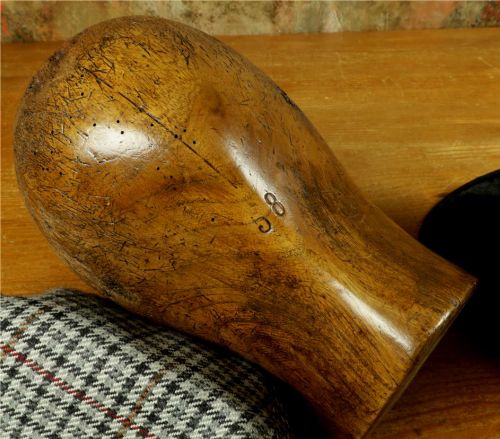
- A carved wooden form used by milliners to shape hats during manufacture. These blocks determine the final contours of the crown.
- Hat stretcher
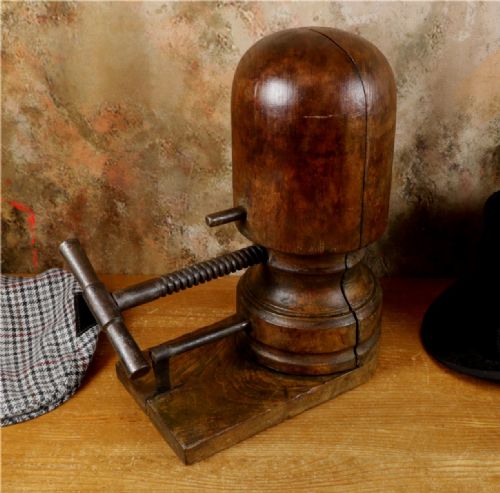
- A mechanical tool designed to enlarge or maintain the size of a hat. These objects usually feature wooden segments expanded via a central screw mechanism.
- Wig stand
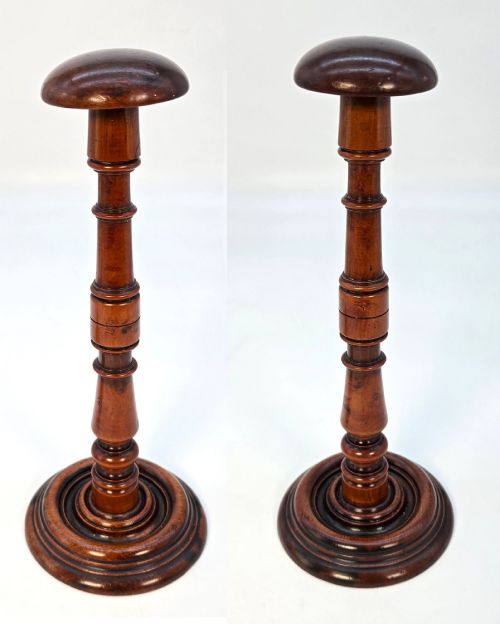
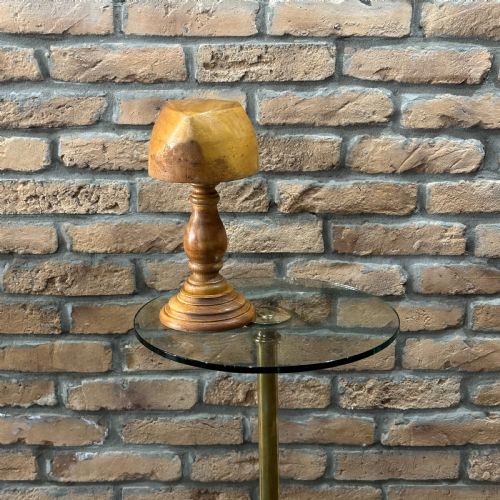
- A pedestal form utilised for supporting and styling wigs or headwear. These items often feature a rounded upper section atop a turned stem and stable base.
- Haberdashery
- Items and fittings associated with the trade of selling small articles of dress and sewing. Shop displays from this trade form a distinct category of antiques.
- Patina
- The surface sheen and colour developed by wood and metal through age and handling. This visual depth indicates genuine historical use.
Millinery Hat Stand: Frequently Asked Questions
What is a millinery hat stand used for?
These pieces originally served hatters and milliners as workshop tools for shaping hats or as shop counter displays for merchandising. Today, collectors utilise them to display hats, wigs, or scarves in domestic settings.
Their sculptural forms also allow them to stand alone as decorative objects on tables and mantelpieces.
How do I date a wooden hat block?
Dating relies on identifying the timber species, turning style, and tool marks left by the maker. Earlier pieces from the eighteenth and early nineteenth centuries often employ native hardwoods like yew or mahogany with hand-turned proportions.
Later twentieth-century examples frequently feature beech or simpler industrial forms associated with mid-century workshop production.
Are hat stretchers still functional?
Many surviving wooden stretchers retain their mechanical action and can adjust hats when handled with care. However, aged timber and vintage brass screws require gentle treatment to prevent splitting the historical wood.
Most buyers treat them as decorative display objects rather than active wardrobe tools.
What is the difference between a wig stand and a hat block?
A wig stand is typically taller and designed primarily to display or store completed headwear and wigs without altering their shape. A hat block is a denser, solid wooden form specifically engineered for shaping millinery during construction.
Blocks often feature peg holes at the base for mounting on workbench stems.
How should I clean a vintage wooden hat stand?
Dust the surface gently with a dry, soft cloth to preserve the accumulated patina and historical wax. Avoid harsh chemical cleaners, water, or modern polishes that can strip the dry timber surface.
Applying a microcrystalline wax can occasionally help protect exposed wood if the environment is particularly dry.