

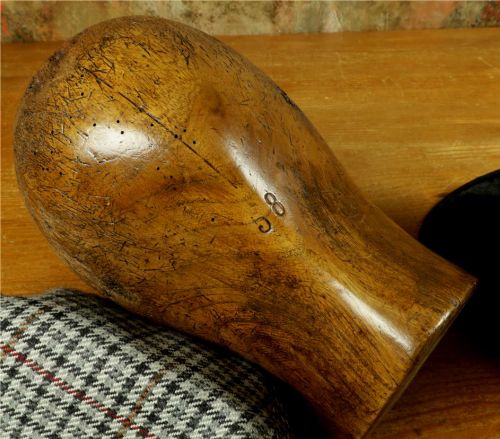
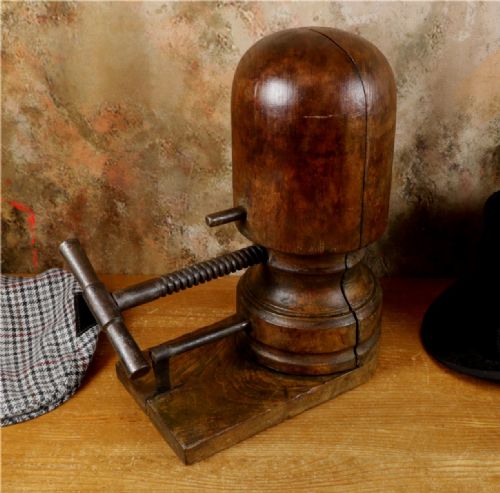


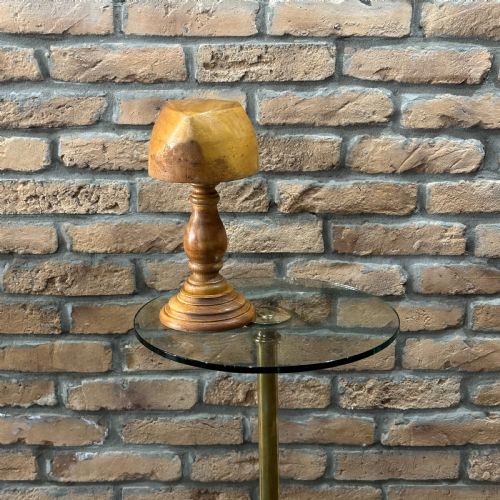


Millinery Display Head
These millinery display head pieces are shop furniture and studio sculptures designed to hold hats, capturing decades of counter top history.
Millinery Display Head
When you search for a millinery display head, you are looking at practical shop furniture and counter top display items built to support hats and wigs in retail spaces. These pieces range from utilitarian hat stretchers and solid beech blocks to carved wooden forms and French Art Deco advertising mannequins.
The versions you are most likely to meet on this page hail from the Victorian era up through the nineteen-thirties, reflecting both industrial haberdashery and folk art traditions. Oak, walnut, fruit wood, and painted plaster dominate the forms, offering a tangible link to historic retail display.
Makers shaped these objects to serve distinct roles in the trade, creating specialised hat stands alongside full mannequin busts. Whether carved in London or fashioned in France, each item reveals the specific commercial needs of past milliners and hatters.
How they were made
Makers relied primarily on timbers such as oak, walnut, beech, and fruit wood, shaping solid blocks with hand tools or turning them on lathes to create smooth contours for hats. Carved folk art examples demonstrate individual woodworking skills, utilising local timber to build durable shop fittings.
Plaster and painted plaster provided an alternative medium, frequently seen in counter top advertising mannequins from the Art Deco period. Metal and cast iron components added structural support or weighted bases, ensuring the stands remained stable under the weight of heavy winter hats.
Millinery Display Head Retail Price Guide 2026
Typical asking prices for millinery display head among the pieces listed under this phrase on Sellingantiques today, from the lower quarter to the upper quarter. They describe what is for sale here now, not the wider market.
Some wooden hat stretchers still carry the faint, lingering scent of vintage pomade and old wool from their days in bustling London haberdasheries.
What varies in quality
Industrial haberdashery items vary according to their mechanical complexity, such as adjustable hat stretchers with working wooden mechanisms. Simpler solid beech blocks depend purely on the quality of the timber selection and the balance of their proportions.
The Millinery Display Head Glossary
- Hat stretcher
- A mechanical device used by hatters to expand or maintain the size of a hat. These wooden tools often feature internal wedges operated by a central screw.
- Hat block
- A solid wooden form carved in the exact shape of a human head upon which a hat is constructed or reshaped. They display the tool marks of the block maker.
- Advertising mannequin
- A counter top shop display figure created to showcase hats and garments to retail customers. These figures often embody specific stylistic periods like Art Deco.
- Haberdashery
- The trade and goods associated with small wares and clothing accessories. Pieces originating from this context were built strictly for commercial utility in shops.
Millinery Display Head: Frequently Asked Questions
What is a millinery display head?
A millinery display head is a specialised shop fitting or sculpture designed to support hats, wigs, and headwear in a retail or studio setting. These items served practical functions for hatters and merchants.
They appear in various materials including carved wood, painted plaster, and cast iron, spanning different decades of shop display history.
How were these heads used in shops?
Merchants placed these pieces on counter tops and in display windows to exhibit hats to prospective buyers. They held the shape of delicate millinery and attracted attention.
Later, collectors repurposed them as decorative objects and sculptural display pieces in domestic interiors.
How do I date an antique head?
Dating relies on identifying stylistic markers, construction techniques, and materials characteristic of specific eras like the Victorian period or the nineteen-thirties. Art Deco pieces display geometric lines and specific plaster finishes.
Earlier nineteenth-century examples often show hand-carved wooden construction and traditional British or French provincial origins.