




Millegrain Halo Cluster Ring
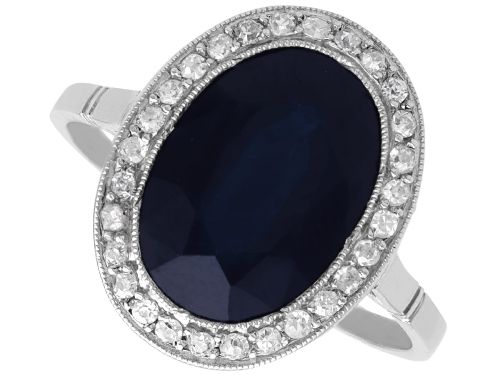
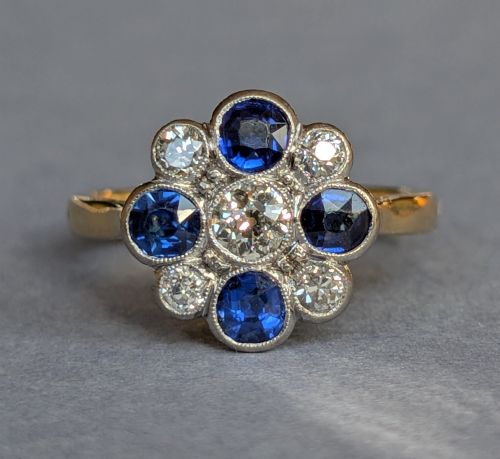
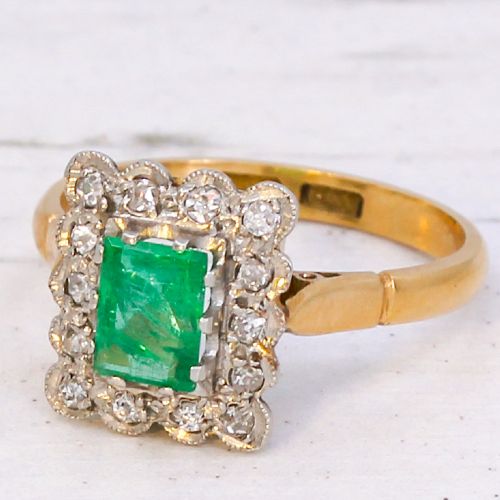
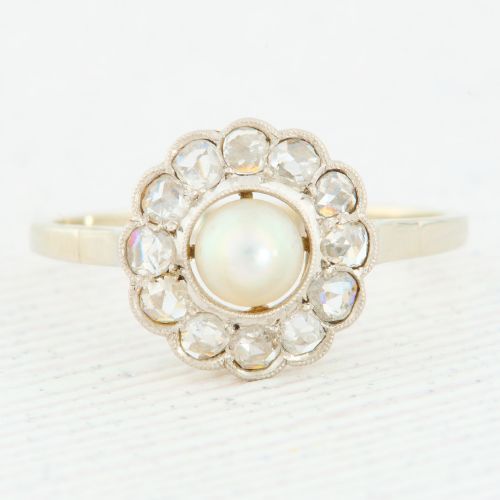
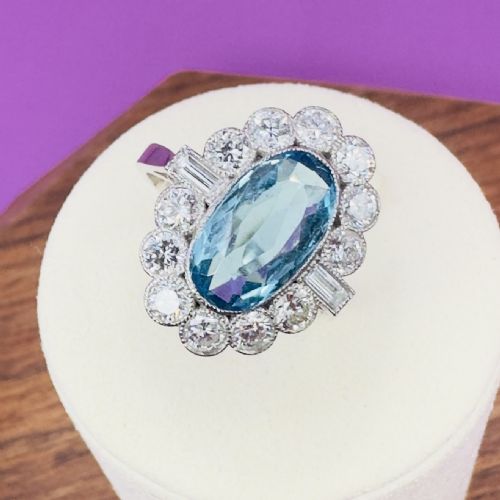
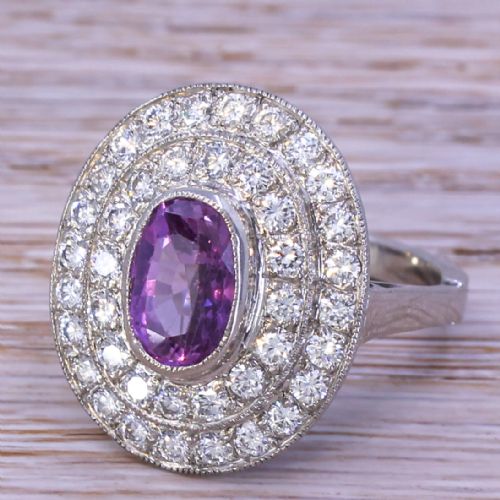
A millegrain halo cluster ring gathers small precious stones tightly round a bright centre, edged with tiny metal beads.
Millegrain Halo Cluster Ring
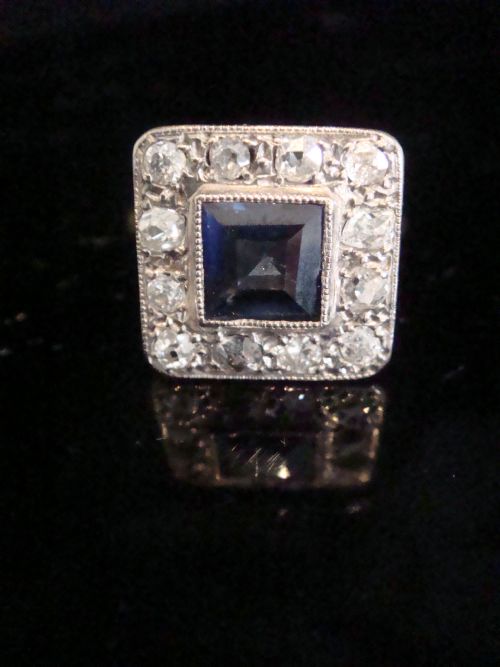
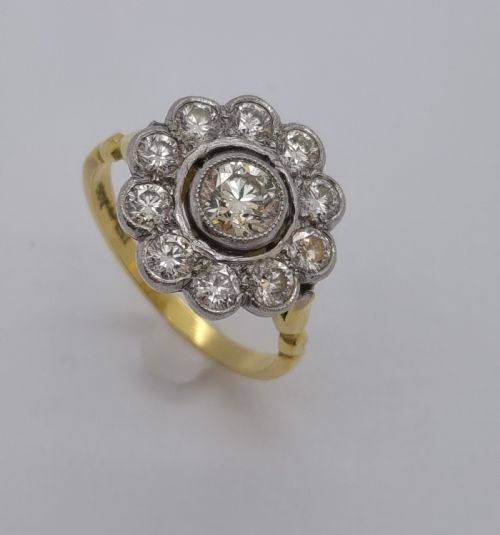
A millegrain halo cluster ring centres on a prominent stone, such as a diamond, sapphire, emerald, pearl or aquamarine, framed by smaller surrounding gems. These pieces span the Edwardian, Art Deco, Mid-Century and Late 20th Century periods.
The versions most commonly met on this page combine platinum or 18ct white gold with diamonds and sapphires, following classic Edwardian and Art Deco designs. Yellow gold and retro double halo or daisy cluster forms also appear among the selections.
Makers shaped these cluster rings through the 1910s, 1920s, 1930s, 1940s, 1950s and 1960s, yielding varied geometric and floral outlines. Elongated oval cuts, calibre cut sapphires and natural pearls define the recurring structural types.
How they were made
Platnum and 18ct white gold provided strong, bright settings for old cut diamonds and calibre cut sapphires during the Edwardian and Art Deco decades. Yellow gold also served as a primary mount material, particularly in mid-century examples.
The signature millegrain technique involves rolling a small textured wheel along the edge of the metal to raise tiny, uniform beads that frame the stones. This meticulous hand finishing softens the geometric edges of platinum and gold mounts.
Listings span seven decades from the 1910s to the 1960s, featuring platinum, white gold, yellow gold, diamonds, sapphires, emeralds, pearls and aquamarines.
What varies in quality
The crispness of the tiny metal beads defines the skill of the original bench worker, with sharper, more even rows marking superior execution. The regularity of the surrounding halo stones relative to the centre gem also determines the overall visual balance.
Gemstone selection dictates the upper range, where matched old cut diamonds or vivid natural sapphires replace synthetic stones. The integration of the mount into the finger shape demonstrates the structural mastery behind each ring.
The Millegrain Halo Cluster Ring Glossary
- Millegrain
- A decorative edging technique featuring a line of tiny raised metal beads. It softens the transition between metal and skin.
- Cluster ring
- A ring design featuring a central gemstone surrounded by a group of smaller stones. This arrangement maximises surface brilliance.
- Calibre cut
- Gemstones specifically shaped and cut to fit tight geometric patterns in jewellery settings. They line Art Deco mounts precisely.
- Old cut
- Diamond cutting styles pre-dating modern brilliant cuts, characterised by high crowns and small tables. They catch candle and gas light distinctively.
- Halo
- A concentric ring of pavé or bezel-set stones encircling a larger centre gem. It visually amplifies the size of the main stone.
Millegrain Halo Cluster Ring: Frequently Asked Questions
How do I clean a millegrain halo cluster ring?
Warm soapy water and a very soft brush clear away daily oils caught beneath the small halo stones. Dry the piece thoroughly with a lint-free cloth afterwards.
Avoid harsh chemical dips that can damage pearls, emeralds or vintage metals. Ultrasonic cleaners risk loosening stones set in delicate antique claws.
Can these antique rings be resized easily?
Platinum and 18ct gold bands generally allow a skilled jeweller to alter the shank size. The structural integrity of the halo remains unaffected if the work stays away from the cluster shoulders.
Elaborate side engraving or continuous calibre work complicates alterations. Consult a specialist workshop familiar with vintage mounting techniques.
Are synthetic stones common in period pieces?
Early synthetic sapphires appear alongside natural gems in Edwardian and Art Deco jewellery. Laboratories began producing uniform coloured stones that jewellers prized for bright colour consistency.
Gemmological testing distinguishes natural inclusions from laboratory-grown material. Both hold historical significance within specific manufacturing decades.
What defines an Edwardian cluster ring?
Edwardian examples favour platinum settings, natural pearls and old cut diamonds arranged in delicate lace-like patterns. The metalwork often mimics fabric or floral garlands with fine piercing.
Proportions remain light and airy compared to the bolder geometric forms of the subsequent Art Deco era.
How do Art Deco rings differ from earlier styles?
Art Deco designs introduce strict symmetry, strong linear geometry and calibre cut sapphires. White metals dominated this period to contrast sharply with deeply coloured stones.
Makers abandoned soft floral curves in favour of architectural silhouettes and sharp angles.