


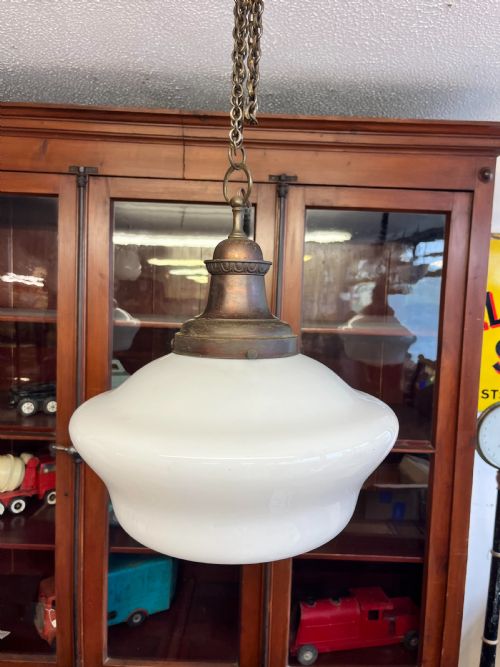


Milk Glass Light Fixture
These milk glass light fixture examples bring genuine period character to a room through distinctive opal, moonstone and opaline glass forms.
Milk Glass Light Fixture
A milk glass light fixture covers opaque white glassware shaped into pendant lights, ceiling lights, and oil lamps spanning the Victorian era through the 1930s. Buyers investigating this category encounter everything from modest domestic ceiling fittings to large industrial chapel pendants and pharmacy lights.
The selections on this page draw from distinct historical moments, including Late Victorian, Edwardian, and Art Deco periods, alongside robust industrial designs. Forms range from pear-shaped and fish scale pendants to multi-tier chandeliers and mounted oil lamps utilising ceramic or black glass bases.
Origins stretch across English domestic and commercial workshops, mixing utilitarian workplace lighting with ornate domestic illumination. Buyers most frequently meet pendant lights and ceiling lights equipped with opaline glass or brass mountings.
Materials and construction methods
Construction relies upon specialised glassblowing techniques to produce dense opal or opaline glass, sometimes combined with hand-painted details or enamelled decoration. These glass shades diffuse light evenly, creating a soft illumination distinct from clear glass.
Metal components such as brass, chrome, and steel provide the structural skeleton for suspension and mounting. These durable metals support heavy glass globes, pendant shades, and oil lamp reservoirs, often showing period patination from active service.
Milk Glass Light Fixture Retail Price Guide 2026
Typical asking prices for milk glass light fixture among the pieces listed under this phrase on Sellingantiques today, from the lower quarter to the upper quarter. They describe what is for sale here now, not the wider market.
Some Victorian oil lamps were designed with heavy black glass bases so they stayed firmly anchored during vigorous parlor debates.
Evaluating quality and craftsmanship
Quality reveals itself in the weight, density, and consistency of the glass shade, alongside the structural integrity of the metal mounts. Finer examples display precise reeded designs, hand-painted artistry, or enamelling that remains crisp and vibrant.
The sophistication of the hardware distinguishes utilitarian pieces from finer domestic showroom fittings. Superior mountings utilise solid brass or heavy cast iron work that secures the glass securely without stress fractures.
The Milk Glass Light Fixture Glossary
- Opaline Glass
- A translucent or opaque white glass developed during the nineteenth century to mimic porcelain. It diffuses light with a characteristic milky softness.
- Pendant Light
- A light fixture suspended from the ceiling by a cord, chain, or metal rod. These direct illumination downward over specific task areas.
- Oil Lamp
- A domestic lighting device that burns liquid fuel via a wick. Many period examples later undergo conversion to electrical power.
- Gothic Revival
- An architectural and decorative style drawing inspiration from medieval design. It frequently incorporates pointed arches and heavy brass framing.
- Reeded Design
- A decorative surface treatment featuring parallel convex mouldings. This texture adds visual depth and catches light across the glass body.
Milk Glass Light Fixture: Frequently Asked Questions
How do I date a milk glass light fixture?
Dating relies upon examining the manufacturing techniques, mounting hardware styles, and glass composition visible in the piece. Victorian examples often feature heavy brass fittings and hand-painted or enamelled surfaces.
Later pieces from the 1920s and 1930s typically adopt industrial forms like pear shapes, fish scale textures, or streamlined opaline pendants. Comparing the collar and gallery fittings to known period catalogues helps confirm the decade of manufacture.
Can these antique lights be rewired safely?
Most antique fixtures require rewiring to meet modern electrical safety standards before installation in a home. Professional electricians can easily replace old internal wiring while preserving the original brass or metal exterior components.
Retaining the original ceiling canopy and shade holders maintains the historical integrity of the piece. Modern wiring ensures the fixture operates safely with contemporary bulb voltages.
What rooms suit a milk glass light fixture?
Pendant lights and ceiling lights work exceptionally well in kitchens, hallways, and dining areas where diffuse, glare-free illumination is beneficial. Industrial chapel pendants and pharmacy lights provide a strong focal point in high-ceilinged spaces.
Table-mounted oil lamp conversions add warm, ambient task lighting to studies, living rooms, and bedside tables. The neutral white tone of the glass complements both traditional and modern interior palettes.
How should I clean antique opaline glass?
Cleaning requires gentle washing with warm water and a mild detergent using a soft cloth or sponge. Avoid harsh chemical cleaners or abrasive scouring pads that might scratch the delicate glass surface or damage hand-painted details.
Metal components should be dusted carefully to preserve their natural age patina. Detaching the shade from heavy brass fittings simplifies the cleaning process and reduces the risk of accidental drops.