



Military Style Chests
Military style chests are sturdy travelling trunks and drawer units built for officers on the move, offering robust storage with distinct campaign hardware.
Military Style Chests
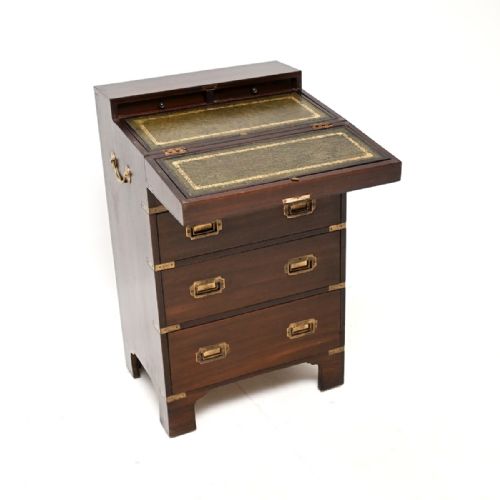
When you search for military style chests, you encounter robust travelling trunks, compact bureaux, and drawer units designed for portability during campaigns. These pieces span periods from the eighteenth century through the Victorian era up to the early twentieth century, including George V examples.
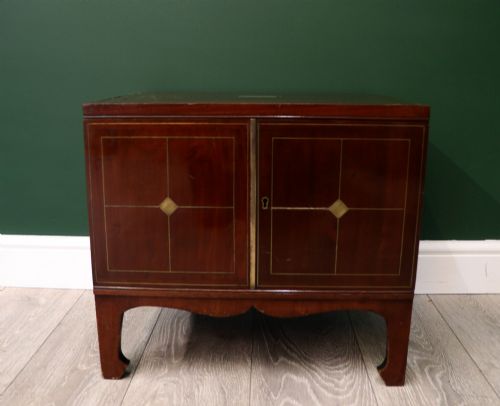
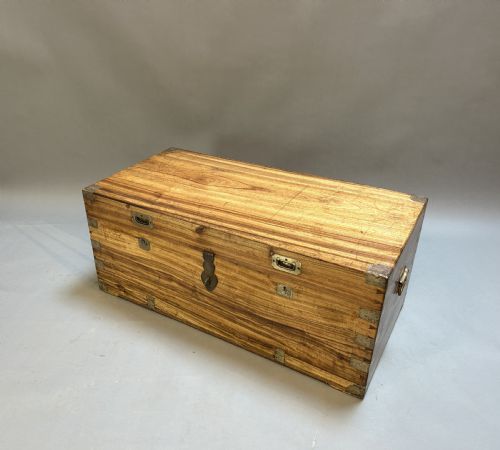
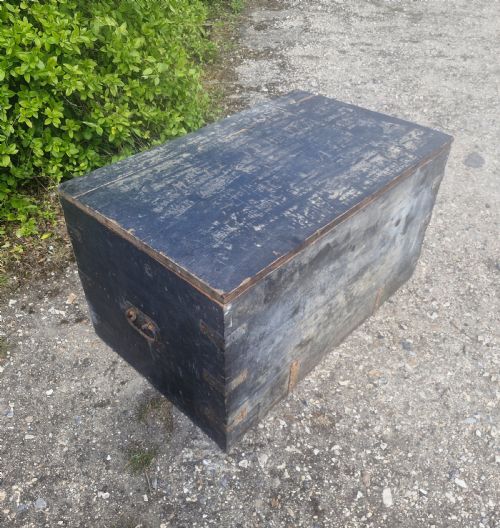
The versions you are most likely to meet on this page are mahogany and camphor wood chests, alongside teak, pine, and yew wood variants. Forms range from simple storage trunks and blanket chests to lockers, small chests of drawers, and display cabinets.
Origin details in the evidence include Indian pieces alongside British periods, reflecting the global movement of campaign furniture. Chests of drawers, storage trunks, and cabinets dominate the selection available to collectors.
How they were made
These pieces utilise dense hardwoods such as mahogany, teak, camphor wood, burr walnut, and yew wood, chosen for their durability in transit. Some examples incorporate pine and leather elements to complete the construction.
Construction relies heavily on brass binding and brass inlays to protect vulnerable corners and edges from the knocks of travel. Recessed handles and iron fittings allow items to pack tightly into ships and wagons without protruding hardware.
Listings feature pieces spanning from the eighteenth century through the Victorian era up to 1930, built in mahogany, camphor wood, teak, and yew.
What varies in quality
Quality separates standard utilitarian transport trunks from finer domestic campaign furniture commissioned by senior officers. Timber selection drives much of this distinction, moving from plain utility woods to richly figured burr walnut, mahogany, and yew wood.
The precision of the brass work and the integration of flush-fitting hardware distinguish superior pieces. Finer cabinets and bureau chests exhibit careful joinery and thoughtful interior fittings suited for stationary use after travels concluded.
The Military Style Chests Glossary
- Campaign chest
- A chest of drawers built in two or more sections so that officers could pack and transport their belongings easily. These pieces feature inset brass handles and reinforced corners.
- Camphor wood
- An aromatic hardwood frequently utilised for military chests and trunks to protect uniforms from insects during tropical deployment. Its distinct scent remains a key identifier for these trunks.
- Brass bound
- A construction method where edges and corners are reinforced with brass straps and brackets. This protects the wood from heavy impacts during transport.
- Recessed handle
- A drawer pull or carrying handle set flush into the surface of the wood. This design prevents snags and allows items to stack closely together.
Military Style Chests: Frequently Asked Questions
What are military style chests?
Military style chests are portable storage units and drawer chests built for officers on active service. They are designed to withstand rugged transport while maintaining practical interior organisation.
These pieces typically feature sectional construction, brass corner guards, and flush handles. Their sturdy build made them enduringly popular for domestic use long after active campaigns ended.
How were campaign chests used?
Officers utilised campaign chests to transport uniforms, maps, documents, and personal valuables across long journeys. The multi-section design allowed servants to pack and load the belongings quickly.
Once the regiment reached a destination, the sections stacked together to serve as a functional dressing chest or desk. This adaptability ensured officers maintained a degree of comfort in temporary quarters.
How do I live with a military chest?
Military chests function exceptionally well as bedside tables, coffee tables, or primary bedroom storage drawers. Their compact proportions and flat tops make them practical surfaces in modern rooms.
Keep them away from direct heat sources to protect the solid hardwoods and brass fittings. Regular dusting and occasional wax maintenance will preserve the finish of mahogany, camphor, and walnut surfaces.
How can I tell the periods apart?
Earlier eighteenth and nineteenth century pieces often rely on utilitarian timbers and robust iron or brass reinforcements. Victorian and Edwardian examples frequently introduce finer veneers like burr walnut and yew wood.
Look closely at the construction methods, drawer linings, and lock mechanisms to determine age. Stylistic shifts reflect the transition from active military utility to refined domestic decoration.