




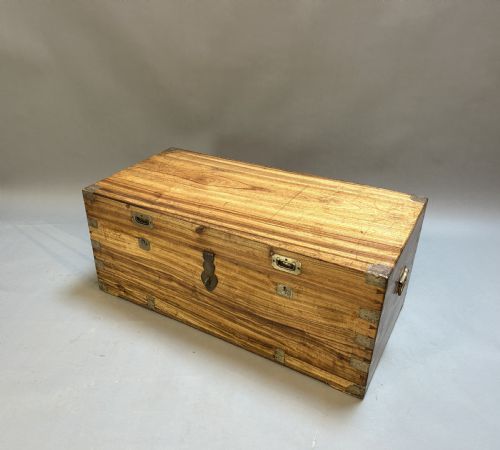


Military Officer Box
A military officer box offers practical travel storage built for service during the nineteenth and early twentieth centuries.
Military Officer Box
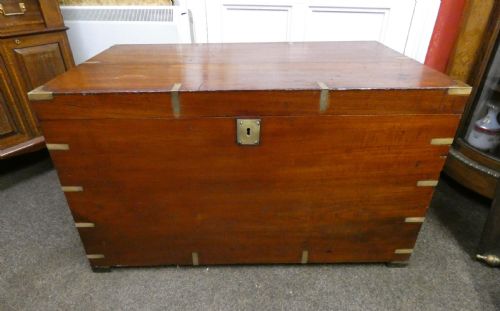
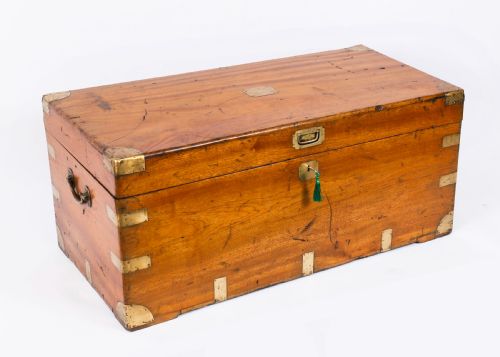
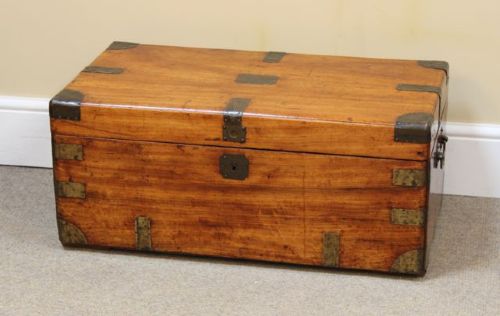
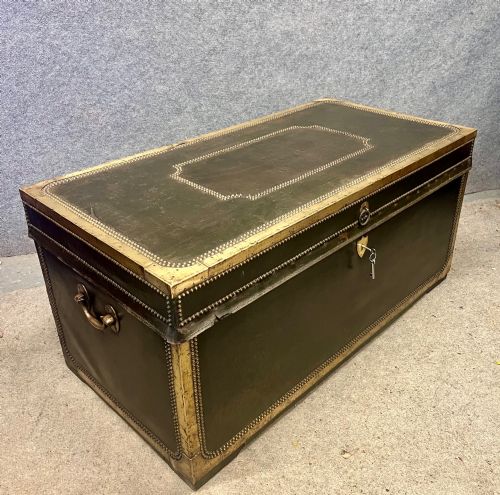
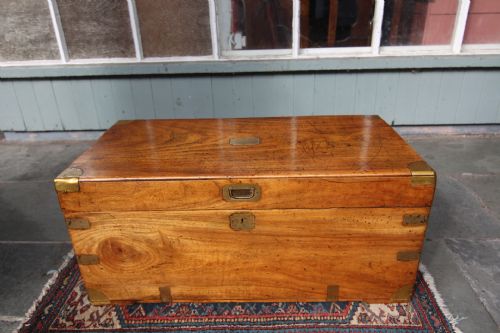
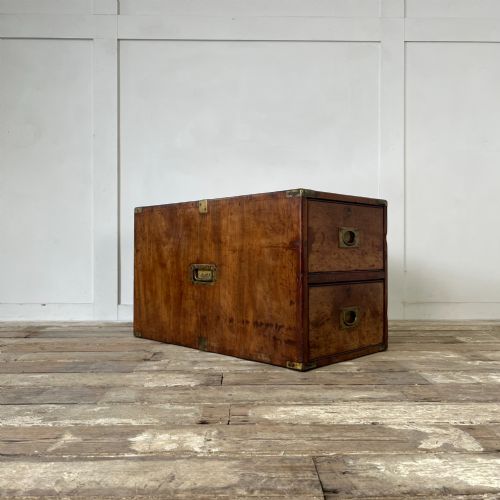
A military officer box encompasses campaign chests, travelling trunks, writing slopes, and toleware hat boxes designed for portability. These pieces span periods from the Regency era through to the early twentieth century, including Victorian examples.
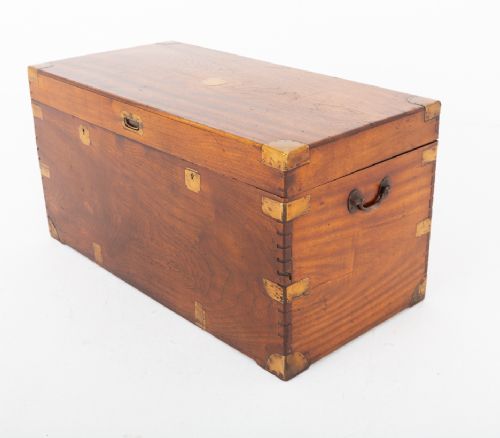
Camphorwood chests and trunks dominate the selection, frequently bound in brass for durability during transport. Smaller desktop items such as writing slopes and specific hat boxes also appear across the listings.
Materials and Construction
Constructed primarily from sturdy timbers like camphorwood, teak, oak, and mahogany, these boxes rely on dense woods to withstand difficult travel conditions. Metal components including brass corners, straps, and flush handles reinforce the structure while protecting vulnerable edges.
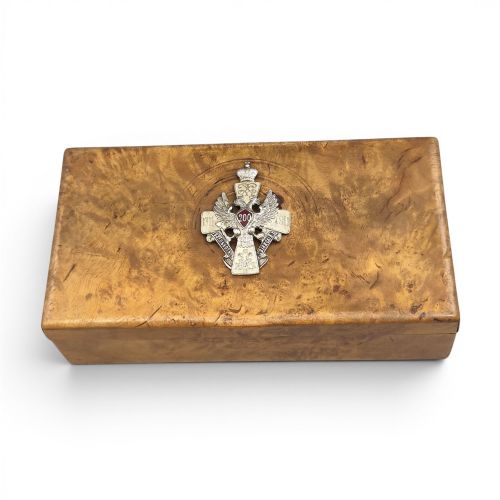
Specialised items incorporate leather, painted tin toleware, and zinc linings to safeguard contents against moisture and wear. Makers also utilised specialised veneers and regional woods such as Karelian birch on specific officer items.
Military Officer Box Retail Price Guide 2026
Typical asking prices for military officer box among the pieces listed under this phrase on Sellingantiques today, from the lower quarter to the upper quarter. They describe what is for sale here now, not the wider market.
Specific pieces connect to historical conflicts, including marked chests from the Boer War and items bearing regimental badges.
Assessing Quality
The standard of a military officer box depends heavily on the integrity of its brass mounts, flush-fitting handles, and original locking mechanisms. Superior examples retain their fitted interior compartments and original inscriptions or regimental badges.
The choice of timber grain and the precision of the dovetail joinery separate standard utility trunks from finer officer pieces. Retaining original surfaces and travel wear adds distinct character to these functional containers.
Hawkes & Co·Drew & Sons·Allen of London
The Military Officer Box Glossary
- Campaign chest
- A sturdy storage chest built in sections for easy dismantling and transport during military deployment. These pieces typically feature recessed brass handles and corner brackets.
- Camphorwood
- An aromatic timber frequently utilised for nineteenth-century campaign trunks due to its natural insect-repelling properties. This wood often displays a rich grain and distinct scent.
- Toleware
- Enamelled or lacquered metalware, commonly iron or tin, shaped into protective containers such as hat boxes. This material provided a durable, water-resistant outer shell for uniform transport.
- Writing slope
- A portable slant-topped desk used by officers for correspondence on the move. These boxes fold flat and contain internal storage for paper, ink, and pens.
Military Officer Box: Frequently Asked Questions
What is a military officer box used for?
These boxes served officers on campaign, storing uniforms, documents, and personal possessions during transport across postings. Their modular design and robust construction handled the demands of frequent relocation.
Today, they function well as coffee tables, blanket boxes, or decorative storage in domestic interiors, offering both practicality and historical character.
How do I identify a campaign chest?
Campaign chests feature distinctive recessed brass handles, reinforced corners, and are frequently built in two stacked sections for easy loading. The timber is chosen for strength, with camphorwood and teak being common choices.
Many examples retain inscribed brass plaques detailing the original officer or regiment, confirming their period military provenance.
Are these boxes made of solid wood?
Most campaign chests and trunks utilise solid timbers like camphorwood, mahogany, or teak to withstand harsh travel environments. The density of these woods provides natural resilience against knocks and humidity.
Some smaller desk items or specialised boxes incorporate veneers over secondary woods, though solid construction remains the standard for travel trunks.
How should I care for camphorwood?
Camphorwood requires minimal maintenance, needing only occasional dusting with a soft cloth to preserve its natural finish. Avoid placing the box in direct sunlight or near heat sources to prevent the timber from drying out.
The wood naturally retains its distinctive aroma over decades, which continues to protect stored textiles.