
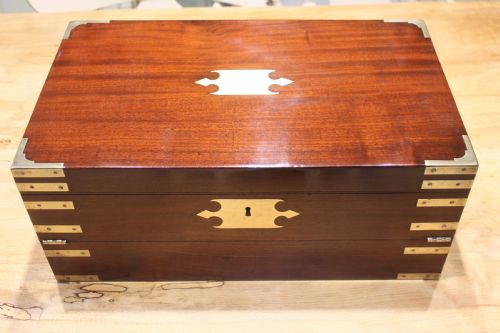


Military Folding Desk
A military folding desk is a clever piece of campaign furniture built for travel, offering officers a portable workspace that collapses compactly.
Military Folding Desk
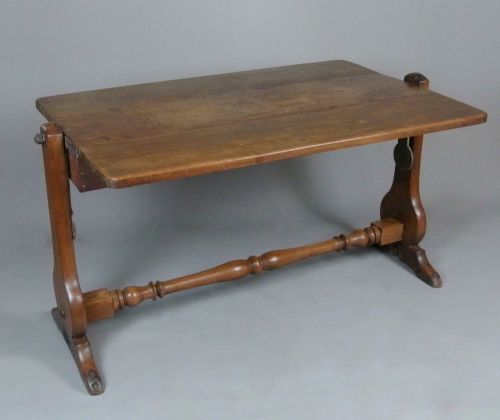
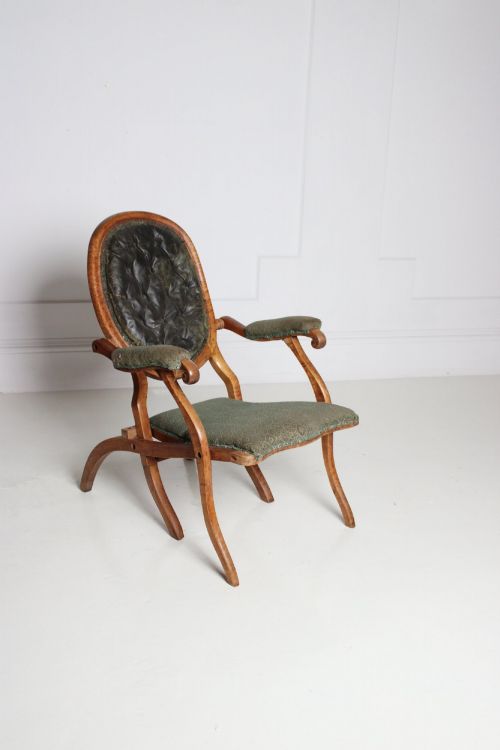
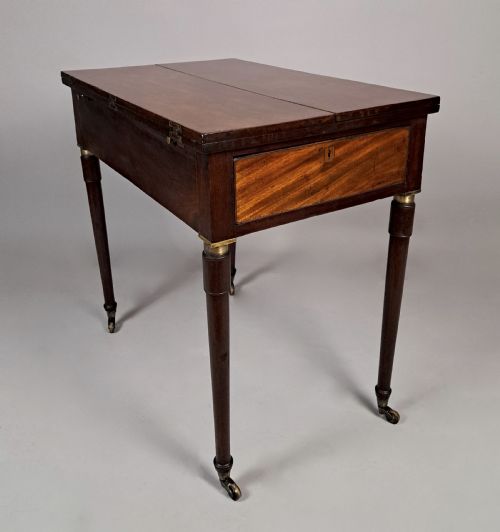
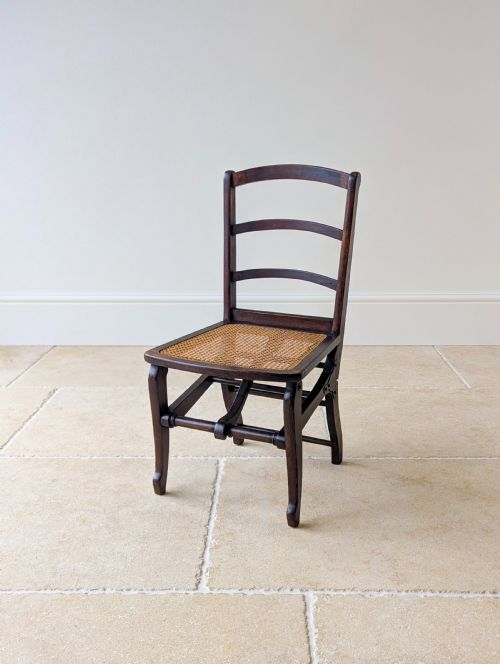
A military folding desk is an ingenious portable writing surface designed for officers on the move during the eighteenth and nineteenth centuries. These pieces were constructed to withstand rigorous transport, folding compactly for officers serving across the British Empire. Buyers searching for a military folding desk will find variations ranging from slope-form writing boxes to larger travelling desks and bi-fold tables.
The versions most commonly met on this page date from the Georgian and Victorian periods, executed in sturdy timbers like mahogany and teak. Many incorporate clever internal compartments, folding stands, and brass fittings that secure the components during transit. These desks reflect a practical domestic comfort carried into the field, combining utility with fine cabinet-making.
How they were made
Makers utilised dense, durable timbers such as solid teak, mahogany, and birds-eye maple to endure the rigours of military campaigns. These woods resist warping in shifting climates, making them ideal for travel across distant colonies and rough terrain.
Brass corners, hinges, and recessed carrying handles were integrated to protect vulnerable edges and joints from heavy knocks. The construction relied on precise joinery and folding mechanisms that allowed the entire desk to collapse into a manageable box form.
Listings feature pieces spanning the Georgian, Victorian, and Edwardian periods, constructed primarily from mahogany, teak, and brass.
What varies in quality
The distinction between ordinary and superior pieces lies in the sophistication of the folding mechanism and the precision of the brass hardware. Finer desks feature flush-fitting mounts, hand-cut dovetail joints, and well-fitted internal stationery compartments that remain secure when packed.
Material selection also defines the upper tier, with beautifully figured timbers like birds-eye maple or rich mahogany showing superior grain and colour. The presence of original fitted interiors and authentic campaign markings elevates the execution.
Gillows
The Military Folding Desk Glossary
- Writing slope
- A desktop box with an inclined writing surface that opens to reveal storage for paper and ink. These were frequently used for correspondence while travelling.
- Secretaire chest
- A chest of drawers containing a fitted pull-out writing drawer with pigeonholes and small drawers. This combines domestic storage with a functional desk.
- Bi-fold
- A design where a table or desk folds in half on hinges to reduce its footprint for transit. This allowed officers to pack larger surfaces into compact crates.
Military Folding Desk: Frequently Asked Questions
How did officers use a military folding desk?
Officers used these desks in field tents and temporary quarters to write reports, map out movements, and handle personal correspondence. The internal compartments kept ink, pens, and paper secure during rough horse or wagon journeys.
When camp was struck, the entire desk folded into a compact box with recessed handles, ready to be strapped to a pack animal or loaded into a baggage wagon alongside other campaign equipment.
What woods were used for military folding desks?
Cabinet-makers relied on robust hardwoods like mahogany, solid teak, and occasional exotic veneers such as birds-eye maple. Teak was particularly favoured for colonial service due to its natural resistance to moisture and warping.
These timbers provided the structural strength needed to survive repeated packing and unpacking in harsh field environments while maintaining a polished appearance suitable for an officer.
How do I date an antique campaign desk?
Dating relies on examining the timber, the style of the brass hardware, and the construction methods used inside the internal compartments. Georgian pieces often show simpler, functional lines in solid teak or mahogany, while Victorian examples frequently incorporate more complex folding mechanisms and varied woods.
Cabinet-making techniques evolved through the nineteenth century, moving from hand-cut dovetails to more standardised brass fittings and integrated locking systems by the Edwardian era.
Where should I place a folding desk at home?
These compact desks suit studies, living rooms, or hallways where floor space is at a premium and a full-sized bureau would feel too heavy. Their folding nature means they can be positioned open as a functional writing space or closed to act as a decorative side table.
Keep them away from direct heat sources and strong sunlight to protect the polished timber surfaces and the original brass mounts from drying out or tarnishing.