
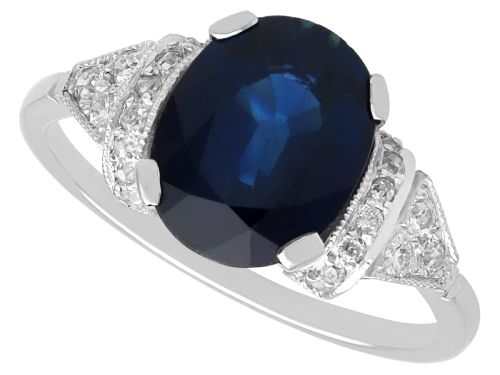
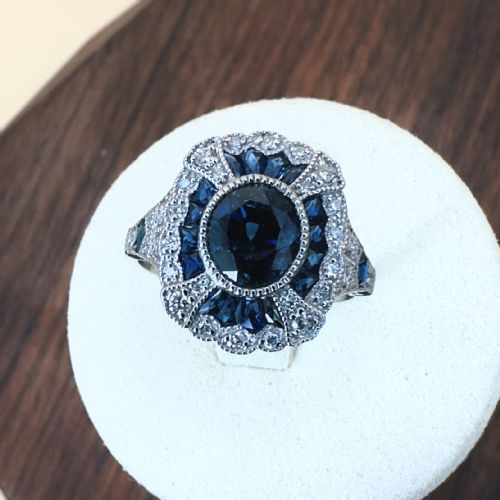


Milgrain Platinum Diamond Ring
A milgrain platinum diamond ring combines crisp geometric metalwork with the quiet fire of old cut stones.
Milgrain Platinum Diamond Ring
A milgrain platinum diamond ring is primarily found in Edwardian and Art Deco designs, spanning the 1920s through the 1940s alongside mid-century interpretations. These pieces take the form of cluster, solitaire, three stone, and panel rings designed as engagement or cocktail jewels.
The materials centre on platinum and white gold settings paired with diamonds, frequently accented by sapphires, rubies, or emeralds. Buyers encounter diverse stone cuts, including old cut, transitional cut, rose cut, and baguette diamonds framing central gems.
How they were made
The construction relies on platinum and 18ct gold to fabricate secure settings for fragile stone cuts. Metal edges receive delicate beading by hand to frame the stones with fine texture.
Gems are traditionally hand-set into multi-stone clusters, trilogies, or symmetrical panel layouts. Jewellers utilise old cut and transitional cut diamonds shaped before modern machinery standardised proportions.
Several rings conceal tiny hand-carved galleries beneath their stone clusters, built strictly for the private enjoyment of the wearer.
What varies in quality
Quality rests upon the uniformity and crispness of the tiny beaded metalwork edging the settings. Wear to these minute metallic details alters the original tactile finish of the piece.
The proportion and cut of the central diamond relative to surrounding calibre-cut sapphires or secondary stones dictate the visual impact. Original claw integrity and the absence of clumsy metal adjustments separate superior examples from altered pieces.
The Milgrain Platinum Diamond Ring Glossary
- Milgrain
- A decorative border of tiny raised metal beads along the edge of a setting. This technique softens the transition between metal and skin while adding textural detail.
- Old Cut
- A diamond faceting style from the late nineteenth and early twentieth centuries featuring a smaller table and larger culet. These stones display distinctive broad flash patterns under candlelight.
- Transitional Cut
- A diamond cut bridging old cuts and modern brilliants, utilised during the early twentieth century. It shares high crowns with more symmetrical modern facet arrangements.
- Cluster Ring
- A ring design featuring a prominent central stone surrounded by a border of smaller gems. This configuration maximises visual presence on the hand.
- Trilogy Ring
- A three stone ring symbolising past, present, and future. The central gem is typically flanked by two matching smaller stones.
Milgrain Platinum Diamond Ring: Frequently Asked Questions
How do I clean my milgrain platinum diamond ring?
Clean your jewellery using warm water, mild washing liquid, and a very soft toothbrush to clear debris from beneath the settings.
Avoid harsh ultrasonic cleaners on antique pieces, as the vibrations can loosen stones held in aged settings.
Can platinum rings be resized easily?
Platinum can be cut, heated, and soldered by a skilled jeweller experienced in working with dense metals. The process requires specialist torches to reach the high melting point of platinum.
Take care to preserve any engraved patterns or milgrain borders situated near the back of the band during resizing.
Are old cut diamonds less brilliant than modern stones?
Old cut diamonds produce broader, softer flashes of light rather than the pinpoint brilliance of modern brilliant cuts. They are designed to catch ambient light sources like candlelight or gaslight.
This distinct optical property gives vintage stones their characteristic warm depth.
What is the difference between Edwardian and Art Deco rings?
Edwardian rings feature lacy, garland-style platinum work with delicate openwork motifs and softer curves. They lean towards romantic, airy floral or ribbon patterns.
Art Deco pieces shift towards rigid geometry, symmetry, and bold contrasting colour combinations involving sapphires or emeralds.