



Mid Century Winter Painting
A mid century winter painting brings the quiet chill of snow and bare branches into a room with striking brushwork and muted tones.
Mid Century Winter Painting
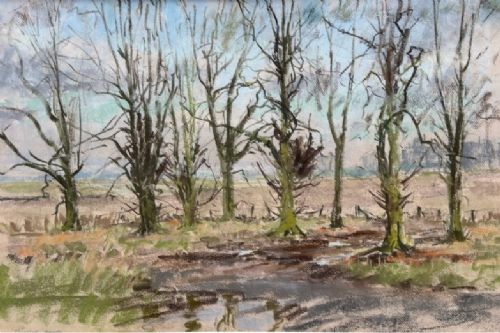
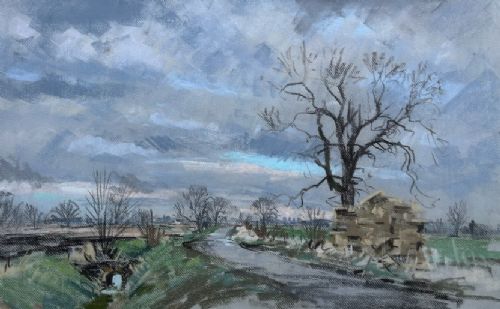
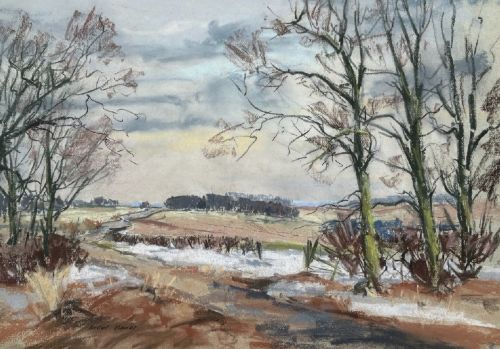
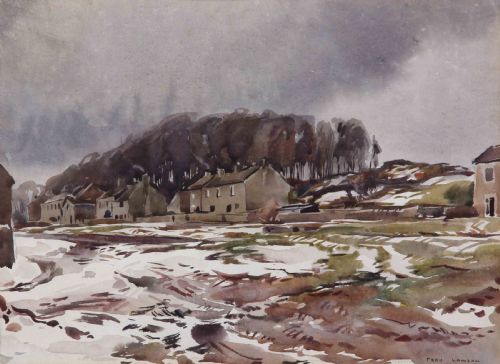
A mid century winter painting captures seasonal landscapes from the middle decades of the twentieth century, alongside a few earlier nineteenth century and Edwardian works. These pieces depict snowy scenes, Yorkshire dales, and frosty European or Canadian views.
The works take several forms, including original oils on canvas or board, pastel drawings, and watercolours on paper. Buyers encounter subjects ranging from quiet village rooftops to sheep droving landscapes under grey skies.
Most examples originate from British artists working in the mid twentieth century, though American, French, and German hands also appear. Each piece offers a distinct window into past winter weather through varied schools of painting.
How these winter paintings were made
Artists built these scenes using oil paint on canvas or board, often layering pigment to create the heavy textures of snow and overcast skies. Others utilised pastel, chalk, and ink on paper to capture the soft light of a winter day.
Support materials include traditional wooden stretchers, gesso grounds, and protective frames that hold the paper or canvas secure. The technique relies on direct observation, whether rendering a Yorkshire landscape or a French street scene.
Mid Century Winter Painting Retail Price Guide 2026
Typical asking prices for mid century winter painting among the pieces listed under this phrase on Sellingantiques today, from the lower quarter to the upper quarter. They describe what is for sale here now, not the wider market.
Periods represented span the nineteenth century, Edwardian era, and the 1920s through to 1960.
What separates the finest works
Quality rests in the handling of light and atmosphere, where skilled brushwork or pastel application makes the chill of the air palpable. The best examples show a confident grasp of tone, distinguishing between shadow on snow and the dull glare of a winter sky.
Condition and originality also separate pieces, particularly the preservation of the paper, canvas, and original framing elements. Works drawn directly from studio portfolios often retain a freshness that lesser, more heavily reworked compositions lack.
Angus Rands·Thomas Hicks·John Hobson Nicholson·Fred Lawson
The Mid Century Winter Painting Glossary
- Pastel
- A dry medium made of powdered pigment and a binder, pressed into stick form. It allows for immediate colour application and soft blending, frequently seen in landscape sketches.
- Gesso
- A plaster mixture applied to canvas or wood to prepare a smooth surface for painting. It provides a stable white ground that helps reflect light through subsequent paint layers.
- Impressionist
- A style focusing on the accurate depiction of light and its changing qualities. Artists working in this manner use visible brush strokes and open composition.
- Watercolour
- A paint where the colour pigments are suspended in a water-based solution. It is typically applied to paper to create translucent washes of colour.
Mid Century Winter Painting: Frequently Asked Questions
What subjects do these winter paintings show?
The works depict snowy landscapes, rural dales, European street scenes, and rooftops under frost. Locations range from the Yorkshire countryside to the Isle of Man and Canada.
Artists focused on capturing the specific atmosphere of cold weather, bare trees, and muted seasonal light using oils, pastels, and watercolours.
How should I care for a paper winter painting?
Works on paper, such as pastel or watercolour pieces, require protection from direct sunlight to prevent fading. Keep them behind glass in stable indoor humidity.
Avoid hanging them in damp rooms or areas subject to large temperature swings to protect the paper support and dry media.
Are these paintings framed?
Many of the listed works retain their original frames, which range from simple wooden mouldings to more ornate surrounds appropriate to their period. The framing style often reflects the decade in which the art was produced.
Buyers should check individual descriptions to confirm whether a piece includes its frame or is offered unframed.
How do I identify the date of a painting?
Dates are established through artist signatures, studio portfolio records, and stylistic markers typical of periods such as the mid twentieth century or earlier 1900s. Materials like canvas, board, and paper also offer clues to the era of creation.
Documentation provided with each piece helps confirm the likely decade of production.