

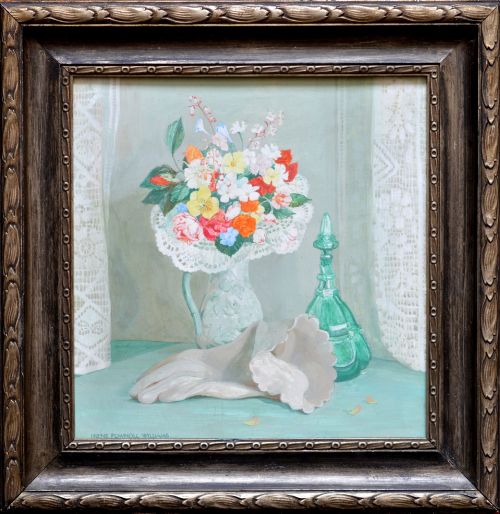


Mid Century Green Glass
Mid century green glass brings vibrant colour and striking form into a room, offering everything from heavy moulded table lamps to delicate wine glasses.
Mid Century Green Glass
When you search for mid century green glass, you encounter a surprisingly broad mix of forms spanning functional glassware and decorative objects. The selection ranges from slender wine glasses and decorative bowls to heavy table lamps and sculptural vases.
While the phrase suggests a single twentieth-century movement, the actual pieces available stretch across multiple periods including Victorian, Georgian, and twentieth-century decades. You are just as likely to find a nineteenth-century wine glass as a mid-century Italian decorative piece.
How they were made
The objects in this group rely primarily on glass, coloured glass, and blown glass techniques, often shaped by hand or moulded to achieve deep emerald and bright green hues. Makers utilised traditional glassblowing methods alongside specialised double-walled construction.
Beyond pure glassware, some items incorporate metal, wood panel, and tempera, pairing glass bodies with alabaster urn bases or framed painted scenes. This combination of materials demonstrates the varied manufacturing approaches found across different periods.
Mid Century Green Glass Retail Price Guide 2026
Typical asking prices for mid century green glass among the pieces listed under this phrase on Sellingantiques today, from the lower quarter to the upper quarter. They describe what is for sale here now, not the wider market.
Listings feature items made from glass, coloured glass, blown glass, metal, and wood panel across Victorian, Georgian, and mid-century periods.
What varies in quality
Quality in these pieces rests upon the depth of the green coloration and the crispness of the form, whether in a blown vessel or a moulded decorative object. Superior examples show careful attention to proportions and clean lines without distracting surface bubbles.
Maker attribution also shifts the standing of a piece, with marked items and pieces attributed to known glassworks carrying distinct manufacturing pedigree. The weight of the glass and the stability of any attached metal or alabaster bases further distinguish finer items from standard ware.
Venini·Varnish England·Mappin And Webb·AVEM
The Mid Century Green Glass Glossary
- Blown glass
- Glass shaped by inflating molten glass on the end of a blowpipe. This technique creates smooth, continuous walls and individual character in each vessel.
- Moulded frame
- A rigid border shaped to enclose a picture or panel. It provides structural support and aesthetic definition to paintings on wood.
- Tempera
- A permanent, fast-drying painting medium consisting of coloured pigments mixed with a water-soluble binder. It produces a flat, matte finish on panel supports.
- Double walled
- A construction featuring two distinct layers of glass with a space between them. This method adds visual depth and insulation to vases.
- Campana urn
- A bell-shaped vessel with a footed base, classically inspired and often rendered in alabaster. It provides a stable support for lamp fittings.
Mid Century Green Glass: Frequently Asked Questions
What periods do these green glass items come from?
The pieces span a wide chronological range, including Georgian, Victorian, and mid-twentieth-century eras. This mix brings together nineteenth-century tableware and later modernist designs.
Because the inventory covers multiple centuries, you find distinct manufacturing traits that reflect the shifting tastes of each era.
How do I care for vintage glassware?
Wash delicate glass items by hand in warm water using mild soap, avoiding harsh scrubbing tools that might scratch the surface. Dry them promptly with a soft lint-free cloth.
Keep pieces out of direct sunlight for extended periods to preserve the intensity of the green coloration.
Are these pieces functional or decorative?
They serve both purposes depending on the specific form, ranging from practical wine glasses to purely decorative bowls and vases. Table lamps also add functional lighting while acting as sculptural objects.
Selecting an item depends on whether you want everyday utility or a visual accent for a room.
How do I identify Italian glass pieces?
Italian items often feature bold forms, vibrant hues, and techniques associated with historic glassmaking centres like Murano. Look for distinctive weight, bubbling patterns, and attribution marks where present.
Comparing the silhouette to known mid-century designs helps distinguish them from British or Victorian equivalents.