








Metal Urn Lamps
Metal urn lamps are classical vessels and ewers given new life as lighting, bringing architectural silhouette and rich patination to a room.
Metal Urn Lamps
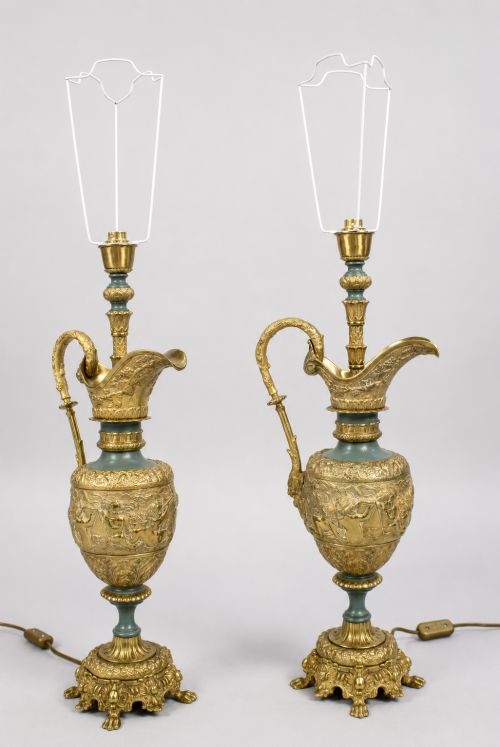
Metal urn lamps take classical forms such as amphorae, ewers, and classical vases and adapt them into table lights. When you search for metal urn lamps, you encounter pieces originating from the nineteenth century up through the nineteen-thirties, reflecting enduring classical tastes.
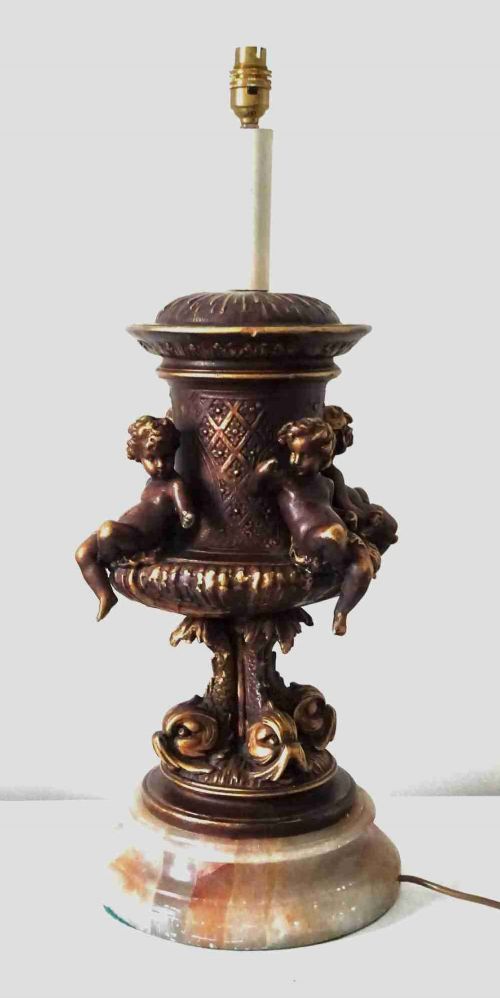
The most common examples on this page are French and English designs cast in bronze, brass, or gilt metal, often featuring decorative mounts. Many started life as ornamental vessels or ewers before being converted into lamps during later decades.
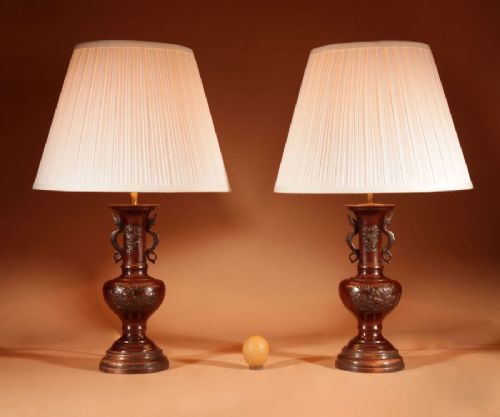
Makers drew heavily on historical revivals, producing Neoclassical, Victorian, and French Louis XVI styles. You will also find Japanese Meiji period bronzes and Chinoiserie toleware adapted to hold electrical fittings.
Materials and Construction
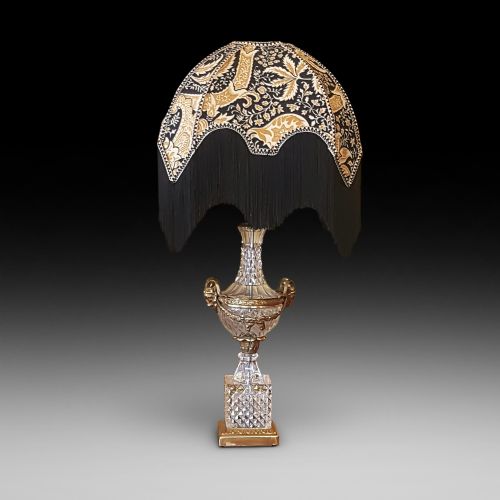
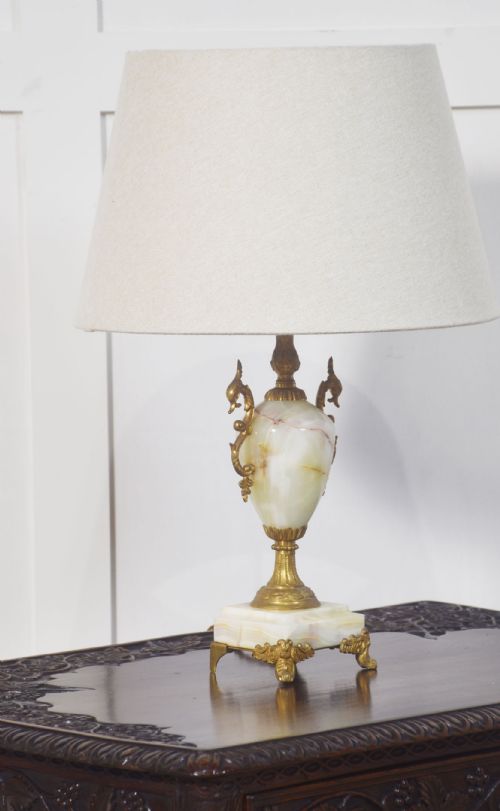
Foundries cast these bodies in bronze, brass, or gilt metal, often combining them with bases of marble, onyx, or cut glass. Surface decoration ranges from hand-painted details and enamel to rich ormolu and black and gold lacquer.
Conversion from vessels to lamps involved drilling mounts or fitting custom collars to receive electrical wiring without damaging the integrity of the original antique metalwork.
Metal Urn Lamps Retail Price Guide 2026
Typical asking prices for metal urn lamps among the pieces listed under this phrase on Sellingantiques today, from the lower quarter to the upper quarter. They describe what is for sale here now, not the wider market.
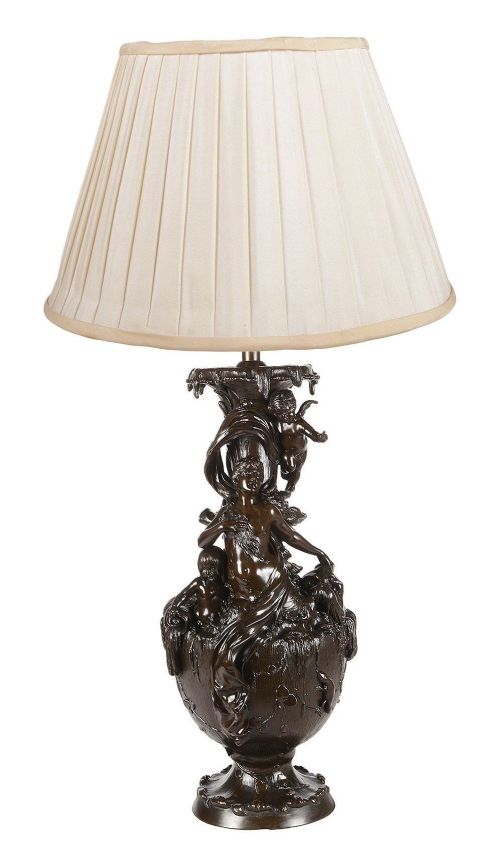
Several lamps double as mythological deities, letting you illuminate your hallway with the literal presence of the Goddess Amphitrite.
Judging Quality and Execution
The finest examples display crisp chasing and deep relief work on the cast metal, whereas lesser pieces show softer contours and simpler surface finishing. Ormolu highlights and fire-gilding require careful hand application that separates master foundry work from routine production.
Material integration dictates the overall balance of the piece, with superior models uniting heavy bronze or brass bodies securely to solid stone or marble plinths without wobble or misaligned mounts.
The Metal Urn Lamps Glossary
- Ormolu
- Gilded bronze produced by applying a mercury and gold amalgam to a bronze base and firing it. This technique creates a durable, warm golden lustre characteristic of fine French decorative objects.
- Ewer
- A large jug with a wide spout traditionally used for pouring water, frequently adopted by nineteenth-century makers for conversion into dramatic lamp bases.
- Toleware
- Enamelled or lacquered sheet metal, usually tinplate, painted with decorative scenes or flat colours. It provides a robust surface for striking black and gold Chinoiserie finishes.
- Cloisonne
- An ancient technique where vitreous enamel is applied to compartments created by soldering thin metal strips onto a bronze or metal body.
Metal Urn Lamps: Frequently Asked Questions
What are metal urn lamps made from?
These lamps are constructed from cast metals like bronze, brass, and gilt metal, frequently mounted on bases made of marble, onyx, or cut glass.
Many examples incorporate decorative surface treatments such as enamel, hand-painted porcelain panels, or black and gold lacquer to enhance their visual weight.
Where should I place a metal urn lamp?
Because of their substantial weight and classical silhouettes, these lamps suit heavy timber sideboards, entrance hall consoles, or large reading desks.
Pair them with simple fabric shades to let the patinated metal body and architectural details remain the focal point of the surface.
Are these lamps converted antiques?
A significant portion of these pieces started as ornamental vases, ewers, or decorative vessels before being professionally adapted for modern electrical use in later decades.
This conversion process preserves the historical integrity of the original nineteenth-century metalwork while updating the interior functionality.
How do I identify French Neoclassical styles?
French Neoclassical and Louis XVI designs rely on restrained symmetry, classical architectural motifs, and disciplined use of gilt bronze mounts.
Look for crisp leaf tips, ribbon ties, and paw feet that mimic ancient Greek and Roman furniture archetypes.