





Metal Tea Boiler
A metal tea boiler offers genuine period warmth, combining heavy copper or brass with practical domestic history for daily use.
Metal Tea Boiler
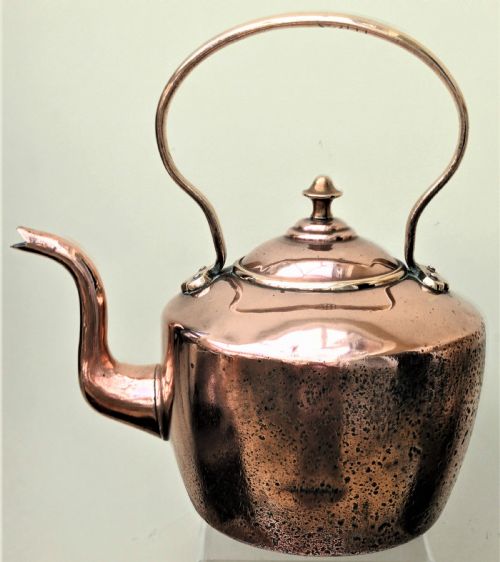
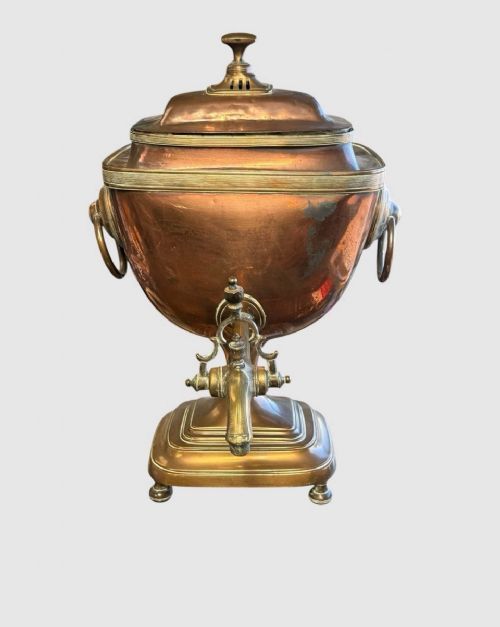
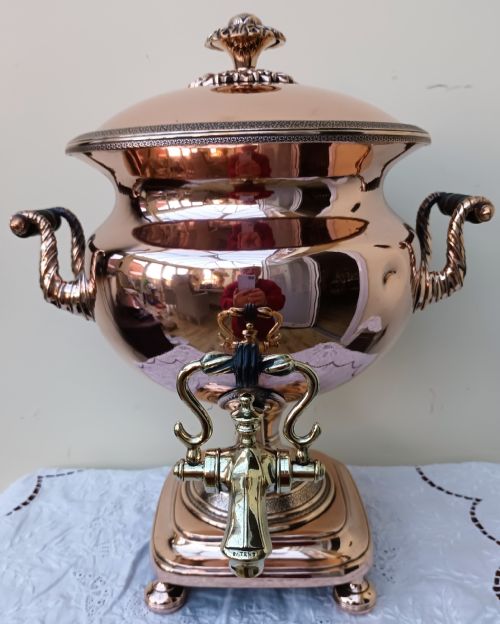
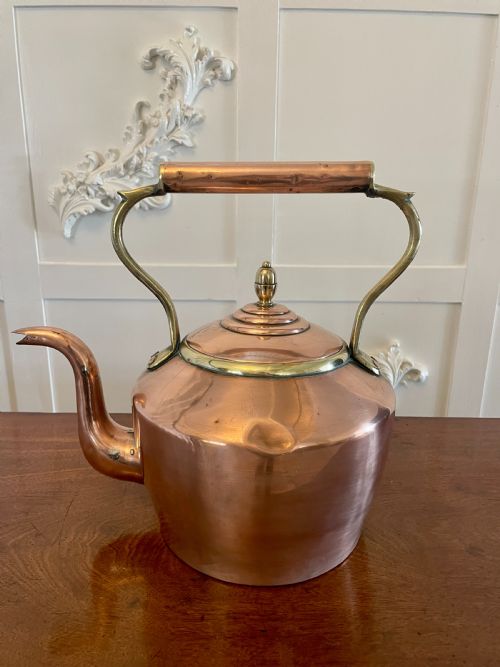
A metal tea boiler brings heavy copper and brass vessels into the home, encompassing traditional kettles, samovars, and tea urns. These functional antiques date from the George III and Victorian periods, reflecting the domestic habits of the nineteenth century.
Kettles dominate the current selection, ranging from standard domestic sizes to large examples, alongside larger samovars and tea urns. Most pieces originate from English workshops operating across the nineteenth century.
Buyers will most frequently encounter Victorian copper kettles and samovars on this page, often featuring brass fittings and occasional bone or ebonised wood details. These vessels served to heat water efficiently for the table or hearth before the arrival of modern appliances.
Materials and construction
Makers utilised heavy gauge copper and brass as the primary metals for these boilers, hammering and joining the sheets to withstand direct heat. Handles and knobs frequently incorporate insulating materials such as bone or ebonised wood to protect the user's hand.
Construction techniques combine hand-beaten metal panels with dovetailed or soldered seams, creating robust vessels designed for long service. Surface finishes display the natural warm metallic tones of polished or patinated copper and brass.
Metal Tea Boiler Retail Price Guide 2026
Typical asking prices for metal tea boiler among the pieces listed under this phrase on Sellingantiques today, from the lower quarter to the upper quarter. They describe what is for sale here now, not the wider market.
Early tea boilers often feature tiny turned bone spacers on the handle to stop your knuckles from meeting red-hot copper.
Assessing quality and craftsmanship
Quality in a metal tea boiler rests upon the thickness of the metal sheet and the skill of the forming process. Heavier gauge copper and well-executed oval or round shapes distinguish superior examples from standard utilitarian wares.
The integration of secondary materials such as turned bone handles and contrasting brass trim elevates certain pieces. Refined surface shaping and clean geometric proportions separate standard nineteenth-century production from finer decorative vessels.
The Metal Tea Boiler Glossary
- Samovar
- A heated metal container traditionally used to boil and heat water in Russia and throughout Europe. These large urns often feature an internal central tube for charcoal or a tap at the base.
- Tea Urn
- A large vessel designed for holding and dispensing hot tea or water during social gatherings. They sit upon fixed bases and incorporate spigots for pouring.
- George III
- The period of British history spanning from seventeen sixty striker to eighteen twenty. Pieces from this era display restrained neoclassical proportions and early manufacturing methods.
- Victorian
- The period covering the reign of Queen Victoria during the nineteenth century. Domestic metalwork from this era spans heavy utilitarian designs and ornate decorative forms.
- Ebonised Wood
- Timber treated with a dark stain or finish to imitate expensive ebony. Makers applied this material to kettle handles and knobs for contrast and durability.
Metal Tea Boiler: Frequently Asked Questions
How were samovars used?
Samovars served as large-scale water boilers for social gatherings, keeping water hot over extended periods. Users drew water directly from a small spigot located near the base of the vessel.
Unlike standard kettles, many samovars utilised an internal vertical chimney or tube to maintain heat via fuel or hot coals. They formed the social centrepiece of tea-drinking rituals in larger households.
How do I clean an antique copper kettle?
Cleaning antique copper requires mild, non-abrasive metal polishes to preserve the surface metal and any underlying historic patina. Harsh chemical cleaners can strip away the aged character accumulated over the nineteenth century.
Frequent light wiping maintains the metallic shine without removing the subtle surface textures left by original hand-hammering techniques. Care must be taken around joints and bone or wooden insulating handles.
Can I still use these for boiling water?
While these vessels were originally engineered for daily boiling, many buyers now appreciate them purely as decorative antiques. Internal historic repairs or modern solder changes may affect whether a piece remains safely usable.
Those intending to heat water on modern stoves should inspect the interior condition and seams thoroughly before use. Most collectors prefer to display them unheated to preserve their nineteenth-century finish.