




Metal Patio Chairs
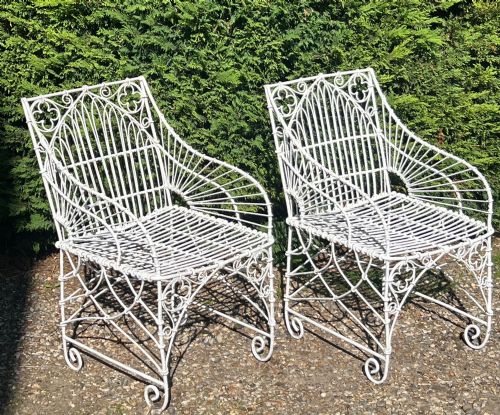
Metal patio chairs offer sturdy garden seating shaped by decades of outdoor design, from Victorian wirework to French mid-century modern styles.
Metal Patio Chairs
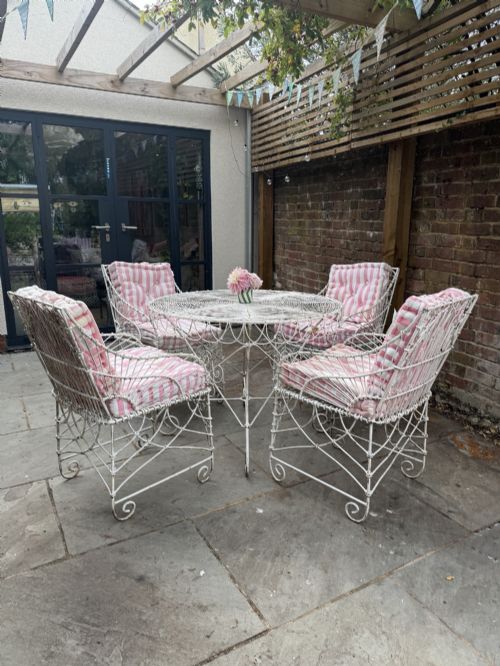
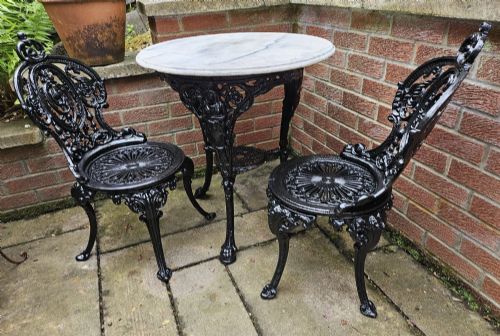
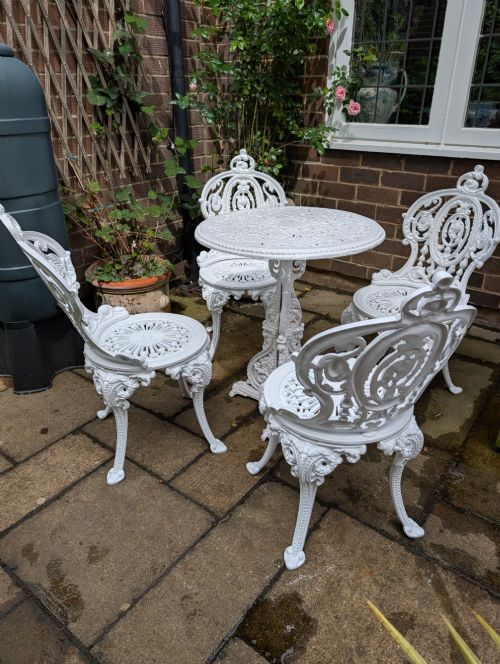
Metal patio chairs span multiple eras including the nineteenth century, Victorian period, nineteen-twenties, and nineteen-thirties, appearing frequently as part of garden dining sets or paired with matching tables.
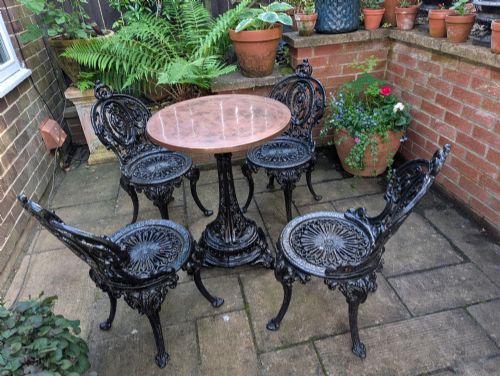
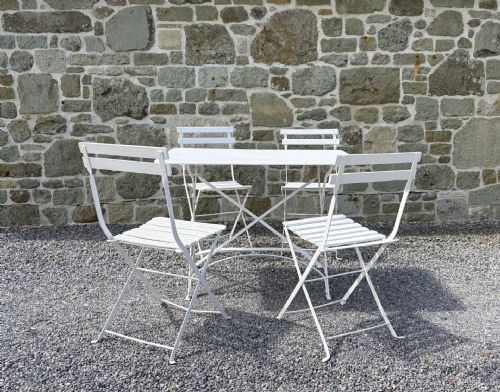
The selections on this page include French country bistro sets, Gothic style armchairs, lion mask designs, and folding chairs originating from French workshops.
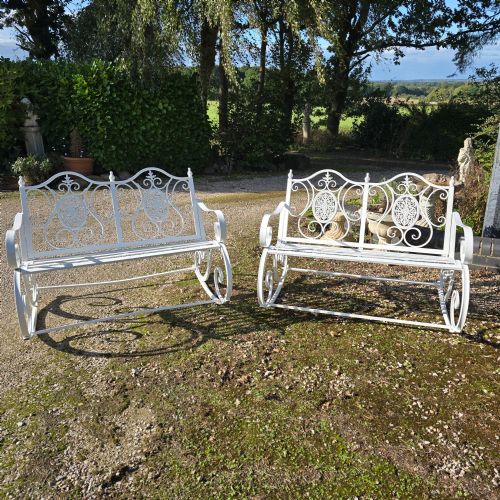
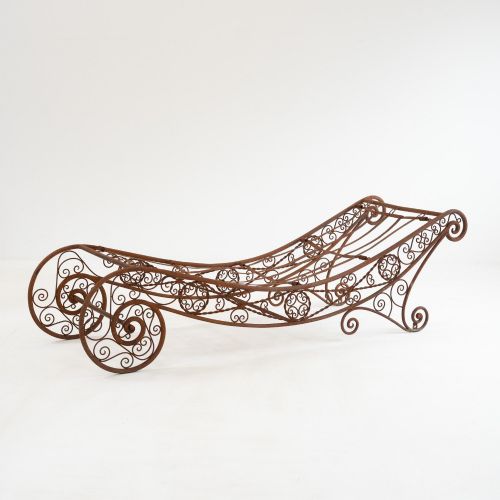
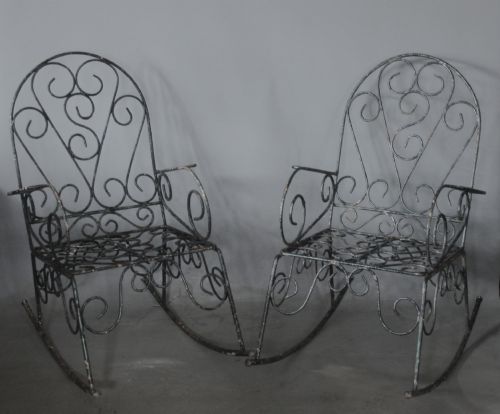
Buyers encounter robust individual seating options such as rocking chairs and daybeds alongside larger dining configurations built for outdoor use.
Materials and construction
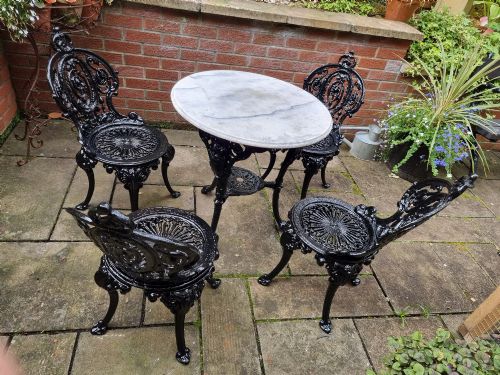
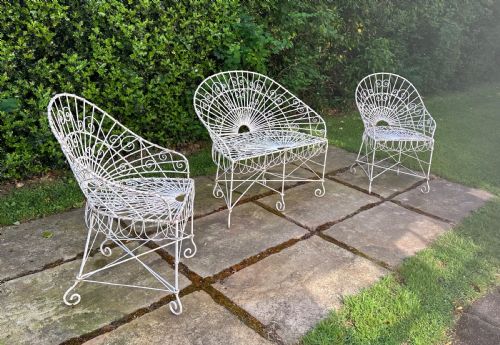
Pieces are primarily constructed from cast iron and wrought iron, utilising the strength of metal to form intricate scrollwork, structural frames, and heavy bases.
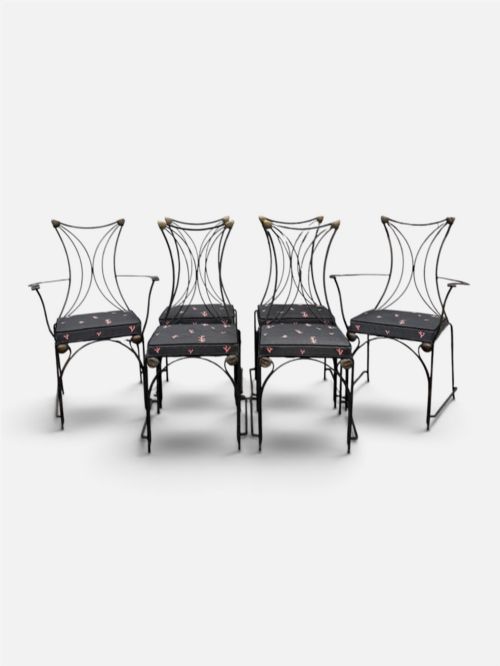
Makers integrated secondary elements like wood, marble tops, zinc surfaces, copper details, and fabric cushions to finish tables and chairs.
Applied paint finishes protected the metal frames from the elements while introducing colour to garden furniture.
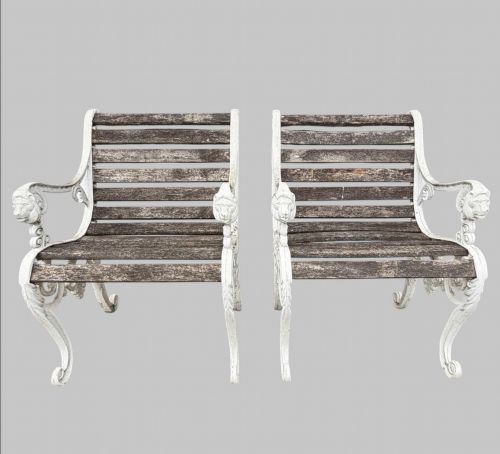
Certain nineteenth-century chairs sport fierce lion masks to guard your morning tea against intruders.
Evaluating quality and design
Quality rests in the crispness of iron casting details, such as lion masks, shell motifs, and Gothic tracery, which define finer examples.
Structural integrity depends on the original forge work and the preservation of the metal components across varying periods.
Christopher Dresser
The Metal Patio Chairs Glossary
- Cast iron
- Molten iron poured into a mould to create decorative garden furniture with high relief details. This technique produced ornate motifs like lion masks and Gothic tracery.
- Wrought iron
- Iron heated and hammered by hand into durable shapes. This method allowed craftsmen to form sweeping curves and structural frameworks.
- Bistro set
- A small outdoor table accompanied by matching chairs. These compact sets originated for pavement cafes and small garden spaces.
- Wirework
- Metal strands twisted and bent into open geometric patterns. This technique was popular for lightweight Victorian garden seating.
Metal Patio Chairs: Frequently Asked Questions
How do I date metal patio chairs?
Dating relies on stylistic clues like Victorian Gothic motifs or Art Deco lines, combined with construction methods such as cast versus wrought iron.
Evidence from periods like the nineteen-twenties and nineteen-thirties helps narrow down the timeframe of specific outdoor pieces.
Are these chairs suitable for year-round outdoor use?
Most metal garden chairs tolerate outdoor conditions well due to their heavy iron construction and protective paint layers.
Protecting them during harsh winter weather preserves the painted surfaces and underlying metal.
What is the difference between cast iron and wrought iron?
Cast iron is poured into moulds to achieve heavy, highly decorative forms with sculptural details like lion masks. Wrought iron is heated and shaped by hand, resulting in resilient and often lighter frames.
Both materials appear frequently across historical garden furniture.
Do metal patio chairs usually come with matching tables?
Many listings group chairs with matching garden tables or bistro sets to form complete dining arrangements.
Individual pairs and sets of four or six chairs also appear independently.