



Metal Oil Lamp
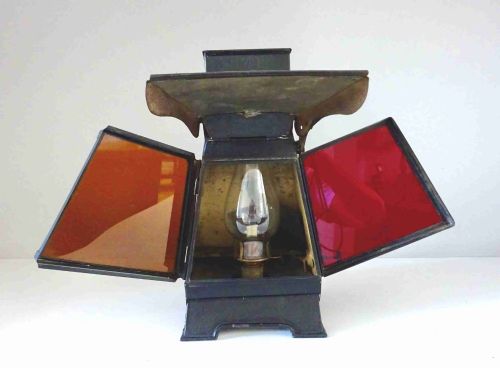
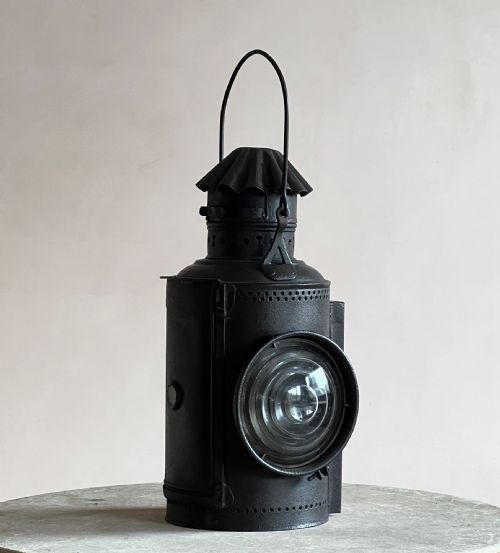
These metal oil lamp examples range from grand tour bronze figural pieces to utilitarian railway lanterns, bringing period illumination into a modern room.
Metal Oil Lamp
A metal oil lamp serves as a functional lighting device fashioned from materials such as brass, bronze, cast iron, and copper. When buyers search for a metal oil lamp, they encounter domestic Victorian table examples alongside industrial railway lamps, scientific pieces, and Continental works dating from the eighteenth to the twentieth century.
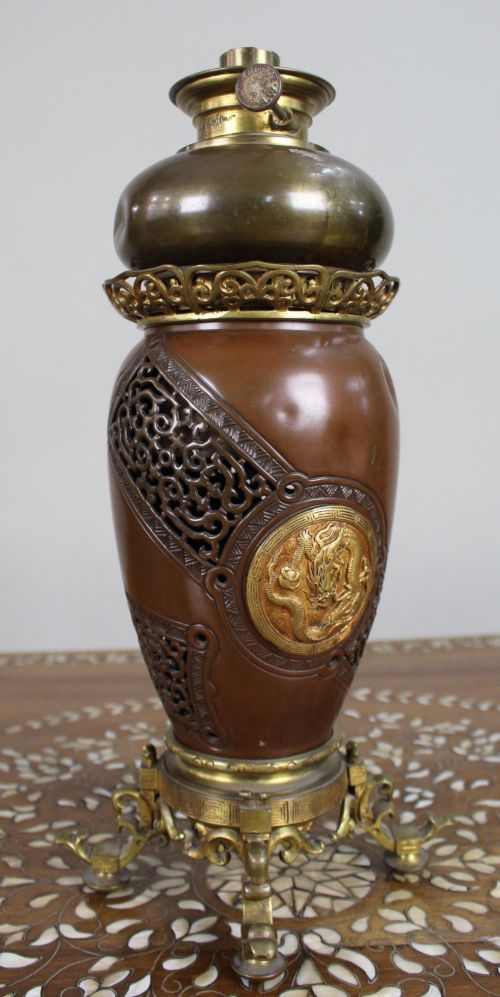
The selection includes desk accessories like inkwells and cigar lighters, alongside floor-standing telescopic standards and hanging lanterns. Forms span from Italian and Japanese Meiji period castings to British railway lighting and Tibetan butter lamps.
Victorian domestic examples often combine metal reservoirs with coloured glass components and fabric elements, whilst industrial variants prioritise robust cast iron and copper construction. Each iteration reflects the specific technical and decorative requirements of its period.
Materials and construction
Construction relies heavily on cast and worked metals, predominantly brass, bronze, cast iron, and copper, shaped through casting, hammering, and assembly. Many domestic pieces incorporate glass reservoirs and fabric elements, whilst industrial examples utilise durable painted steel and iron.
Makers employed specialised techniques for specific forms, such as lost-wax casting for figural grand tour pieces and sheet metal fabrication for railway lanterns. Stamped maker marks and engraved details frequently identify specific manufacturers and production numbers on the metalwork.
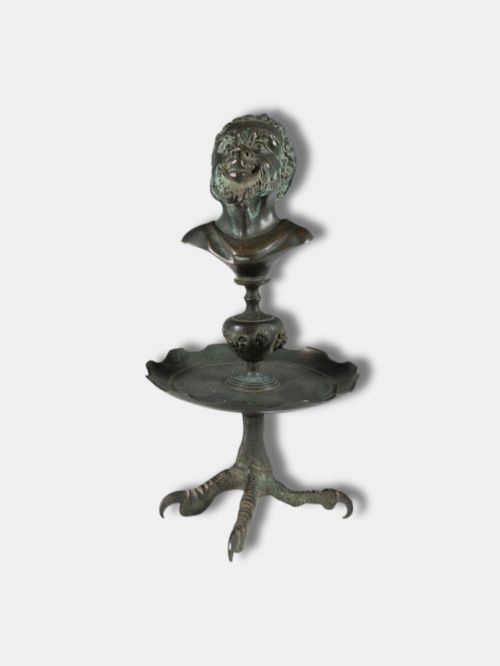
A satyr's bust peers out from an eagle's claw, proving that nineteenth-century lighting could be delightfully theatrical.
Markers of quality
Quality rests in the crispness of the metal casting, the weight and thickness of the brass or bronze, and the integrity of the original components. Finer pieces display refined chasing, detailed figural work, and authentic maker stamps.
Surface finish and patination distinguish superior examples, particularly where original gilding, patinated bronze, or intact coloured glass reservoirs survive without alteration. Structural stability in adjustable standards and complex burner mechanisms also marks a higher grade of manufacture.
W A S Benson·Wild And Wessel·Jan Eisenlöffel·WMF·Dressel
The Metal Oil Lamp Glossary
- Grand Tour
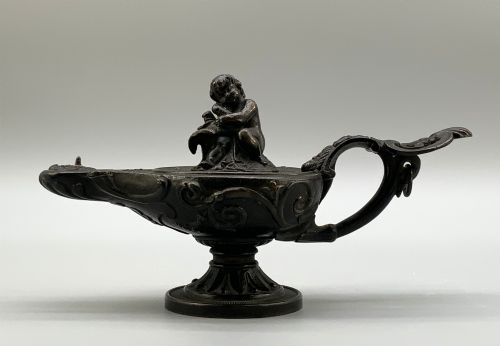
- A term describing souvenirs purchased by travellers in Europe during the eighteenth and nineteenth centuries, often taking the form of classical bronze oil lamps and figural inkwells.
- Lucerna
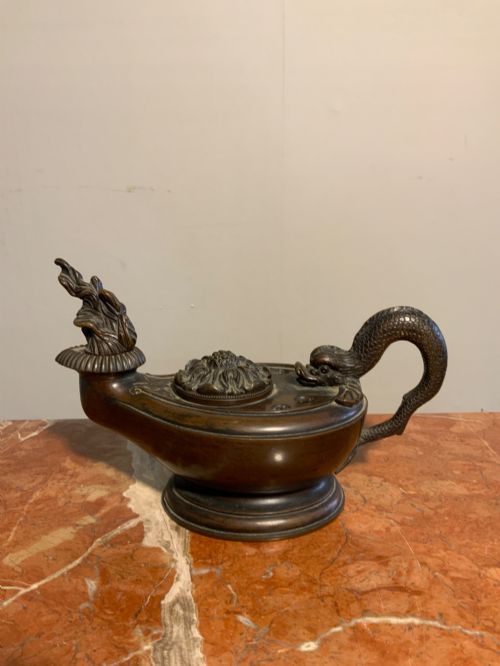
- An Italian term for traditional cast brass and bronze oil lamps featuring multiple spouts and suspension hooks, originating in earlier periods but reproduced into the nineteenth century.
- Wild and Wessel
- A notable German lighting manufacturer known for producing patented burner systems and metal oil lamps during the late nineteenth century.
- Telescopic
- A descriptor for floor standing standards designed with adjustable height mechanisms, commonly found on nineteenth-century metal oil lamp designs.
- Crusie lamp
- An early form of hanging or standing open metal oil lamp, typically fashioned from iron or brass, used in Continental households during the seventeenth and eighteenth centuries.
Metal Oil Lamp: Frequently Asked Questions
How do I date a metal oil lamp?
Dating relies on stylistic clues, manufacturing techniques, and any visible maker marks or patent numbers stamped into the metal components.
Comparing the form against documented Victorian, industrial, or earlier Continental examples helps narrow the production era.
Are these lamps still suitable for burning oil?
Many historical lamps retain their original burners and reservoirs, though modern use often requires careful inspection and new wicks.
Some buyers prefer to keep them unlit as decorative objects or have them professionally adapted for electrical use.
What is the difference between domestic and railway lamps?
Domestic examples focus on decorative domestic illumination, frequently pairing brass or bronze with coloured glass and fine casting.
Railway and industrial pieces utilise heavy cast iron, copper, and painted steel built for rugged utility and weather resistance.
How should I clean antique brass and bronze?
Gentle dusting with a soft cloth preserves the historic patination and prevents damage to the metal surface.
Aggressive polishes remove age and character, so harsh chemical cleaners are best avoided.