


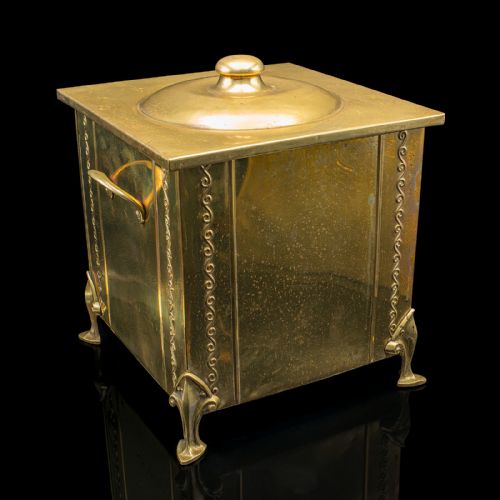

Metal Fuel Bin
A metal fuel bin brings functional Victorian hearthware into modern living spaces, offering sturdy storage for logs and coal.
Metal Fuel Bin
When you search for a metal fuel bin, you encounter heavy utilitarian vessels designed to store domestic heating materials beside the fireplace. The selections on this page span the late nineteenth century, taking the form of lidded bins, buckets, and scuttles.
Most examples hail from the Victorian period, alongside pieces shaped by the Arts and Crafts and Art Nouveau movements. You will frequently find lidded brass and copper containers alongside wrought iron frames and timber-accented vessels.
These items function as both practical fuel stores and decorative fireside accessories. The forms range from simple grain measures adapted for domestic use to elaborate boxes intended to keep sitting rooms tidy.
How they were made
Artisan techniques from the nineteenth century often involve hand-hammered panels and riveted joints rather than modern machine welding. Many vessels incorporate wooden elements for handles or lids, balancing cold metal surfaces with organic textures.
Metal Fuel Bin Retail Price Guide 2026
Typical asking prices for metal fuel bin among the pieces listed under this phrase on Sellingantiques today, from the lower quarter to the upper quarter. They describe what is for sale here now, not the wider market.
Some heavy grain measures from the nineteenth century found new life by the hearth, trading oats for anthracite.
What varies in quality
Quality in a metal fuel bin is dictated by the weight of the metal and the integrity of its construction. Thicker gauge copper and brass resist denting and maintain their structural shape far better over decades of hearthside service.
The sophistication of the design also separates standard utility items from finer decorative works. Pieces bearing the distinct aesthetic markers of the Arts and Crafts or Art Nouveau movements show greater artistic attention in their surface detailing.
The Metal Fuel Bin Glossary
- Art Nouveau
- A decorative style prevalent in the late nineteenth century characterised by sinuous, organic lines and floral motifs. Copper buckets from this era display these characteristic flowing patterns.
- Arts and Crafts
- A design movement valuing traditional craftsmanship and simple forms over mass production. Pieces from this tradition often highlight the natural texture of hammered copper.
- Wrought Iron
- A tough, malleable iron alloy beaten into shape by hand. It appears frequently in the structural mounts and handles of nineteenth-century fuel keepers.
Metal Fuel Bin: Frequently Asked Questions
What is a metal fuel bin?
A metal fuel bin is a robust container built to hold coal, logs, or kindling near an open fireplace. These vessels kept the hearth area tidy while keeping fuel dry and close at hand.
Historically found in nineteenth-century sitting rooms, they combine utility with decorative metalwork. Today, they serve as practical storage or rustic decorative objects.
How do I date a brass fuel bucket?
Dating these pieces relies on examining manufacturing techniques, material choices, and stylistic markers such as Art Nouveau or Arts and Crafts motifs. Nineteenth-century examples often feature hand-hammered surfaces and heavy gauge brass or copper.
Makers' marks or specific construction methods like hand-cut rivets provide further clues to the precise era of production. Comparing the decorative style to known nineteenth-century design periods helps narrow down the origin.
Can I use an antique coal scuttle daily?
Many antique copper and brass bins remain structurally robust enough for everyday use beside a modern fireplace. Their durable metal construction handles the weight of modern firewood without difficulty.
Care should be taken to protect interior surfaces from moisture to preserve the historical integrity of the metal. Regular light cleaning keeps the exterior finish looking presentable.
How do I clean antique copper?
Cleaning antique copper requires gentle methods that preserve the aged patina rather than stripping the metal down to a bright modern shine. Soft cloths and mild cleaning solutions suited for vintage metals prevent scratching.
Harsh abrasive compounds should be avoided to protect any hand-hammered textures or historical surface finishes. Preserving the natural warmth of the metal maintains the character of the piece.